





Let farmers farm
It’s time to rethink salt and brine management in modern aquaculture
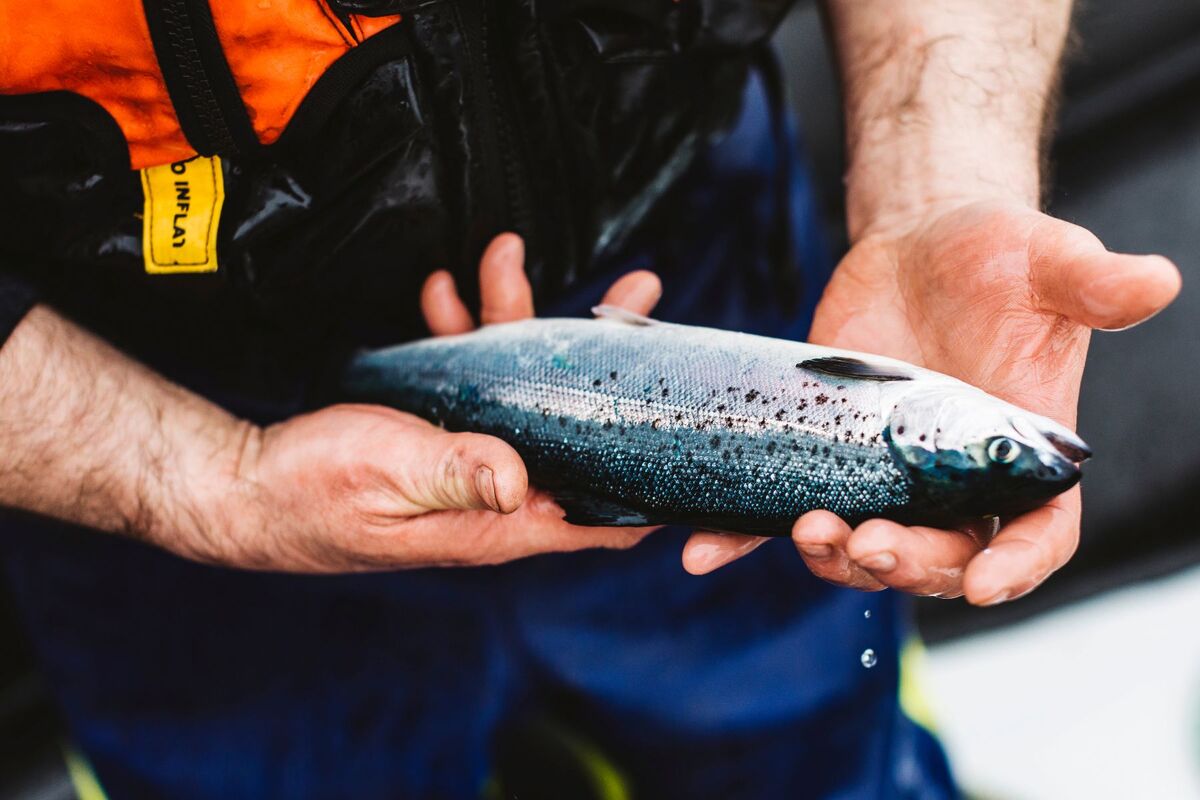
We’re farmers, we just want to get back to farming.”
That comment, heard across the salmon sector, cuts to the heart of fish farming. Too much time is spent wrestling with logistics, bag-splitting, manual dosing, supply chain firefighting, instead of managing fish health. And it’s no surprise that salt has become a source of some of that frustration. How salt is specified, delivered, and dosed directly impacts mortality, feed conversion, and labour cost; three key areas that can be improved by understanding salt and its place in the sector.
Not all salt is equal
Salt supports osmoregulation, reduces stress, and helps manage salmon through each stage of life through recirculating aquaculture systems (RAS). But the additives that are common in most salts, that help to reduce clumping and improve handling, react with UV treatment systems and put fish health at risk. These additives, such as E535 – also known as sodium ferrocyanide – is chemically stable and when added to salt, is safe for human and animal consumption. When exposed to UV water treatment however, it releases cyanide which in turn kills fish. It is for these reasons that salt without additives is more commonly found throughout aquaculture. Where UV is not used as a water treatment method, lower cost non-additive salt may be used but purity still matters for consistent brine chemistry.
This is where product specification matters. A high mineral salt blend such as Seamix is a precise electrolyte profile that mimics natural seawater. The higher mineral content is particularly valuable in early-stage fish development, supporting the fish’s intestinal and osmoregulatory systems. The benefits extend beyond salmon: it improves development and survival rates in crustacean production.
Beyond salt: supporting RAS water chemistry
Several key chemicals play critical roles:
• Sodium bicarbonate – buffers pH and maintains alkalinity, preventing dangerous swings that stress fish and impair biofilters.
• Hydrated lime – raises pH quickly when needed, and aids solids settling and pathogen control.
• Potassium chloride – essential for osmoregulation and heart function; often depleted in RAS and must be replenished.
• Magnesium chloride – supports enzyme function and reduces stress; critical for both fish and the biofilter community.
• Calcium chloride – vital for bone development, blood clotting, and overall health; stabilises water hardness.

Wrestling with today’s logistics
Over 152 years old, Peacock Salt’s roots are in shipping, having survived two world wars. Their ships were even used in Dunkirk! That history matters because global supply chain volatility is nothing new. Peacock’s response is a portfolio of suitable alternative salts, matching customer requirements. From the HQ in Ayr, the handling of logistics over familiar territory helps to prevent disruption to production. It’s often difficult to forecast when salt will be required, so key to mitigating production stoppages is ensuring stocks are kept high. There’s a consistent dialogue with farms and there’s always a back-up to the back-up if needed.
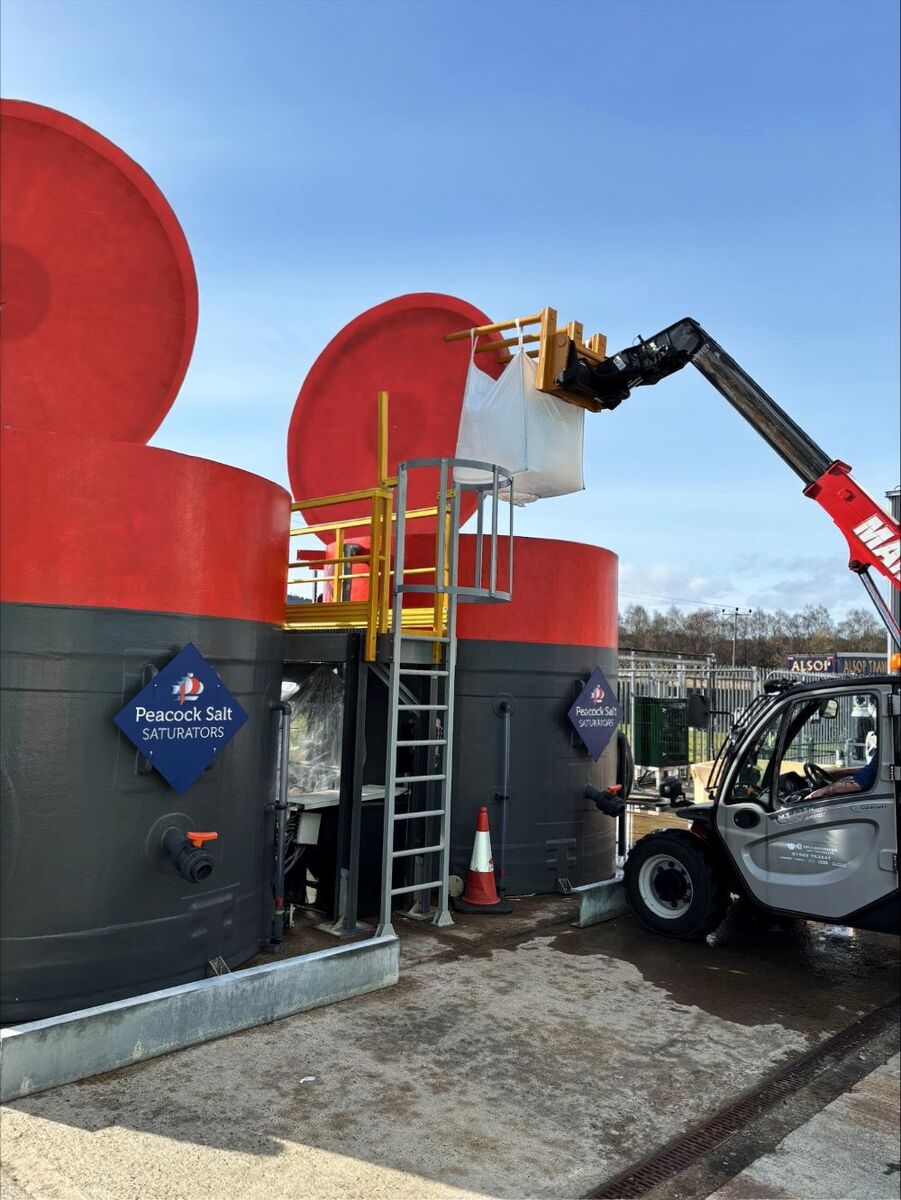
Adapting brining technology for aquaculture
One of the most significant advances has been adapting existing technology. Peacock’s winter team were pioneers of brine production, having installed over 140 brine saturators for UK roads authorities to tackle winter de-icing. These systems make brine on site, mixing it with salt in spreaders to keep roads safe. That same proven technology has now been adapted for salmon farming.
Manual dosing remains commonplace across RAS baths and tanks, often meaning people lifting and emptying hundreds of 25kg bags to nudge salinity closer to desired concentrations. The Multisol upflow saturator works differently: water travels upward through a salt bed, passing a salinity sensor that adjusts freshwater intake until the desired volume and concentration is met. After installing this system, customers are able to consolidate salt deliveries, reducing unit costs. The old hand-balling method becomes a thing of the past. To dose the system, salt is loaded using a forklift or telehandler. The system automatically produces and transfers millions of litres of concentrated brine, dosed accurately whenever and wherever required.
Optimising the salt process from start to finish like this has helped create healthier and bigger fish and, importantly, happier farmers.

Back to farming
It’s not just about passion, it’s about practicality. Optimising a process with health and safety, cost, and fish welfare at its core allows farmers to focus on what they do best. The goal is to make that process effortless and reliable, often for less cost than expected. Because the less a farmer has to worry about salt and chemistry, the more they can think about the fish.
Peacock Salt will be at Stand F10, Aquaculture UK in Glasgow, 16-17 June.
Why not try these links to see what our Fish Farmer AI can tell you.
(Please note this is an experimental service)
You May Also Like






© 2026 Fish Farmer.