ao link

Breeding for a changing climate
Genetics is building thermal resilience in salmonids. 

Xelect May 26 Picture 1
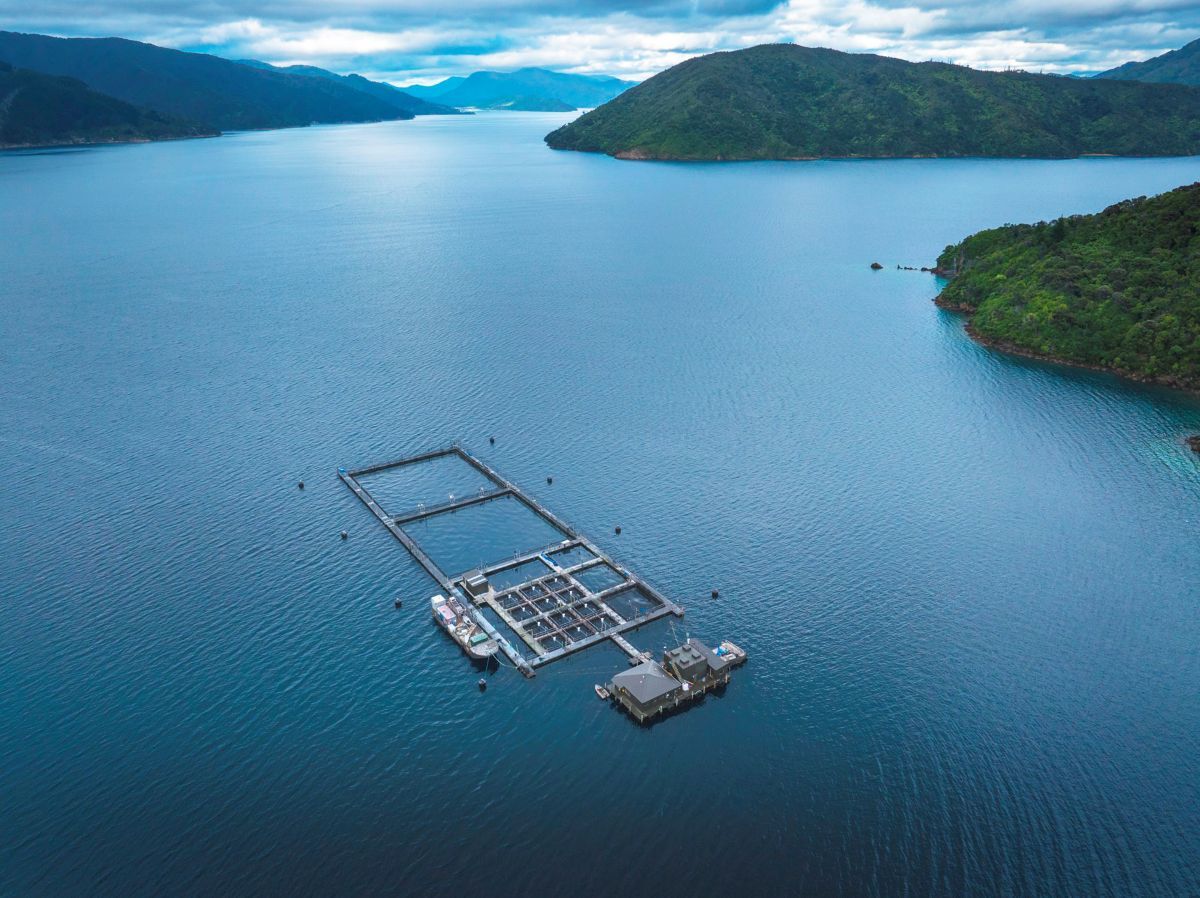
New Zealand King Salmon cages

When aquaculture producers talk about climate-driven risk, they rarely mean temperature alone. Heat triggers a cascade of stressors: lower oxygen, reduced feeding, and elevated disease pressure. What’s more, heatwaves can arrive suddenly and unpredictably, often coinciding with fish entering their peak growth period. 


In New Zealand, marine heatwaves over recent summers have pushed these concerns to the forefront. New Zealand King Salmon (NZKS) analysed years of site records to confirm critical thresholds associated with increased risk. Larger, near-harvest fish were especially vulnerable. These insights led to a critical question: if heat events at sea are inconsistent, could a reliable, land-based temperature challenge model be developed that predicts the summer survival farmers depend on? 


This question launched Xelect, NZKS and the Cawthron Institute into a multi-year effort to turn “summer survival” into an intentional breeding objective, supported by New Zealand’s Sustainable Food & Fibre Futures (SFFF) fund. Salmonids are poorly equipped for prolonged warmth; in nature they simply swim to cooler waters. On farms, rising temperatures accelerate metabolism while lowering oxygen, narrowing aerobic scope and shrinking the margin for error. Appetite changes, behavioural shifts and pathogen susceptibility typically appear before mortalities do, a pattern shared across many temperate species. Some trout populations have adapted under warmer conditions, but passive exposure alone cannot keep pace with today’s climate volatility. 


“Heat risk in aquaculture is rarely one thing, it’s a stack of stressors,” says Dr. Carlos Díaz-Gil of Xelect. “That’s why we designed a repeatable trial that captures a fish’s biological response to elevated temperature and then links it directly to what farmers experience in summer.” 


The team developed a multi-cohort thermal-challenge protocol for Chinook (king) salmon (Oncorhynchus tshawytscha) to simulate a difficult summer. In Cawthron’s seawater recirculating aquaculture systems, temperatures rise gradually from 15 °C up to 23.5 °C at 0.5 °C per day, then hold steady for two to three weeks — long enough to reveal meaningful, heritable differences without inducing acute thermal shock. 


Under the sustained warm conditions, growth is measured for each tagged fish before and after the challenge, and the time to death (TTD) and presence of feed in the gut is recorded. Crucially, this was not a single experiment: the protocol was repeated across multiple year classes, allowing estimation of genetic parameters and, just as importantly, enabling direct comparison with real summer survival at sea in the same cohorts. 


Thermotolerance behaved like a classic polygenic trait, meaning that it is related to multiple genes. TTD showed moderate heritability (~0.4), strong enough to support consistent improvement without compromising other breeding goals. Interestingly lab-based traits demonstrated low to moderate, consistent genetic correlations (~14%) with actual summer survival in cages. This matters because some summers do not produce a clear heat-stress “signal”, i.e. in some summers, mortalities are low. A validated laboratory phenotype keeps selection pressure on temperature-based resilience every year, even when field conditions are mild. 
With a reliable phenotype established, the next step was choosing the right selection tools. Pedigree based selection (pBLUP) remains a trusted,cost-effective backbone in aquaculture genetics, but it cannot detect within-family differences, which is often where the best parents are found. 


Transitioning to a genomics approach through Xelect enabled calculation of genomic Estimated Breeding Values with a 10% uplift in accuracy for thermotolerance traits, compared to pedigree-based selection methods. This revealed within-family standouts, as well as identifying lower tolerance fish that pedigree analysis alone would overlook. 


“Genomics sharpened our vision,” says Díaz-Gil. “We can now identify individuals with exceptional thermal resilience and combine that with real summer survival, which is what really matters to the producer.” 


Xelect May 26 Picture 3
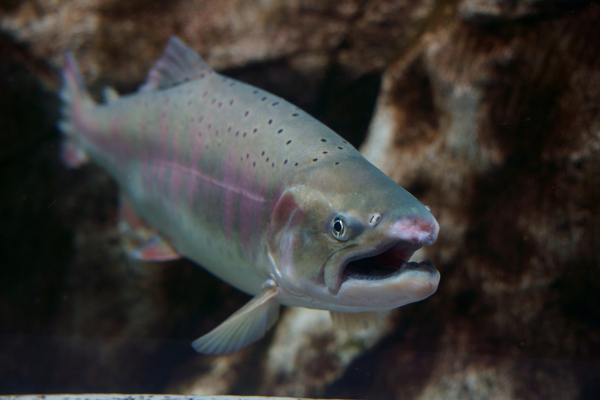
Family egg incubation system

For NZKS, these gains translate directly into farm level benefits: more stable feeding late in the season, fewer setbacks from opportunistic pathogens, and more fish reaching target harvest weights on schedule. The work done to date, initiated by NZKS, has demonstrated that breeding for resilience (e.g. thermotolerance) allows fish farming to remain sustainable and profitable even in the face of climate change. This work, in conjunction with many other fish health initiatives, has demonstrated real-world benefits for NZKS’s operations and will ensure that farming their sites in the Marlborough sounds is future proofed. 


“From a farm perspective, every extra week of healthy fish with stable feeding in summer matters,” notes Dr. Zac Waddington, Fish Health and Welfare Manager at New Zealand King Salmon. “Genomics gives us confidence we’re backing the right families and individuals to produce resilient fish for those potentially challenging summer weeks.” 


To quantify impact, Xelect developed an integrated bioeconomic model, coupling the genetic parameters with growth, feed and survival models using commercial inputs. The modelled scenario, (using summer survival alongside genomic thermotolerance traits) reduced time to harvest by four weeks for the same target weight, increased biomass to market around +140 t, and raised average profit by about +5.2%. While no model perfectly captures every farm’s reality, the results align well with the day-to-day experience of production teams who feel the operational constraints of warmer summers. 


Two aspects make this programme notable. First, it is intentionally multicohort, acknowledging that climate risk is episodic. In cooler summers, the lab test could maintain momentum; in hot summers, field survival re-anchors the selection index in real-world performance. 


Second, the team is expanding beyond mortality traits. Sub‑lethal responses, such as appetite and growth changes around ~20–21 °C, are being investigated in the Climate Adapted Finfish research programme because they capture the performance drag that usually shows up before mortalities do, and planned dual challenges (heat plus disease) will better reflect the complex reality of warm-water episodes. 


The lesson from this work is that resilience can be bred, not just managed. It starts with acknowledging that “temperature” is shorthand for a bundle of interacting risks; developing a phenotype that is repeatable and relevant; and uses genomics to capture variation that pedigrees miss. 


Good site management and husbandry remain essential, but genetics ensures each new generation enters summer with a little more resilience. The work to date indicates that using these various techniques, king salmon resilience can be bred for in a proactive way, which ensures the stock is more than capable of dealing with the challenges of climate change.

 
In an industry that is very reliant on the environment for fish performance and with a changing climate, genetic insurance is not a luxury, it’s a strategy.  


Xelect may 26 Picture 2
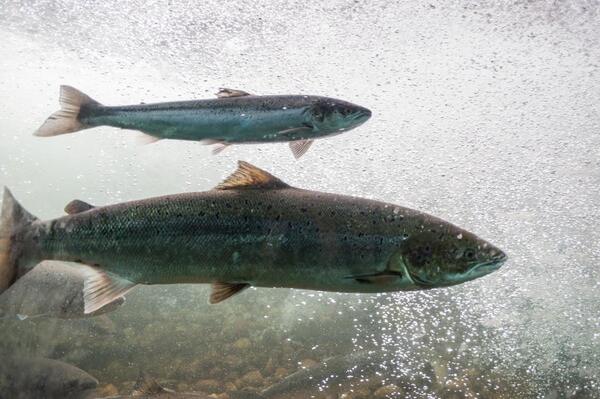
New Zealand King Salmon broodstock hatchery

Practical takeaways for producers:
Measure what matters: If summers are inconsistent, build one in controlled conditions and validate it with field survival. Possibilities to include pathogen specific challenges should also be considered. 
Keep survival in the index: Thermotolerance is the mechanism; summer survival is the outcome. Combine both with traits like growth, fillet yield and fat percentage. 
Use genomics to see inside families: Pedigree is powerful, but genomics helps you to lead the industry. 
Expect compounding gains: Moderate heritability (~0.4 for TTD) plus consistent measurement equals year on year progress. 


www.xelect-genetics.com

Xelect Logo
Add New Comment
You must be logged in to comment.
Trainee Health & Safety Advisor - Mowi Scotland
Western IslesWestern Isles£28,000 to £30,000 per annum£28,000 to £30,000 per annum

Farm Technician (Laga Bay) - Mowi Scotland
Acharacle, LochaberAcharacle, Lochaber£28,258 to £31,648 per annum£28,258 to £31,648 per annum

Environmental Field Scientist (Fort William) - Mowi Scotland
Fort William, LochaberFort William, LochaberSalary On ApplicationSalary On Application

Feed Operations Technician (ROC - Fort William) - Mowi Scotland
Fort William, LochaberFort William, Lochaber£30,387 to £34,032 per annum£30,387 to £34,032 per annum

Farm Technician (Kingairloch) - Mowi Scotland
Camasnacroise, LochaberCamasnacroise, Lochaber£28,258 to £31,648 per annum£28,258 to £31,648 per annum
Fish Farmer Magazine
IPSO
Facebook
X
Linked In

© 2026 Fish Farmer.