




SalMar reports strong start to 2026 and increases harvest guidance
SalMar, the world’s second largest Atlantic Salmon farmer today unveiled a significant first quarter profit improvement.


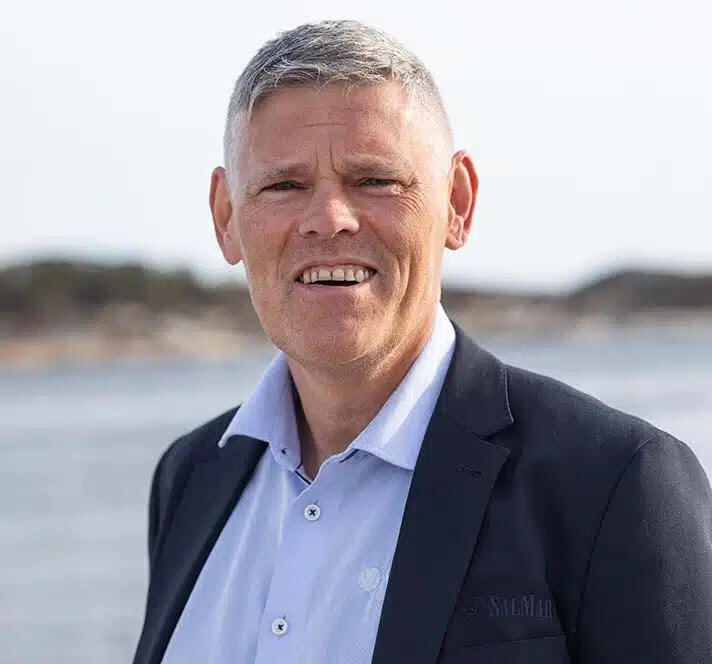
SalMar CEO Frode Arntsen

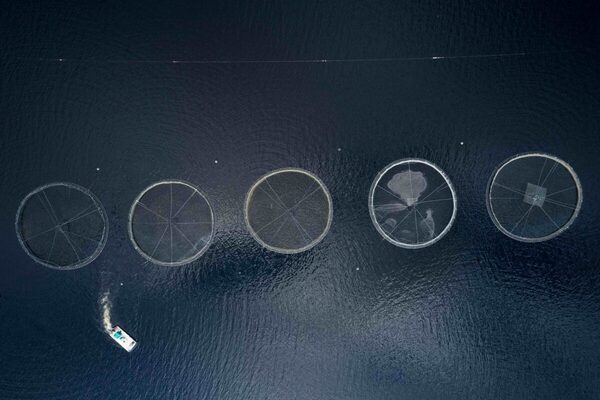
Salmar Norway Farm scene
This was driven by better quality harvested fish and lower cost levels in the value chain along with a stronger biological performance.
The operational EBIT for Norway was NOK 1,536 million (£122m), around double the figure for Q1 2025.
The slaughter volume was 56,300 tonnes and operational EBIT per kilo was NOK 27.3.
For the whole group, operational EBIT was NOK 1,512 million (£120m) in the first quarter of 2026.
The slaughter volume was 60,300 tonnes up from 42,700 tons last year and operational EBIT or operational profit per kilo was NOK 25.1.
Salmar said the early year performance paves the way for increased volumes and continued good performance going forward.
However, there were weak results from Scottish Sea Farms, which SalMar owns with the Lerøy Seafood Group, and Icelandic salmon due to high costs in the value chain.
Salmar CEO Frode Arntsen said: “The start of the year has been record-breaking in a number of biological key figures and based on what we have experienced so far. We are increasing the volume guidance by 12,000 tons for 2026.
“The positive development provides a solid basis for continued good performance going forward, with increased volume, lower cost levels in the value chain and high quality of harvested fish.”
He added: “The start of 2026 has been record-breaking for a number of biological parameters (survival, growth, superior proportion, average weight, etc.) and SalMar must go back more than 10 years to find an equally good biological start to the year as SalMar has had so far in 2026.
“At the same time, SalMar has record-high biomass in the sea with a lower cost level both compared to last year and the previous quarter.”
There was also a sound biological performance from Ocean Farm 1, SalMar’s offshore facility.
The Scottish Sea Farms figures were published by co-owners Lerøy earlier this month, but SalMar’s share was a loss of NOK 48 million (£3.8m).
Why not try these links to see what our Fish Farmer AI can tell you.
(Please note this is an experimental service)
Hatchery RAS Technician (Lochailort) - Mowi Scotland
Lochailort, Lochaber£28,258 to £35,265 per annum
Sales Support Administrator/Marketing Assistant - Wyvex Media
Hybrid home/office - Oban or Edinburgh areaCompetitive Salary
Deckhand / Relief skipper Tiffany II - Kames
KilmelfordFrom £33,000 per annum
Marine Engineer - Scottish Sea Farms
Shetland£43,800 - £48,000 per annum
Hatchery Technician (Anglesey) - Mowi Scotland
Holyhead£28,258 to £35,265 per annum
You May Also Like




© 2026 Fish Farmer.