The theme of the 2026 Sea Lice Conference, which took place in Trondheim on 3-4 February, was “The Power of Knowledge”. But this title did not signal a focus on academic research alone: in fact, the overriding message was about what the industry itself – both as a sector and as individual producers – can do to meet the sea lice challenge.

Eirik Ruud Sigstadstø of FHF, the Norwegian Seafood Research Fund, took the stage saying: “Regardless of anything else, the industry itself needs to be in control of sea lice. FHF’s focus is about what the sector can do to help solve the challenge. We aim to ensure that knowledge and best practice are shared around prevention and control measures that don’t involve handling of the fish.”
In the FHF’s 2026 Action Plan, sea lice control has been elevated into a distinct strategy area. This is to ensure it receives a sufficiently large and targeted effort, reflecting its status as one of the most urgent challenges in Norwegian salmon aquaculture.
The main conference programme then kicked off with presentations from the four main fish farming regions of Norway (Finnmark, Nordland, Trøndelag and Vestlandet). Speakers from DNV and HAVET gave detailed updates on the sea lice status in their geography – outlining the lice situation over the past year and sharing which prevention and control strategies the farmers expect to bring with them into 2026.
One of the four, Marte Fredriksen from DNV, reported that in the Finnmark region, prevention methods currently employed include lice skirts and an extensive use of lasers. The latter has seen 50% coverage so far across the region’s sites; this has proven effective and more installations are expected. Testing of Harbor Fence (electric fencing for pens) and AcuLice (acoustic technology) is also ongoing

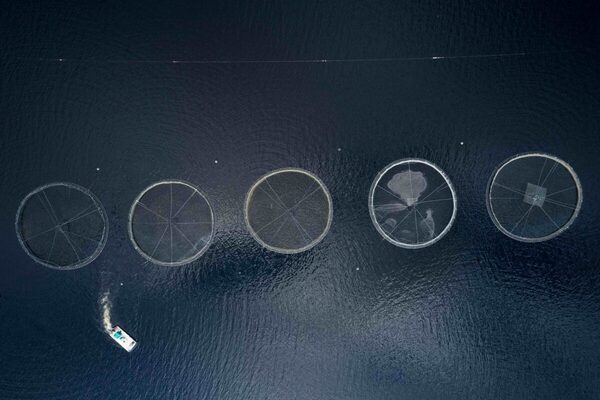
Among the event’s wide-ranging programme topics, there were several presentations about non-traditional ways of farming. Thinking back to Aqua Nor 2025, a lot of the talk was about closed containment. This year’s Sea Lice Conference featured a talk by Siri Vike of Ovum – the producers of the Egget pen – which covered the use of closed systems as part of a sea lice strategy. Demonstrating the beneficial effect on the wider open-pen area when closed units are deployed strategically, she also said a “zero lice vision” is perfectly possible when deploying a physical barrier between the parasite and its host.
However, three of the programme items at FHF’s event focussed on submersible farming. Anna Solvang Båtnes of NTNU examined how lice are transmitted in deep farming, while Frode Oppedal of Havforskningsinstituttet (Norway’s Institute of Marine Research) presented the results from an analysis based on 42 submerged sites comprising 422 pens, extensive interviews with farmers, data comparisons from Barentswatch and a range of other sources. The study suggests that lice and the requirement for delousing are significantly reduced in commercial submerged salmon farming.
But first, Ketil Rykhus of Sinkaberg – one of the major owner-managed Atlantic salmon companies operating on the coast of mid-Norway – gave a farmer’s perspective on this method.
Although his brief was to expand on the effects that submersible farming can have on an entire production area, Rykhus was keen to initially focus on what it means for the fish. The company has extensive experience of submersible aquaculture – having passed eight to nine months of production and their fifth round of smolt transfer to submersible pens – and this experience has been overwhelmingly positive. At one site, for example, they went from 100 to zero sea lice treatments, by moving from traditional open pens to submersible systems.
However, Rykhus said it is of utmost importance to choose the right sites and know the conditions in each area well.
“Once you go deep,” he explained, “the realities are different.”
At some sites, vertical currents may mean that you have lice at depth as well higher up in the water column, or a big layer of brackish water may push the lice downwards. And if there is high sea lice pressure in the area, you can pick up contagion in the first few metres on the way down.
A lot of detailed planning is required for submersible farming to succeed, advised Rykhus. Test runs and meticulous preparation are key before you transfer the fish into the system.
Sinkaberg had an ambition to be 100% “shielded” (a combination of submerged and closed containment) by the end of 2025, which was largely achieved. The results so far? A noticeably smaller lice burden, fewer lice treatments, better fish welfare, higher survival rates and better harvest quality. Using submersible systems, they have experienced 96-97% survival, with similar superior-graded percentages at harvest.

With regards to welfare, the company has found that when the fish have been submerged for the whole production period, they are less used to people as there has been no handling. Therefore, Rykhus stressed, care must be taken when the fish are raised for harvest, to avoid stress. But this “shyness” can also be a sign of good welfare, he added: the fish has been left alone and all it needs to do is eat.
Sinkaberg has also found that its submersible systems provide even better visibility and data – in terms of welfare, lice counts and other operational information – than it gets with traditional farming, thanks to the in-pen technology, such as cameras and sensors. But this data must be used effectively, to ensure they have procedures in place to handle any emerging situations as early as possible.
Despite the positive results, Rykhus feels we are barely beginning to realise the full potential of submersible farming. Even better results can be achieved if you always pick key locations and research them well. He explained that the method also brings valuable insights that can be transferred to what they are doing with breeding and at the smolt facilities.
The company’s aim going forward is that all smolt transfers and all new sites will be submersible.
“It will be interesting to see what effect our submersible and closed farming operations will have on nearby farms,” said Rykhus. “Maybe more farmers in an area will need to use such systems for there to be noticeable effects on an entire zone.”

One conclusion can be drawn from the years of fish farming and research touched upon in the Sea Lice Conference 2026: the sea louse is a challenging opponent. Could we be getting closer to a time when this persistent parasite will be a thing of the past?
Lene Sveen of Nofima, who updated the delegates on the extensive CrispResist project, certainly reported encouraging signs that gene editing or selective breeding can be used to improve Atlantic salmon’s innate immunity against sea lice. But if such a momentous breakthrough happens, as Sveen quipped at the end of her presentation, “many of us here will be out of a job, and we will no longer need a sea lice conference.”
Why not try these links to see what our Fish Farmer AI can tell you.
(Please note this is an experimental service)