




Lobster farming: Spiny stars
An international aquaculture research centre is currently working to develop sustainable farming techniques for the spiny lobster (Panulirus ornatus) and evaluate its viability as a livelihood for coastal fishers in the Philippines.


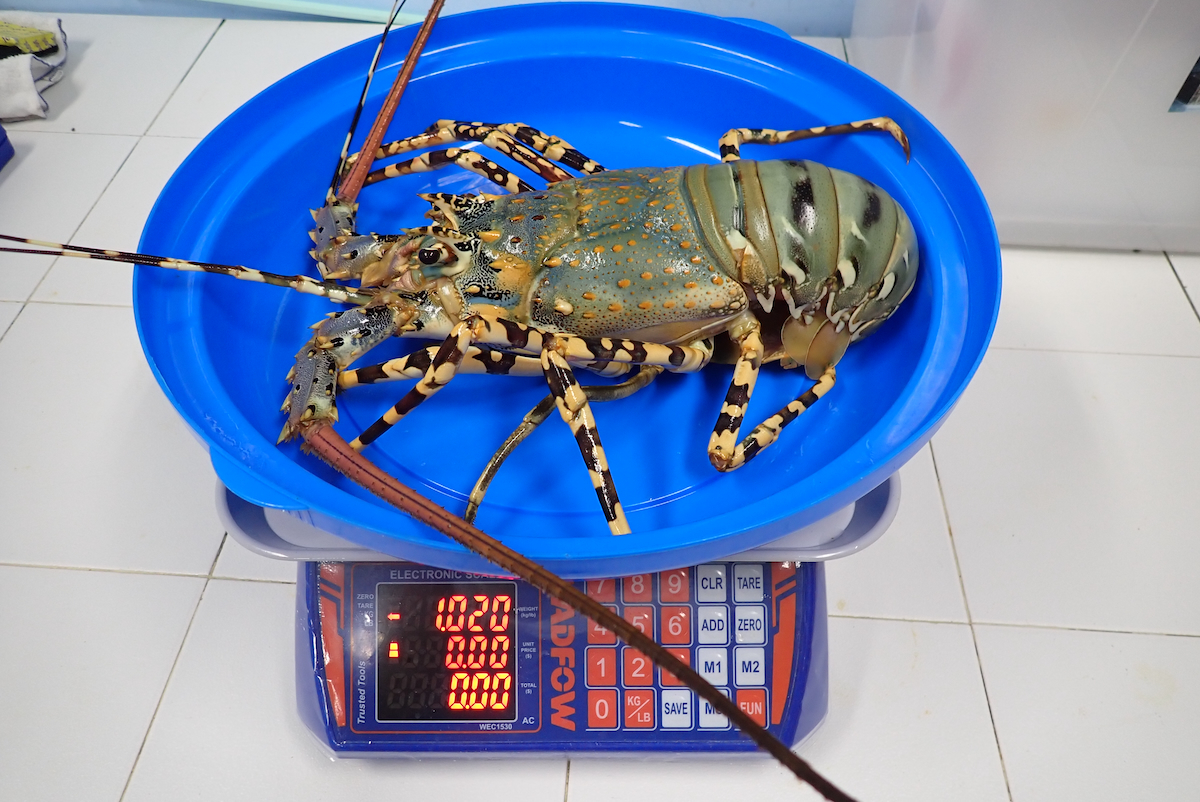
The spiny lobster is a type of marine crustacean distinguished by its long, spiny antennae and the absence of large claws, which are commonly found on true lobsters.
Spiny lobsters inhabit warm waters and are often found in rocky crevices or coral reefs. They are highly valued for their delicate meat and are a popular seafood choice in many coastal regions.
Locally known as tiger lobster or banagan, and internationally as “rock lobster”, the species has been recognised by the Iloilo-based research centre, Southeast Asian Fisheries Development Centre Aquaculture Department (SEAFDEC/AQD), for its potential to strengthen a high-value industry due to its high market demand and abundant seed resources in the country.
“Although spiny lobster farming exists across the Philippine archipelago, it still depends on the collection of pueruli and juveniles from the wild, which are seeded into small-scale nursery and grow-out cages using traditional methods,” says SEAFDEC/AQD Chief Dan Baliao.
“We aim to standardise informal practices into science-backed production models with recommendations on optimal stocking density, appropriate feeding schemes and environmental management,” he adds.
As part of this effort, Roselyn Baylon, a researcher at SEAFDEC/AQD, and her team identified a site in Guimaras as a natural source of wild seeds of spiny lobsters. They conducted environmental monitoring to study the local ecology and verified catch data through interviews with fishers.
“These baseline data are essential for evaluating spiny lobster ecosystem dynamics and for guiding future fisheries management and stock assessment efforts,” Dr Leobert de la Peña, Head of the SEAFDEC/AQD Research Division, says.
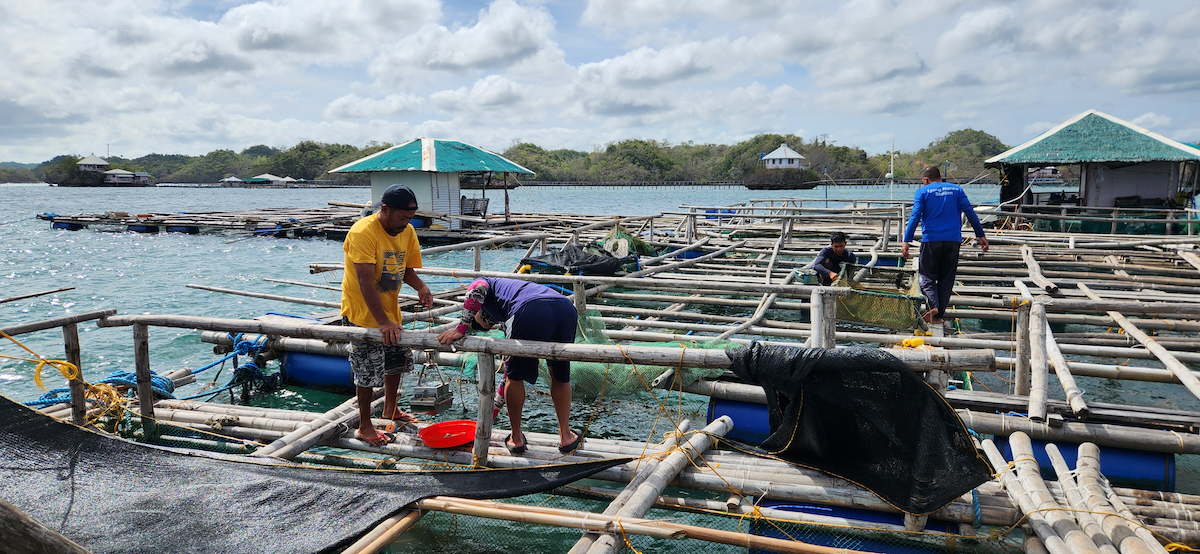
At the Igang Marine Station of SEAFDEC/AQD in Guimaras, experiments are underway to determine the optimum stocking density and feeding practices in both nursery and grow-out phases of sea-based cage systems. Growth performance, survival and socioeconomic analyses are also underway.
“Through these experiments, the project has already established key growth benchmarks for the spiny lobster, which are essential for achieving efficient production cycles,” Baylon says.
During the nursery phase, puerulus (larval)-stage lobsters with an average body weight of 0.35 grams are reared for six months to reach approximately 50 grams, an ideal size for grow-out following strict husbandry procedures.
In the grow-out phase, lobsters reared for 12 months in sea-based systems attain body weights ranging from 500 grams to 1 kilogram, with carapace lengths between 7.9 centimetres and 10.9 centimetres, depending on stocking density.
Ecological and economic impacts and future directions
The current spiny lobster research of SEAFDEC/AQD focuses on resource assessment and the refinement of nursery and grow-out techniques for spiny lobster. Nutritional studies have also recently commenced.
This project still relies on captured pueruli, the organisation stresses, as wild-sourced seed supply remains abundant in key regions of the Philippines, supporting its viability for aquaculture. Full-cycle aquaculture of spiny lobster is still a long shot due to their long and complex larval development, which poses significant challenges in cultivation such as maintaining water quality, providing adequate nutrition and scaling up production. Therefore, current research is directed toward establishing scientifically-backed standards for nursery and grow-out.
The centre says: “There is currently no practical approach to growing lobsters from seed. Recent attempts to commercially produce seed in Australia have not been sustainable.
“Naturally-occurring pueruli are very abundant in the Philippines, making their capture for ongrowing a potentially sustainable practice. However, natural mortality rates remain extremely high due to predation, cannibalism and energy depletion. The collection of these seeds for mariculture represents the most practical approach for the foreseeable future, provided that management and regulation are effectively implemented.
“Additionally, due to their dispersion by oceanic currents across the Indo-Pacific, the spiny lobster population across the area is genetically connected, diminishing the risk of differentiation.”
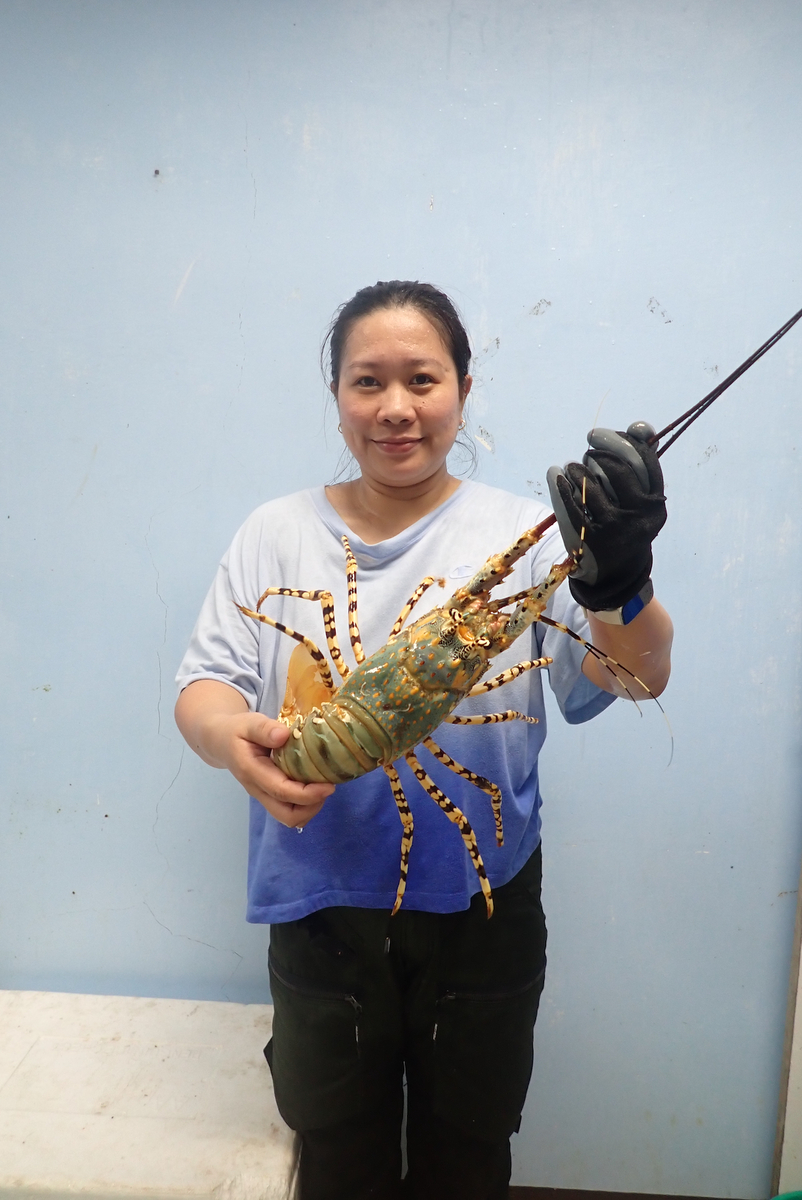
Baylon emphasises that the project aims to balance economic productivity with environmental sustainability and animal welfare.
“We conduct regular monitoring of water salinity, dissolved oxygen, pH, total suspended solids, nutrients, bacterial load, and sediment quality beneath cage facilities,” she explains. “Temperature and light levels are also continuously logged.”
Further, lobster health assessments are routinely performed to prevent or control diseases, enhance survival and health, and manage environmental impacts.
“Upon completion of this project, large-scale verification trials of the refined protocols will be done,” de la Peña says, while noting that controlling cannibalism and developing effective feed are also future research directions.
He adds: “Once standardised rearing protocols are developed and verified for the spiny lobster, we will facilitate technology transfer through training and the establishment of sustainable livelihoods in coastal communities.”
The project last year received an endorsement from internationally recognised aquaculture scientist Professor Clive Jones, Professorial Research Fellow from Australia’s James Cook University.
As the keynote speaker delivering the 31st Dean Domiciano K Villaluz Memorial Lecture on 9 July 2025, Professor Jones said farming Panulirus ornatus in the Philippines is not just possible, it’s “just an absolute no-brainer”.
He expressed strong confidence in the Philippines’ potential to follow the success of countries like Vietnam and Indonesia.
“Rock lobster, I’m absolutely convinced would be very successful,” he said.
Why not try these links to see what our Fish Farmer AI can tell you.
(Please note this is an experimental service)
You May Also Like





© 2026 Fish Farmer.