




Sea scallop study could help boost production
A Japanese technique for farming Atlantic sea scallops could be the way to take the sector forward, according to a group of scientists in the USA.


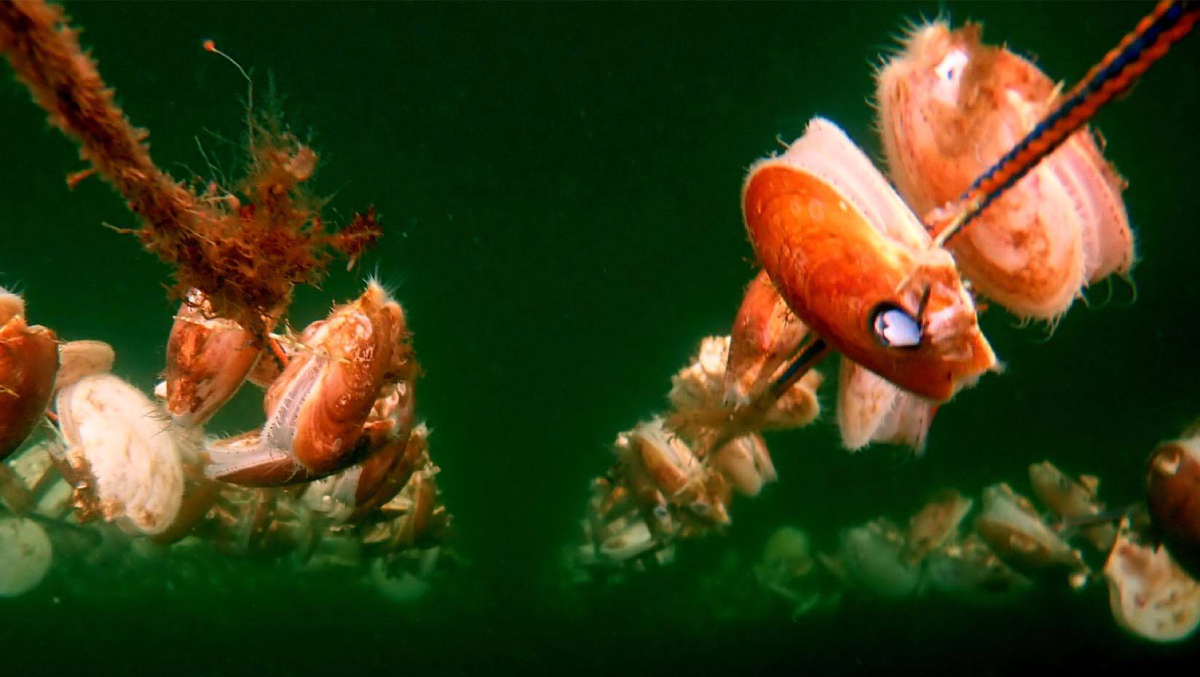
A new study by the University of Maine’s Aquaculture Research Institute and its Darling Marine Centre is helping to refine the best practices for growing sea scallops (Placopecten magellanicus), a species of increasing interest to the state’s aquaculture sector.
Atlantic sea scallops are a different species from the king and queen scallops commonly found in the north-east Atlantic.
Published in the academic journal Aquaculture , the research compares two scallop farming methods, ear-hanging and lantern net culture, over a complete grow-out cycle to determine which approach yields the best results for commercial growers.
The study, led by the university’s postdoctoral researcher Christopher Noren, provides new insights into how each method influences scallop size and adductor muscle weight, a key factor in market value.
The university says the Maine’s scallop aquaculture industry is still in its early stage of development , and growers are looking for efficient ways to scale up production.
Suspended culture is the most common approach, with farmers typically using multi-tiered lantern nets to grow scallops to a harvestable size.
But it points out that this method requires frequent maintenance to manage biofouling — an unwanted accumulation of microorganisms, plants and animals.
Ear-hanging, a technique adapted from Japanese scallop farming, offers a potential alternative. This method involves drilling a small hole in the scallop’s shell and suspending it on a line, allowing for better water flow and potentially reducing maintenance needs.
To evaluate the effectiveness of each method, researchers partnered with two commercial scallop farms in Maine’s Penobscot Bay and Frenchman Bay.
Over the past four years, they measured scallop growth and the weight of their adductor muscles, the primary product from scallops that are sold in US seafood markets.
The study found that scallops grown with ear-hanging culture had slightly larger shell heights, about 1-4% greater than those in lantern nets.
More significantly, ear-hanging scallops had up to 12% more adductor muscle weight and commanded a higher price per pound when larger.
This suggests a potential advantage for growers aiming to maximise profitability within that market.
“We wanted to provide growers with data they could actually use on the water,” said Christopher Noren, doctoral researcher at UMaine and lead author of the study.
“By comparing these two methods across a full grow-out cycle, we were able to identify where the biological advantages lie and how they might translate to better yields and more efficient operations.”
The results also highlight the role of temperature in scallop growth. Ear-hanging scallops grew more quickly in optimal conditions, which are between 50 and 59 degrees F. but were more affected by colder winter temperatures than those in lantern nets.
Co-author Damian Brady, Professor of Oceanography at Maine, said: “These findings give scallop farmers a clearer picture of how different methods impact growth and harvest timing. Understanding the trade-offs between techniques will help inform decisions about production strategies.”
Why not try these links to see what our Fish Farmer AI can tell you.
(Please note this is an experimental service)
You May Also Like






© 2026 Fish Farmer.