
ao link

Help for kelp

Kelp cultivation is playing an increasing role in food production – and it has recognised health benefits.

Linked InXFacebook
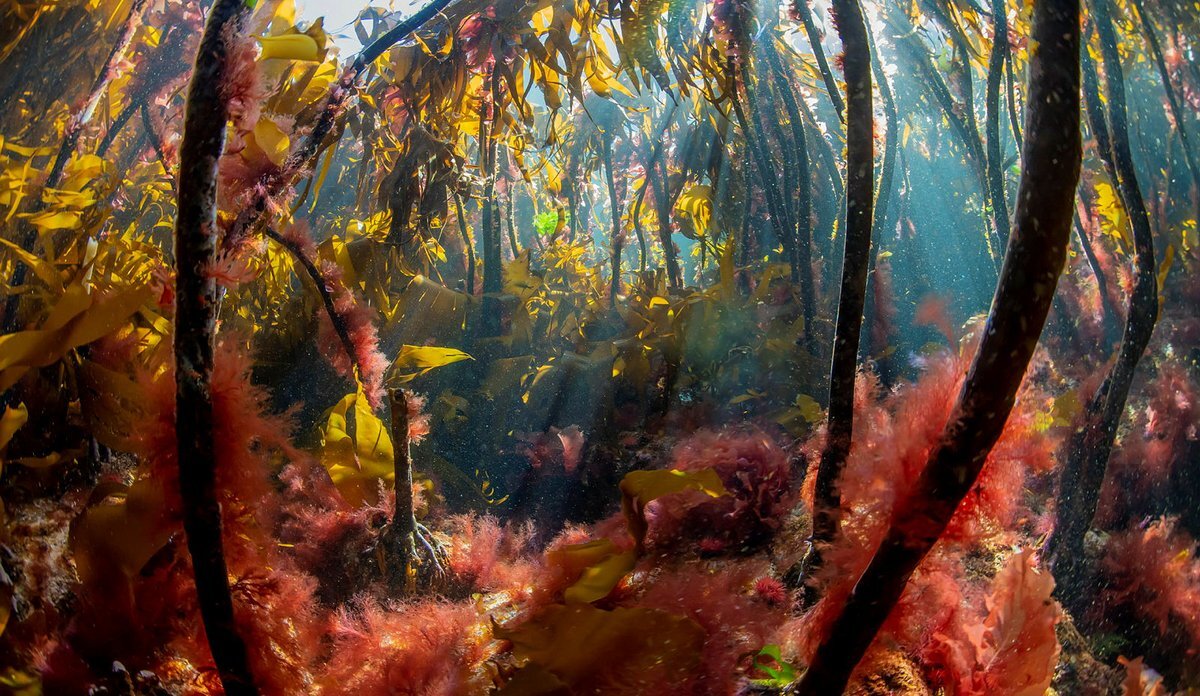
kelp forest
Kelp forest

But all is not well with the sector. Kelp forests around the world are in decline, posing not just a threat to marine ecosystems but affecting thousands of people who depend on it for a living.


Last year, the Storting, Norway’s parliament, ordered the government to draw up a plan and propose measures that would systematically restore the country’s coastal kelp forests in order to improve the marine environment.


The assignment, tabled resolution 789, was given to the Institute of Marine Research.


The work is being carried out in collaboration with the Directorate of Fisheries and the first detailed report should be published next year.


An expert group has been established with researchers from the Institute of Marine Research and invited researchers from the Norwegian Institute for Water Research (NIVA), Grid-Arendal, the Norwegian Institute for Nature Research (NINA), Nofima and the University of Western Australia, who are carrying out the main work of writing the report.


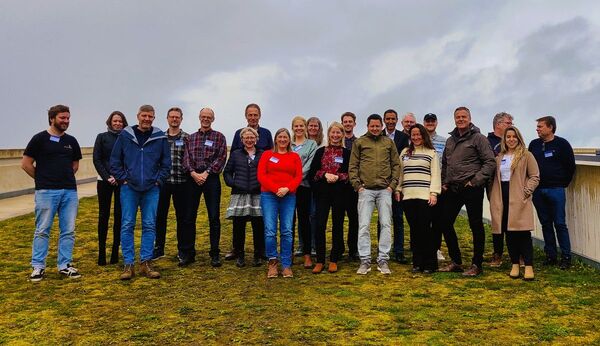
The Norwegian Blue Forest Network organised a conference on kelp forest restoration in northern Norway a year ago in collaboration with various groups.


Kelp is a perennial brown algae that forms dense forests along the coast in shallow hard-bottom areas where there is sufficient light. Of Norway’s five kelp species, three are forest-forming.


The problem is predominantly man-made, although not entirely so. In the north, it is sea urchins that are destroying the forests although in the south climate change is more to blame.


The Storting was told last year that some 5,000 square kilometres or 3,000 square miles of kelp forest in the north had been destroyed. The global picture is even bleaker, with over 60% of forests in decline.


Marine scientist Kjell Magnus Norderhaug says: “The kelp forest is a breeding ground and home to a rich diversity of species. Some of these are endangered or have important functions, others are later fished for either commercially or in recreational fishing.”


In addition, the kelp forest stores carbon, produces oxygen and removes excess nutrients from coastal waters and the marine environment.


In value terms it is worth almost seven billion krone a year or more than £500 million to Norway alone.

sea urchins web
Sea urchins

There are usually several reasons why kelp disappears, but they have one dominant common cause - human influence, says Prof Norderhaug. 


In 1839 Charles Darwin may have been among the first to write about the role of kelp forests in nature, but he was hardly among the first to understand how important they are to maintaining economic life along the coast.


The forests provide many goods and services and are often referred to as ecosystem services.


Norway’s kelp forests, and probably most of those in the northern hemisphere generally, provide a great number of benefits, not least acting as habitats for important and endangered species, a basis for fishing, and important natural and cultural experiences.


They probably don’t realise it, but most Norwegians live within 30 miles of a kelp forest. Large areas of growth have been lost, however, in both the south and north, with major consequences for the economy and for biodiversity.


Fortunately, more and more people are beginning to understand the value of marine forests and are demanding action to take care of them.


The Norwegian Parliament’s request through resolution 789 to create a plan for the restoration of kelp forests comes at a time of increasing focus on biodiversity.


The resolution is in line with Norway’s international commitments (such as the Paris Agreement and the Convention on Nature) and national plans (eg marine management plans and the Seabird Action Plan), and is a recognition of the urgency of reversing the loss of kelp forests.


Along with the human factor, the other main threats are climate change, run-off and overfishing.


Marine heat waves can exceed the physiological tolerance limits of kelp while run-off from land darkens coastal waters, and overfishing of species high up in the food chain can lead to problems.


An important premise for finding an answer to decline is to understand the cause. Changes in the distribution and condition of kelp in Norway are in some cases a consequence of actions at the national and local level, and in other cases part of changes on a European scale.


For example, climate change is causing kelp species to move northwards and decrease or disappear towards their southern limit.


But the European Commission estimates that for every euro invested in restoration, we get up to 38 euros back in benefits once the ecological and economic contribution of the kelp forests is taken into account. 


Experts say it is a big task to improve the situation. But if science can find a solution that can help us get the kelp forests back, it will pay off in the end. 

artificial kelp reef IMR
Artiificial kelp reef (photo:IMR)

Growing kelp on artificial platforms


Norwegian Institute of Marine Research scientists have been growing kelp on artificial reefs. The experiment is being carried outside Hammerfest and has proved to be a success.


A few months ago these artificial reefs were covered in kelp and lowered to a depth of up to 15 metres.


The scientists found that the kelp grew close to all the deployed reefs, and saw both cod and saithe fry in large numbers around the structures.


They will now follow the development over time, to see if the reefs can function as biological “hotspots” for both kelp and fish.


The work is being carried out in response to the Storting call for a plan to restore Norwegian kelp forests.

Linked InXFacebook
Add New Comment
You must be logged in to comment.
Skipper - Bakkafrost Scotland Limited
CairndowCairndow£55,603.77 per annum£55,603.77 per annum

Regional Feeding Network Engineer (Mainland) - Mowi Scotland
LochaberLochaberSalary On ApplicationSalary On Application

Quality Manager - Mowi Scotland
RosythRosythSalary On ApplicationSalary On Application

HGV Driver - Mowi Scotland
RosythRosythSalary On ApplicationSalary On Application

Hygiene Department Trainer (Night Shift Monday to Friday) - Mowi Scotland
RosythRosythSalary On ApplicationSalary On Application
Fish Farmer Magazine
IPSO
Facebook
X
Linked In

© 2026 Fish Farmer.