





From small ponds to big ambitions: could UK King Prawn farming make a splash?
Britons love their prawns, chomping their way through 50,000 tons a year, thus making it far and away the country’s favourite shellfish.
The problem is that most of them are imported cold water prawns from Norway or Iceland, and the King Prawn warm-water variety from Ecuador, India or Vietnam. Could we not produce more of our own? The University of Exeter certainly thinks so.


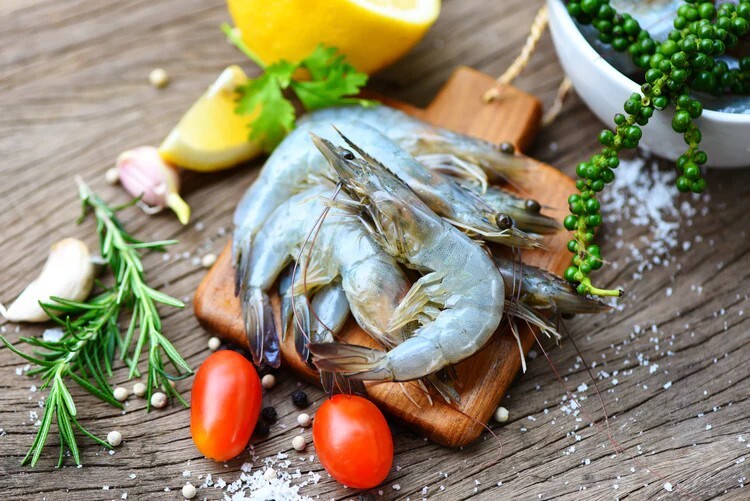

In a recent study of the sector, it says that by developing what remains of a relatively modest contribution, and expanding the number of UK prawn farms, this could help create a sustainable and thriving seafood revolution.
Farming king prawns indoors in tanks on UK farmland is the way forward, they believe.
The king prawn variety is one of the big five seafoods eaten in the UK, but they are produced in warm countries, meaning they are all imported, with some of this production taking place in environmentally sensitive parts of the world.
Researchers from the UK Sustainable King Prawn Project (UKSKPP) believe there is a “better way”, through cost-effective and environmentally-sound king prawn aquaculture production at home, creating employment opportunities along the way.
UKSKPP is a research and business impact project that is exploring the potential to create a new, environment-friendly food production sector in this country.
It focuses on indoor Recirculating Aquaculture Systems (RAS), powered by renewable energy technologies, with circular economic principles built in at every stage.
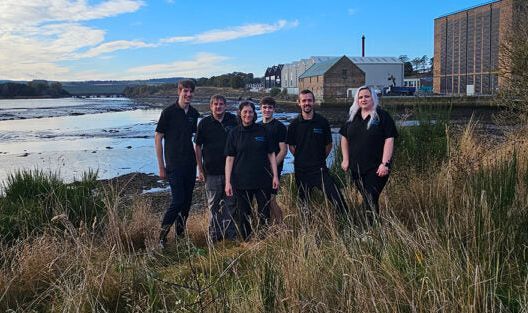
It also aims to position the UK as a global frontrunner in sustainable, land-based seafood production, providing innovative diversification opportunities for both UK agriculture and aquaculture. Professor Rod Wilson (Project Lead), Biosciences, University of Exeter, says: “In the UK, we already love eating king prawns as a healthy, high quality and tasty seafood.
“This project aims to transform practices on UK terrestrial farms through the production of home-grown king prawns, using indoor closed-system methods, harnessing renewable energy technologies and integrating circular-economy opportunities.”
The university says cultivating a ton of king prawns this way takes 50 times less land than raising the same quantity of pork or beef, and it boosts both the UK economy and food security at the same time.
“This impressive efficiency of land use for high-quality food production also opens opportunities for subsidies to support nature-positive solutions on other agricultural land (e.g. planting more woodland for CO2 removal, improving biodiversity and reducing flood risk),” it adds.
The university’s Professor Ian Bateman said: “Nature restoration is vital, but if we simply take land out of farming this reduces food production, shifting agricultural impacts on the environment elsewhere.
“King prawn production yields huge quantities of highly nutritious food [taking place] on small areas by providing a great example of how we can spare land for environmental improvements without reducing food output.”
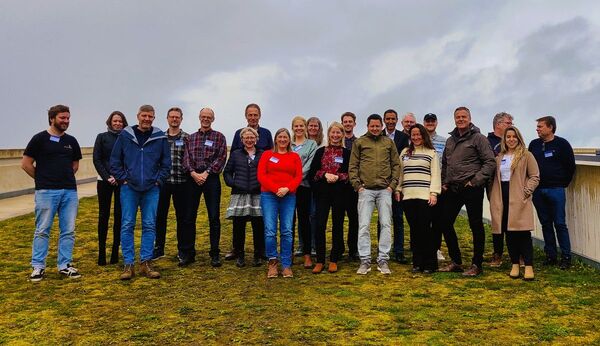
Researchers, business leaders and policymakers attended a showcase for the project at the university a couple of months ago.

Among them was Dr Andrew Whiston, CTO of Rastech and co-founder of Scotland-based Eden Valley Prawns – the UK’s only commercial land-based king prawn farm.
He said: “We’ve proved that king prawns can be raised and sold right here in the UK using only seawater, feed, and renewable energy.
“No antibiotics, no pesticides, no mangrove destruction, and minimal food miles. The UK can lead the way in on-shoring sustainable aquaculture; improving our food security with fresh, healthy seafood that we can all enjoy with a clear conscience.”
Professor Rod Wilson, who is leading the UK Sustainable King Prawn Project, said: “If we are going to feed our growing population over the coming decades – while simultaneously reducing our carbon emissions and reversing biodiversity loss – sustainable aquaculture has to be a major part of food production.
“Our project aims to support a new farming sector for home-grown king prawns, using indoor closed-system methods, harnessing renewable energy and integrating circular-economy thinking so nothing is wasted.”
The current retail value of king prawns in the UK is more than £300 million per year, and even replacing a small proportion of this would boost the UK economy and reduce environmental damage.
Growing king prawns in this way offers so many benefits, including to the UK economy – job creation in rural locations, and environmental (both in the UK and overseas) – but critically, prawns could just be the start.
Dr Robert Ellis: said “Demand for protein in the UK will increase as our population grows. Ensuring we get this extra protein from a sustainable source is imperative, to minimise negative environmental impacts.
“High-tech aquaculture operated in novel locations, such as terrestrial farms or urban settings, could offer the perfect solution, and place the UK at the forefront of a sustainable seafood revolution.”
To establish sustainable aquaculture at the forefront of the UK seafood sector, key barriers to the expansion of land-based production will need to be overcome.
These barriers include enhancing the public perception of aquaculture, creating a suitably skilled workforce, technological and legislative innovation, and UK hatcheries for key production species.
The UKSKPP research team says it is continuing to work with industry and government, and is undertaking research to address these barriers and unlock a new seafood future for the UK.
There is certainly huge enthusiasm among the Exeter University group. The problem facing such projects, however, is getting interest from both government and commercial companies.
Why not try these links to see what our Fish Farmer AI can tell you.
(Please note this is an experimental service)
You May Also Like





© 2026 Fish Farmer.