




The case has not been made
Halfway through January, notification was posted on social media that there was to be a public meeting hosted by Lochgoilhead Community Council to discuss “Coastal Communities, Marine Planning and Fish Farming”.


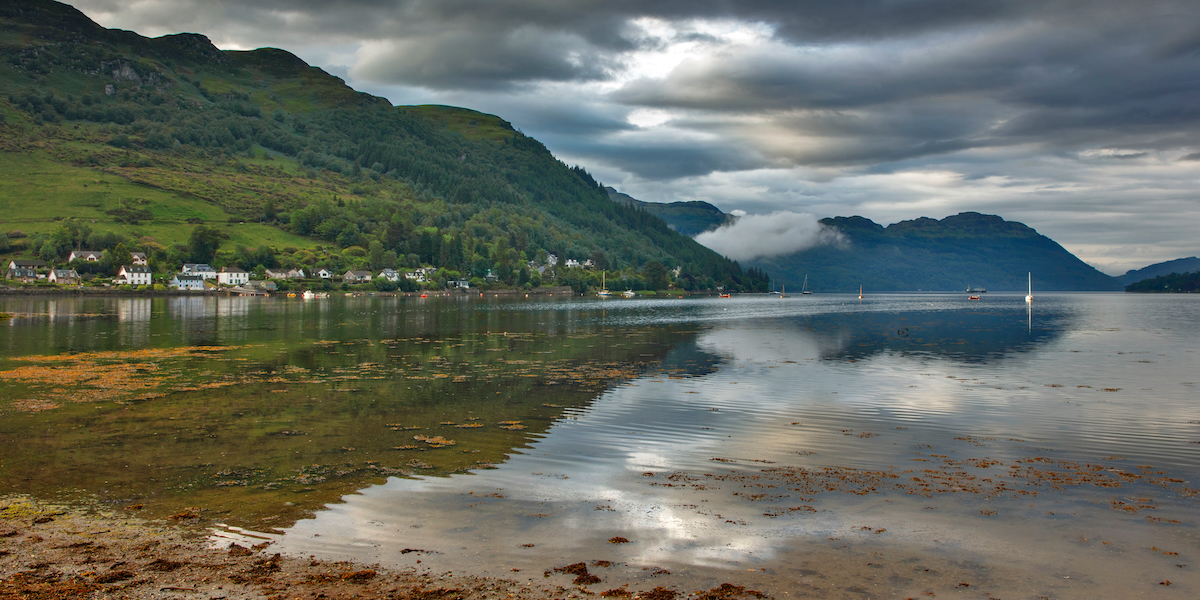
Although the meeting was to take place at the local village hall, the meeting could also be viewed through a popular cloud-based communication platform.
In addition to the host, a local community councillor, those attending the meeting could listen to Ariane Burgess MSP from the Green Party, anti-salmon farm campaigner Don Staniford, and the new head of WildFish Scotland, Nick Underdown.
Clearly, this was going to be a one-sided view of salmon farming, and so it was.
The meeting attracted fewer than 20 people in the room who could contribute to the discussion, and another 14 online, who could not. It seems that the room was divided, with probably a majority present because of concerns about the new farm in Loch Long, and the remainder calling for the closure of all salmon farms in Scotland.
The meeting was dominated by the views of the local councillor and Ariane Burgess MSP. Don and Nick played minor supporting roles.
It is only necessary to visit the Scottish Greens website to see that they are calling for a moratorium on all new salmon farms. They say that Scotland’s coastal waters are at risk, with mounting evidence of the damage caused by industrial salmon farming, including a quarter of fish dying before they reach your plate, pollution to our seas and threats to wild salmon.
They demand that the government pause new and expanding salmon farm development and encourage supporters to send a pre-written message to the Cabinet Secretary. Their goal is to have 1,500 supporters send the message.
I listened to Ms Burgess’s speech to the assembled and I struggled to hear any details of this “mounting evidence” against salmon farms. In fact, I have never really heard any evidence offered against salmon farming, except generalisations about pollution, so-called chemical usage and threats to wild fish.
The MSP only mentioned one “fact”, and that was that she had spoken to a member of the Coastal Communities Network who had suggested that the effluent from a new farm planned for a site on the Northern Isles would be equivalent to that from a town of (I think she said) 43,000 people.
The problem here is that whilst we call human waste “effluent”, it is not a realistic description of fish waste as they are not comparable.
What the Greens seem to ignore is that around 3.5 trillion fish poop in the world’s oceans and seas. That waste is an essential part of the nitrogen cycle that ensures the ongoing existence of the marine ecosystem. Without fish excrement, many parts of the marine environment would simply become devoid of natural life. However, promoting an image of human waste floating around Scottish seas is part of the campaign against salmon farming.
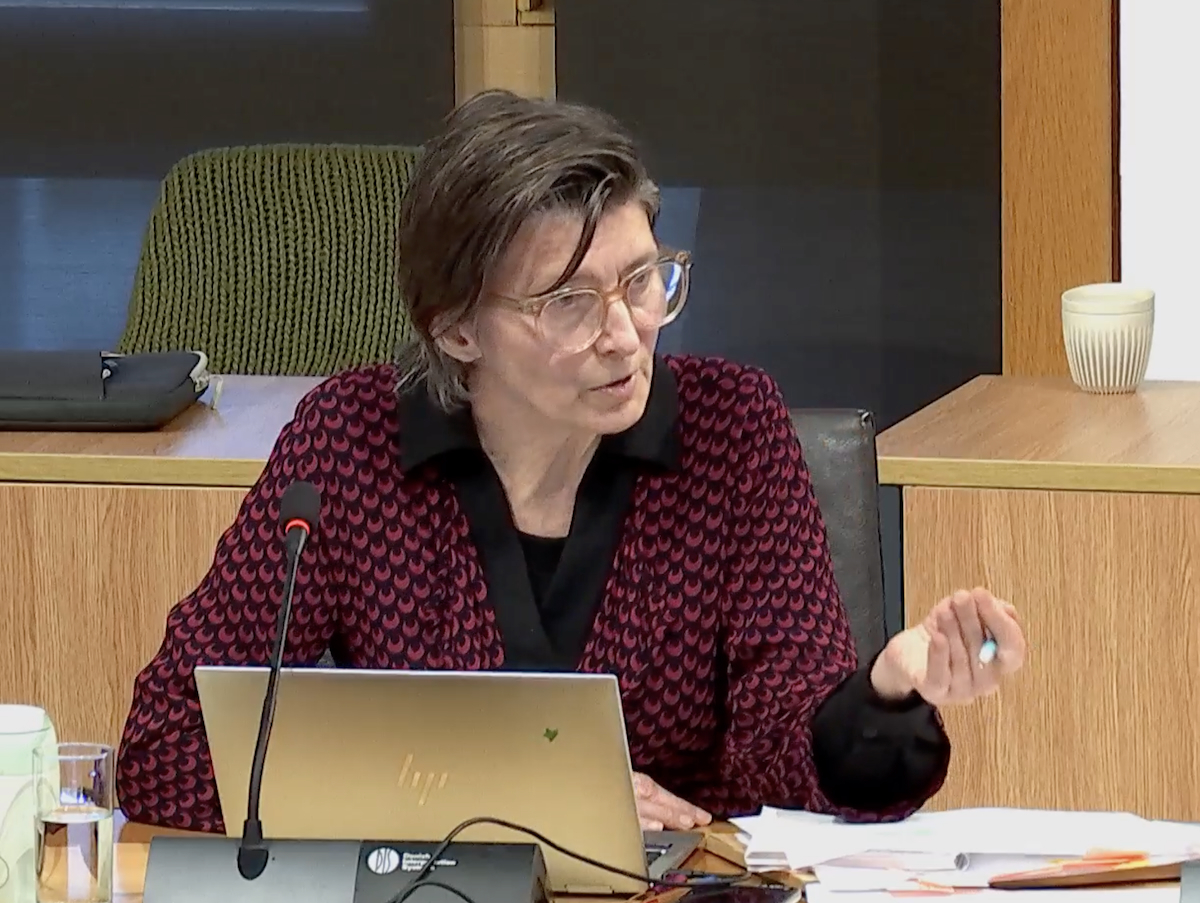
I remember two other points Ms Burgess made. The first is that she described the salmon farming sector as “bullying”. This because the salmon farming industry aren’t prepared to listen to her demands, at least unless a balanced discussion can be offered; something that Ms Burgess, like many of the industry’s other critics, seems unwilling to do.
It is the lack of a proper balanced debate that frustrates me, especially in terms of my interest in sea lice.
The Greens say that sea lice weaken and kill wild fish, threatening biodiversity.
They say this without a shred of hard evidence except the word of campaigners, such as WildFish which also refuses to listen to the evidence that shows otherwise.
My ears did prick up when Ms Burgess questioned whether anglers should continue to fish for salmon, despite sharing a platform with the anglers’ representatives from WildFish.
Perhaps I am a bit naive, but I would hope that members of the Scottish Parliament would be open to listening to the views of all, rather than small cliques who support a single cause.
Ms Burgess is a member of the Scottish Parliament’s Rural Affairs and Islands Committee, who (at the time of writing) are to yet again discuss salmon farming. Their aim is to pose the question of whether the industry has made progress in meeting the demands arising from their report last year.
Sadly, the committee, in its various incarnations, has never really heard a balanced view. This is not surprising, since the first inquiry was the result of a petition from WildFish, which claimed that salmon stocks in most of the West Coast rivers were in a poor conservation state without mentioning that Scottish Government scientists had taken an overly cautious approach to conservation status during this first analysis of the data.
Yet, even now, as wild salmon stocks collapse, there are West Coast rivers in the heart of the salmon farming area that are still classified as being of the highest conservation status, a point WildFish now fails to highlight and where, depending on local rules, anglers can still kill wild salmon and sea trout for sport.
The problem with the Rural Affairs Committee inquiries is that they have always separated the critics from the industry in the evidential sessions. What is really needed is a forum where critics and campaigners, and the industry are challenged together to provide hard evidence to support their cause.
Until the critics, such as the Scottish Greens, are forced to provide evidence rather than rely on sweeping, generalised statements, the fight about the right of the industry to operate will continue ad infinitum.
Sadly, it is the same in every country where salmon farms are located. There are loud voices demanding change; but without any supporting evidence, and with a total unwillingness to face those they accuse.
This article was written ahead of the conclusion of the Rural Affairs and Islands Committee’s review of progress in the year following its January 2025 report on the Scottish salmon industry.
Why not try these links to see what our Fish Farmer AI can tell you.
(Please note this is an experimental service)
You May Also Like







© 2026 Fish Farmer.