ao link

Opinion: What salmon farming needs from the next Holyrood term
As campaigning ramps up ahead of the Scottish Parliament election in May, it is a good moment to reflect on the past five years and on what Scotland’s salmon farmers need from the next administration.

Linked InXFacebookeCard
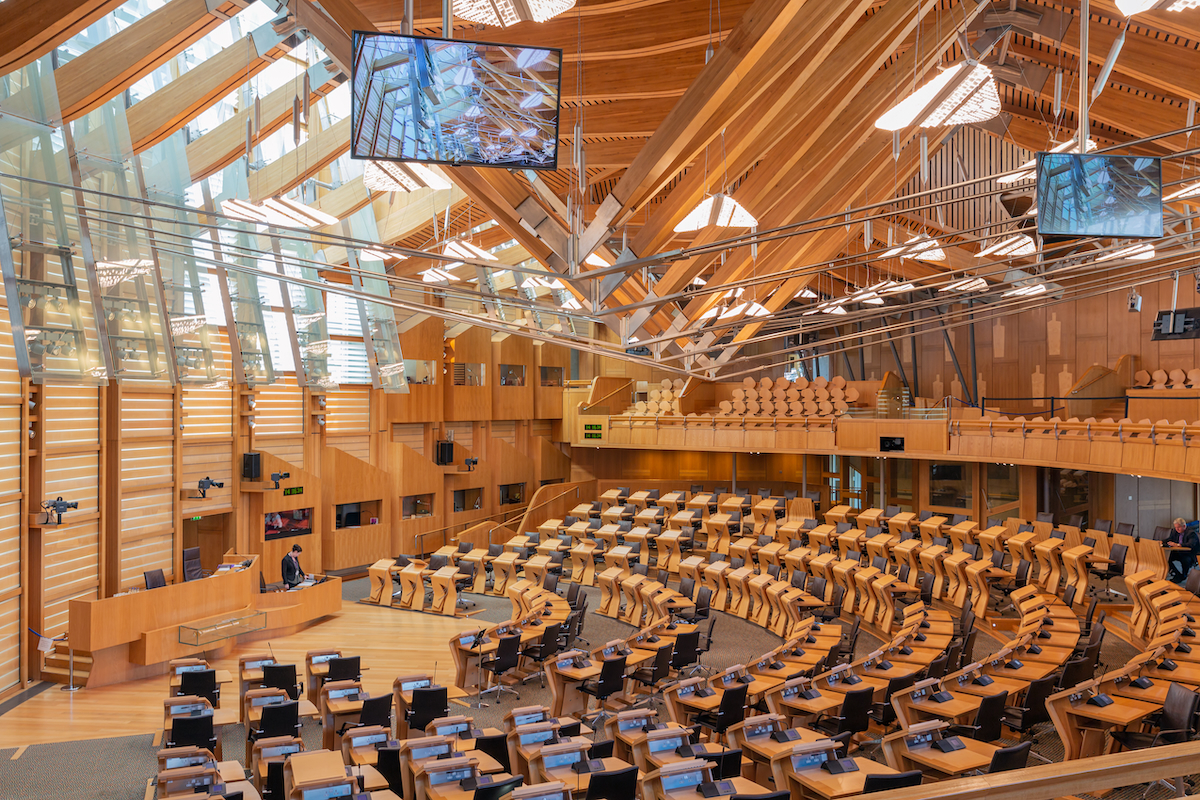
Scottish Parliament debating chamber AdobeStock 531103004 Editorial Use Only web
Debating chamber, Scottish Parliament

Since the 2021 Holyrood election, our dedicated workforce has helped drive the sector to new heights. Scottish salmon is the UK’s top food export and the favourite fish on tables across the country.


The sector generates £1 billion for the UK economy each year, spends £700 million with Scottish suppliers, directly employs more than 2,500 people in Scotland, and supports around 11,000 jobs in total.


More than £1 billion has been invested in technology, fish health and environmental management. As a result, survival rates have reached historic highs, with cumulative mortality falling by more than a third in 2024.


New trade deals are also opening up major opportunities for our premium product. The UK-India trade deal, once in force, will remove a hefty 33% tariff and could generate £130 million over the next decade.


During this Holyrood term, our sector also stood shoulder-to-shoulder with coastal communities to see off the disastrous threat of Highly Protected Marine Areas, which would have banned human activity from vast swathes of our coastline.


For all that progress, however, the defining feature of the past parliamentary term has too often been a political climate that is insufficiently focused on growth and too reluctant to celebrate Scottish success.


Time and again, the minority views of a small group of well-funded, urban-based eco-activists who want to shut down salmon farming have been given disproportionate weight.


There has also been a clear failure to act on the independent Griggs report, which called for a fundamental overhaul of aquaculture regulation.


As we look ahead to the election, and to the formation of a new parliament and government, the Scottish salmon sector is clear about what is required to secure the future of our rural economy.


First, we need a balanced, evidence-based approach to our sector.


Scotland’s politicians must lift their eyes to the world around them and recognise the value we bring, rather than continuing to view our sector with suspicion.


The constant pandering to fringe campaign groups, who masquerade as conservationists but whose only aim is to shut down salmon farming, must end.


Decisions should be rooted in science and fact, not perception, ideology or the demands of deep-pocketed activists who do not even live in the communities they seek to influence.


After all, it is our sector that is actively funding practical conservation efforts to help save Scotland’s endangered wild salmon, while many of our critics offer nothing but noise.

fish farm Orkney AdobeStock 1644668248 web
Fish farm, Orkney

Reform is urgently needed

Secondly, the next Scottish Government must finally deliver the regulatory reform promised by the Griggs review.


If you wanted to design a system that discouraged investment, confused communities and exhausted regulators, it would probably look something like Scotland’s current approach to fish farm consenting.


More than four years have passed since Professor Russel Griggs published his independent review, which rightly concluded that the fragmented, slow and confusing system was unfit for purpose.


Ministers accepted his recommendations in full, yet the systemic change required has still not materialised.


Instead of meaningful reform, we have seen attempts simply to rearrange parts of the system, such as shifting responsibility for environmental discharges to the Scottish Environment Protection Agency (SEPA). That risks locking in complexity rather than reducing it.


A new parliament must commit to a genuine one-stop-shop consenting process that aligns assessment, licensing and enforcement within a single framework.


Streamlining should not be confused with deregulation. Clearer systems deliver stronger environmental protection and allow businesses to focus on performance rather than endless bureaucracy.


Finally, the next government must put food security and export growth at the heart of its economic strategy.


Global shocks, unpredictable trade policies and extreme weather have reminded every nation that a reliable food supply matters deeply.


Scottish salmon provides a healthy, high-value source of protein, and that matters even more at a time of global instability and supply chain disruption.


It is easy to think of salmon farming as something that happens at sea, out of sight of Scotland’s urban centres. In reality, it is one of the most interconnected sectors in the country.


A pen stocked on a west coast island depends on technology built in the central belt, feed developed with scientists in Aberdeenshire, and hauliers who know the timings of every tide and ferry.


We are a lifeline for rural communities, paying an average salary of £44,500, around 16 per cent above Scotland’s typical salary, in places where well-paid jobs are scarce and where the threat of depopulation has hung over communities for decades.


We have the ambition and the ability to grow the blue economy, creating the wealth that helps fund Scotland’s public services. Scotland’s next generation of politicians should be backing us to do exactly that.


Warm words from ministers are always welcome, but it is time for words to be matched by action.


The upcoming Scottish Parliament election is an opportunity to do just that.


We urge politicians of all parties to champion the people who go out in all weathers to rear the best salmon in the world.


Give us a parliament that backs rural jobs, cuts red tape and celebrates the great Scottish success story that is our salmon sector.


Tavish Scott is Chief Executive of Salmon Scotland. 

Linked InXFacebookeCard
Add New Comment
You must be logged in to comment.
Environmental Field Scientist (Fort William) - Mowi Scotland
Fort William, LochaberFort William, LochaberSalary On ApplicationSalary On Application

Feed Operations Technician (ROC - Fort William) - Mowi Scotland
Fort William, LochaberFort William, Lochaber£30,387 to £34,032 per annum£30,387 to £34,032 per annum

Farm Technician (Kingairloch) - Mowi Scotland
Camasnacroise, LochaberCamasnacroise, Lochaber£28,258 to £31,648 per annum£28,258 to £31,648 per annum

Biologist - Bakkafrost Scotland Limited
PA31 8TAPA31 8TA£38,000 to £42,000 per annum£38,000 to £42,000 per annum

Environmental Project Manager - Bakkafrost Scotland Limited
CairndowCairndow£50,000 to £58,000 per annum£50,000 to £58,000 per annum
Fish Farmer Magazine
IPSO
Facebook
X
Linked In

© 2026 Fish Farmer.