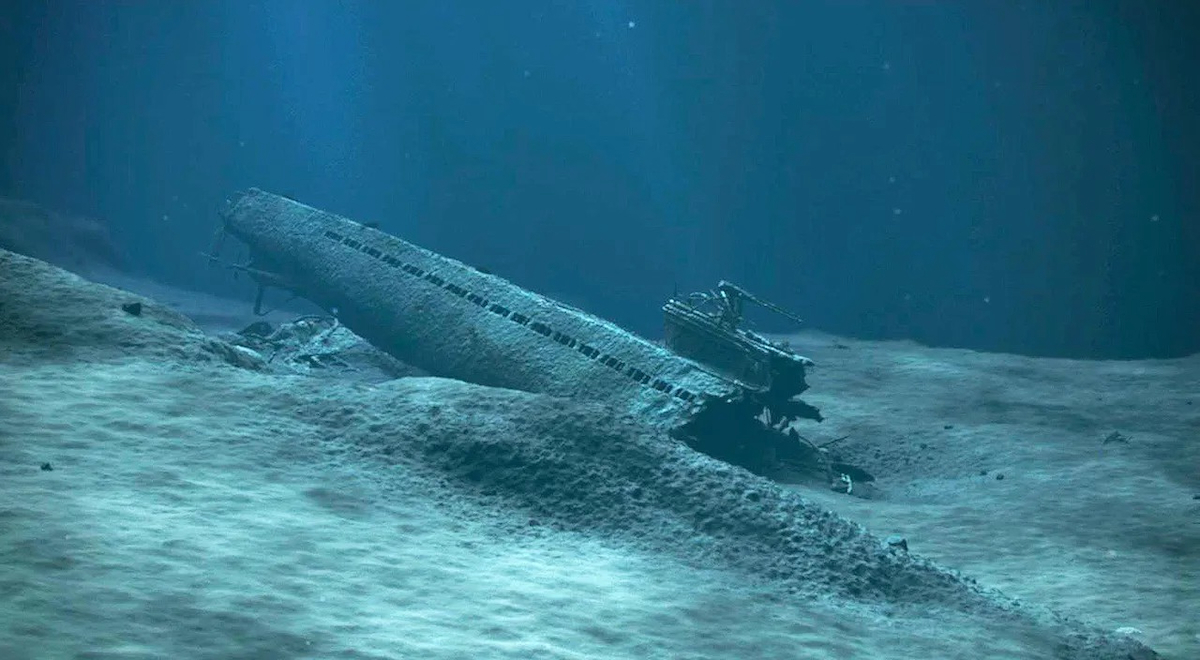
A sunken German submarine from World War Two is posing a major environmental threat to salmon farms and wild fish stocks off the coast of Norway.

Packed with over 60 tons of mercury, the U-864 was sunk towards the end of the war off the coast of Fedje by the Royal Navy’s HMS Venturer. It is thought to be the only time one submarine has been sunk by another while under water. All 73 crew members perished.
Its cargo of mercury, a vital component for high explosives which the submarine was carrying to Germany’s ally, Japan, has lain relatively undisturbed for more than 80 years. Now, however, it is seeping from the wrecked boat and there are calls to act.
While local fish and crabs have shown signs of contamination, the direct impact on regional aquaculture operations remains a subject of intense monitoring by protection organisations.
The wreck is situated 150 metres down in an important fish-farming region, and there are serious concerns that spreading mercury could impact the reputation and safety of the Norwegian seafood industry.
In the past, the Norwegian Food Safety Authority has found fish farm samples around the U-864 site to be within allowable food safety limits, though they advise continuous caution.
Some of the mercury has also been recovered but quite a lot remains on the seabed. Now an underwater drone has just gone down to the wreck and found that significant amounts of mercury are leaking out.
Hans Petter Mortensholm, environment preparedness director at the Norwegian Coast Administration, said the condition is worse than he expected, despite significant amounts of mercury already recovered.
They were able to retrieve 22 containers, with a total of around 500 kilograms of mercury in them. But of these, 80% were already damaged.
There was both positive and negative news. “The positive is that we are able to absorb the mercury and have gained significantly more knowledge about the condition. The negative is that the condition is bad,” he added.
He says the latest probe provided both positive and negative news.
“The positive is that we are able to absorb the mercury and have gained significantly more knowledge about the condition. The negative is that the condition is bad”, he added.
The Norwegian Coastal Administration expects that the poor condition is the same on all containers and boxes, but that this will not be clear until everything has been examined.
Some of the mercury lies in ponds on the sea floor, some of which has been sucked up.
An action group called "Raise the submarine off Fedje" is also adding to demands to raise the wreck, although there is an alternative view that encasing the submarine in sand would be the safer option.

Why not try these links to see what our Fish Farmer AI can tell you.
(Please note this is an experimental service)