
ao link

Researchers find way to trace marine ingredients in feed
A new study has identified a way to detect whether fish have been raised on a plant-based regime, or whether fishmeal has been part of their diet.

Linked InXFacebook
bookmark_borderSave to Library
fish farm feed AdobeStock 509517566 web
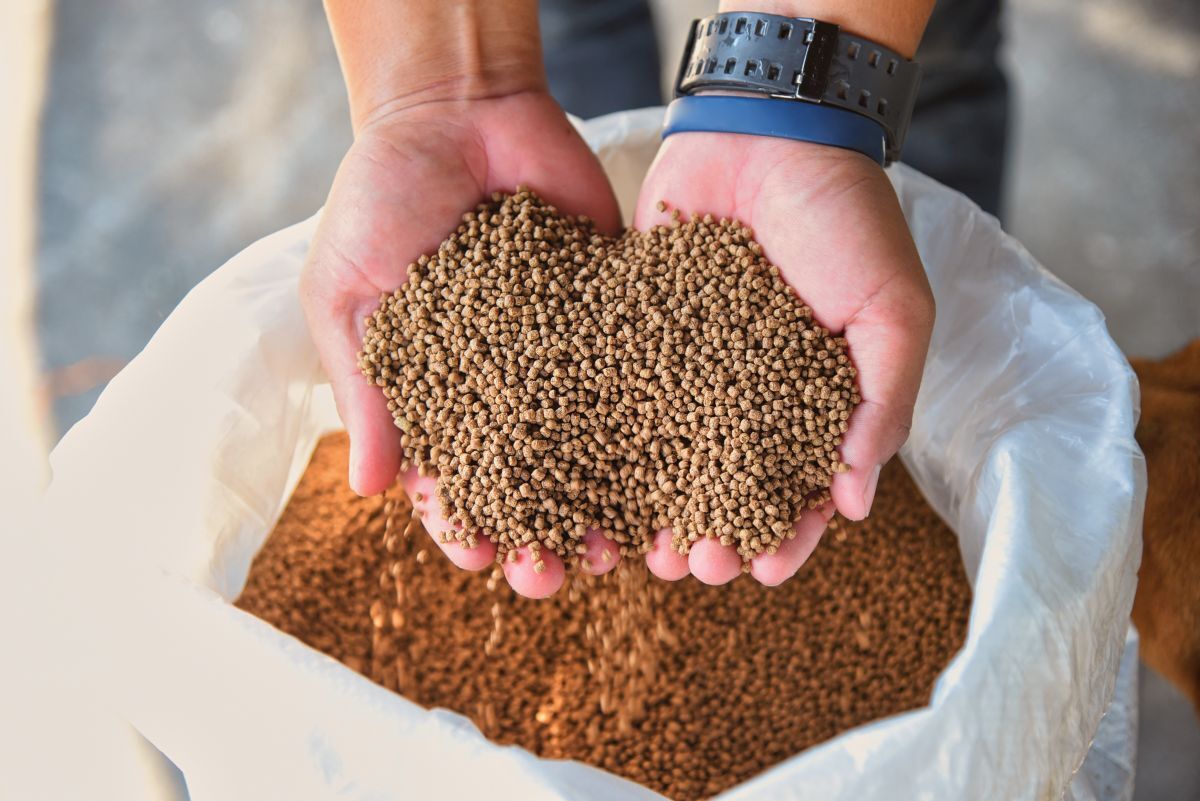
Aquafeed: how can you tell what's in it?

A project led by not-for-profit organisation F3 - Future of Fish Feed has developed a tool to detect and trace dietary fishmeal in farm-raised fish, providing the aquaculture industry with a new method to verify feed sources.


F3 aims to reduce or even eliminate wild-caught marine ingredients from the diet of farmed fish – even carnivorous species like salmon.


The study analysed carbon and nitrogen isotope data from fish muscle samples collected during feeding trials involving seven aquaculture species, along with feed samples from two trials, to determine whether isotopic signatures could detect and trace the use of fishmeal in aquaculture feeds. 


The research team found that nitrogen isotope δ15N shows strong potential as a marker for identifying the presence or absence of fishmeal in aquaculture feeds. These findings, published in the journal Fishes, suggest that δ15N could serve as a reliable indicator of fishmeal use in aquaculture feeds, regardless of other dietary components. 


“As next-generation feed ingredients scale and aquaculture producers adopt formulation strategies that reduce reliance on marine ingredients, isotopic analysis could help validate sustainability claims, detect potential fraud, and strengthen consumer confidence,” said the study’s senior author Michael Tlusty, professor of sustainability & food solutions at the University of Massachusetts Boston and judge of the F3 Challenge.


Across nearly all species examined, the researchers found that fish fed diets containing fishmeal exhibited higher δ15N values, while fish raised on plant-based feeds showed the lowest values and those fed mixed plant- and animal-based diets fell in between. Importantly, other feed ingredients—including alternative lipid sources such as fish oil and algal oil, as well as animal proteins like poultry byproduct meal—did not appear to influence the δ15N signature. 


The results showed isotopic markers are well suited to identify large differences in the percentage of fishmeal included in the diet. More work will be required to determine the limit of detection of fish meal inclusion. 

Salmon in cage Norway Vet Inst
Salmon: can they be weaned off marine ingredients?

The Fish Farm Challenge

The discovery will help to validate the results of F3’s Fish Farm Challenge, a competition to see whether farms can successfully raise carnivorous species without using marine ingredients.


F3 said: “As global demand for farm-raised species such as salmon and trout continues to grow, fishmeal is becoming an increasingly limited resource. This growing scarcity exposes vulnerabilities in aquaculture supply chains and underscore the need for alternative feed ingredients that can reduce pressure on forage fisheries that are critical to healthy marine ecosystems and commercial fisheries. 


“Due to its effects on food security and ecosystems, regulators are encouraging reduced reliance on fishmeal and fish oil in aquafeeds, while consumers are demanding more sustainably sourced seafood. Together, these trends are driving aquaculture producers to accelerate the adoption of alternative feed ingredients that reduce dependence on marine resources like wild-caught forage fish.”


The research also highlights, F3 said, the broader potential of isotopic ratio analysis as a tool for verifying food authenticity and quality at a time when concerns about product integrity and supply chain transparency are growing worldwide.


Because naturally occurring isotope ratios act as a unique "fingerprint" of the ingredients used in production, isotopic analysis can help verify feed claims, improve seafood traceability, and confirm the presence of fishmeal in aquaculture feeds.


The approach may also help trace the origin of fishmeal ingredients, providing sustainability reporting programs and seafood producers with a reliable, science-based method to document ingredient sourcing, evaluate sustainability claims, and support more resilient and responsible seafood supply chains. 


“Isotopic Analysis as a Potential Tool to Verify Feed Protein Sources for Aquacultured Species”by Kelly Brandeau Campbell, Michael Tlusty and Frederic T. Barrows (Fishes, June 2026)

Why not try these links to see what our Fish Farmer AI can tell you.
(Please note this is an experimental service) 

What technologies are used to trace marine ingredients in fish feed?Which feed manufacturers already use traceability tools for marine ingredients?How do feed mills detect fishmeal and fish oil in feeds?Which supply-chain actors handle verification of marine feed ingredients?Which alternative protein sources reduce reliance on marine feed ingredients?
Linked InXFacebook
bookmark_borderSave to Library
Add New Comment
You must be logged in to comment.
Deckhand (Mowi Supporter) - Mowi Scotland
Isle of BenbeculaIsle of Benbecula£32,328 to £36,205 per annum£32,328 to £36,205 per annum

Team Leader (Hygiene Night Shift) - Mowi Scotland
RosythRosythSalary On ApplicationSalary On Application

HGV Driver - Mowi Scotland
RosythRosythSalary On ApplicationSalary On Application

Marine Operative - Bakkafrost Scotland Limited
IV51 9DDIV51 9DD£35,677.16 per annum£35,677.16 per annum

Electrical Engineer with PLC Programming - Bakkafrost Scotland Limited
IV54 8XHIV54 8XH£60,030 per annum£60,030 per annum
Fish Farmer Magazine
IPSO
Facebook
X
Linked In

© 2026 Fish Farmer.