





Eight-year study finds no link between farmed salmon numbers and sea lice in the wild
The controversial decision to close salmon farms in British Columbia’s Discovery Islands has done nothing to reduce sea lice levels for wild fish, according to a scientific study based on eight years’ data gathered in the region.


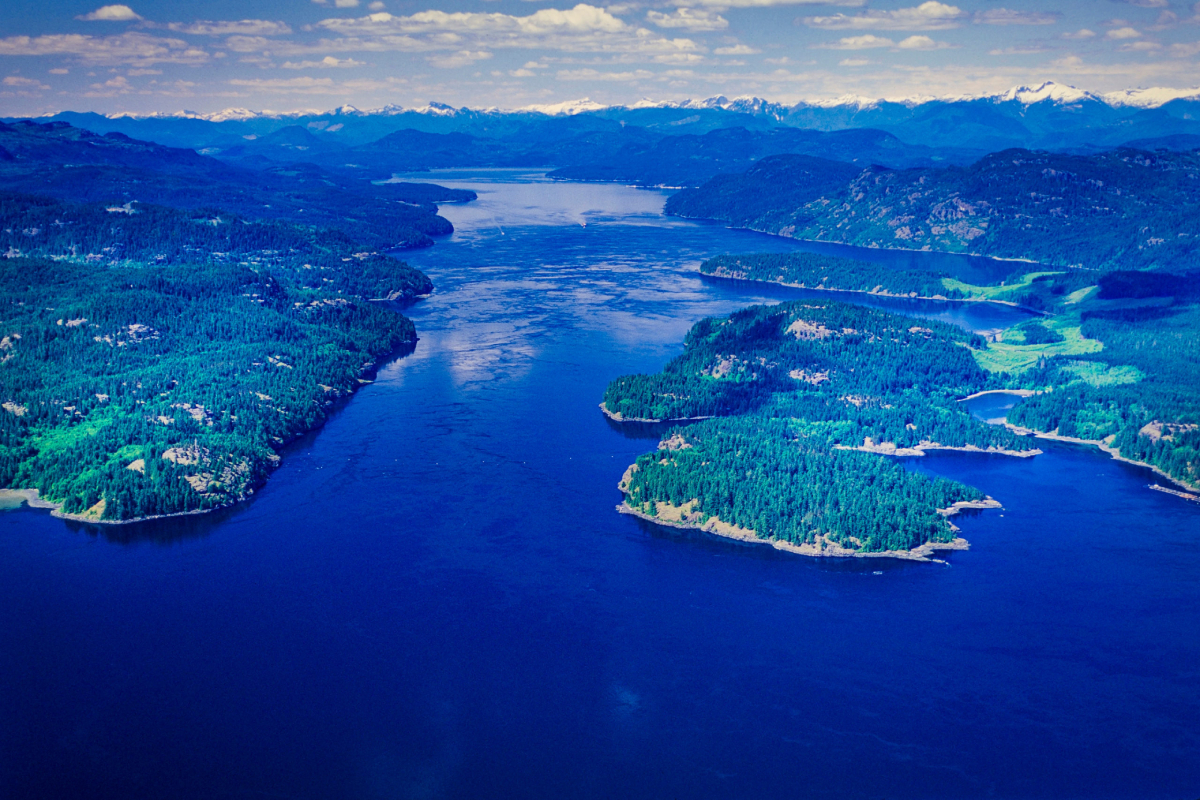
The research, published in the Journal of Fish Diseases, analysed the prevalence and intensity of sea lice recorded on wild juvenile chum and pink salmon between 2017 and 2024 in the Discovery Islands region, as defined by Fisheries and Oceans Canada (DFO).
The study found that the steep fall in the biomass of farmed salmon from 2020, which reached zero in 2022, was followed by a fall in the percentage of infected chum and pink salmon in 2023, but sea lice numbers rose again sharply the following year, when there were no farmed salmon in the area.
The average intensity of sea lice (number of lice per infested fish) on wild juvenile chum and pink salmon dipped in 2021 as the farmed biomass declined, but then remained steady for two years – with no salmon farms operating – and rose again in 2024 to a level higher than had been seen in most of the years when there were farms.
The lice counts were based on nearly 6,000 juvenile wild salmon caught between 2017 and 2024.
Lance Stewardson, RPBio., CPESC, Director of Mainstream Biological Consulting Inc, and one of the paper’s authors, said: “Sea lice levels on wild salmon in 2024 were among the highest recorded during the last eight-year period in the Discovery Islands, despite the closure of salmon farms. A similar pattern with a low sea lice infestation in 2023 and higher levels of sea lice infestation in 2024 was also observed in the Broughton Archipelago and other areas with and without salmon farms.
“These findings demonstrate that the evidence does not support the narrative of ‘no salmon farms, means no sea lice.’”
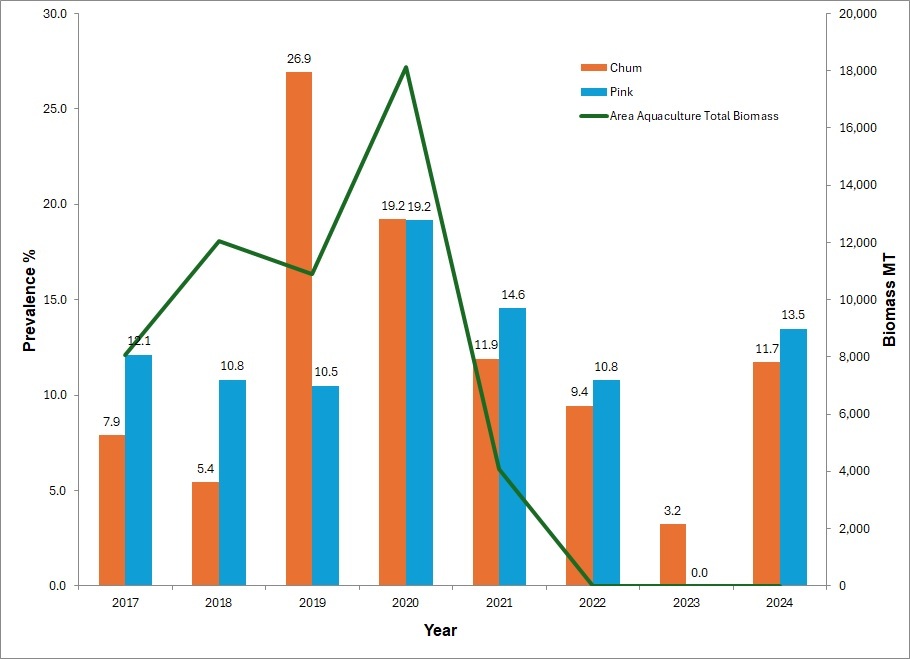
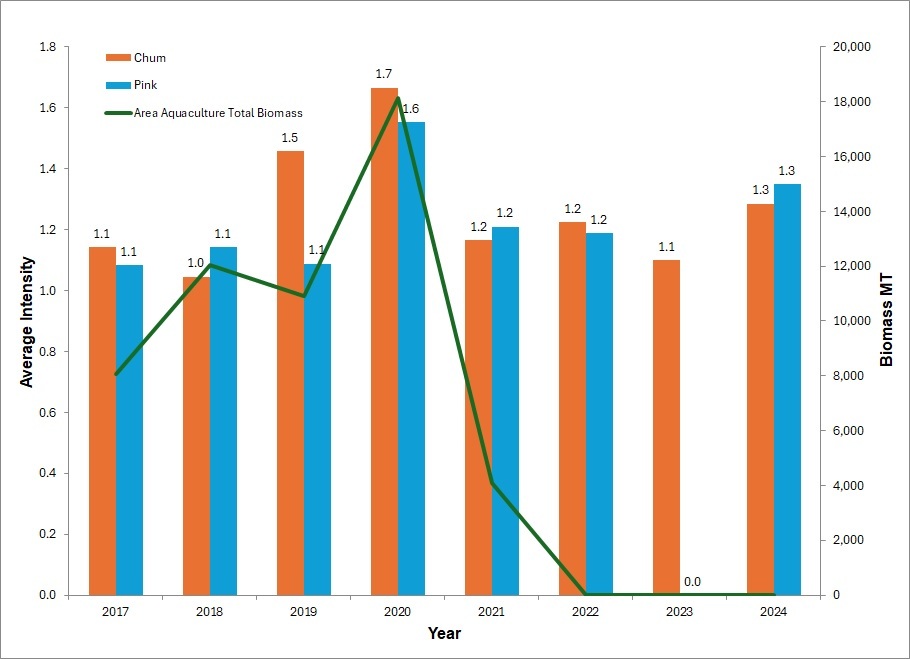
The removal of salmon farms in the Discovery Islands began in 2021, and there have been no active farms since 2022. Data collected with the involvement of local First Nation stewardship staff reveals that 2024 sampling recorded some of the highest sea lice levels seen on wild juvenile salmon during the last eight years. Additionally, the eight years of monitoring show that sea lice levels have generally remained low, with natural fluctuations from year to year (see figures 1 and 2 below).
“This long-term monitoring shows that significant natural sources of sea lice exist. Our findings disprove the claim that salmon farms are the sole driver of sea lice on wild Pacific salmon in the near-shore environment and underscore the need for continued monitoring,” said Stewardson.
The BC Salmon Farmers Association said results from this analysis align with 2024 data collected from the Broughton Archipelago and an extensive literature review released last year, which also identified overestimations of the effects of sea lice from salmon farms on wild Atlantic salmon.
Further supporting these recent findings, the Canadian Science Advisory Secretariat’s (CSAS) 2022 Science Response concluded there was no statistical correlation between sea lice counts on wild and farm-raised salmon populations.
Lance Stewardson (a Director of Mainstream Biological Consulting) has an ongoing annual contract with the aquaculture producers in BC (Cermaq Canada, Grieg Seafood BC and MOWI Canada West) to sample wild juvenile salmon for sea lice infestation assessment to fulfil the conditions of the licence or as part of environmental certification programmes. The other authors declared no conflicts of interest and the study itself received no specific funding.
Trends in Abundance of Sea Lice Lepeophtheirus salmonis and Caligus clemensi on Juvenile Wild Pacific Salmon Unchanged Following Cessation of Salmon Aquaculture in Coastal British Columbia (Simon R. M. Jones, Crawford W. Revie, Lance Stewardson) Journal of Fish Diseases
Why not try these links to see what our Fish Farmer AI can tell you.
(Please note this is an experimental service)
You May Also Like





© 2026 Fish Farmer.