




Atlantic Sapphire warns of default risk – unless it can secure more cash
The Florida-based salmon farmer Atlantic Sapphire says it needs up to 30 million US dollars to complete the first phase of its operation. It has delayed publication of its annual accounts for 2024 by a week, to give more time to secure that capital and avoid the risk that it will fail to meet its financial obligations.


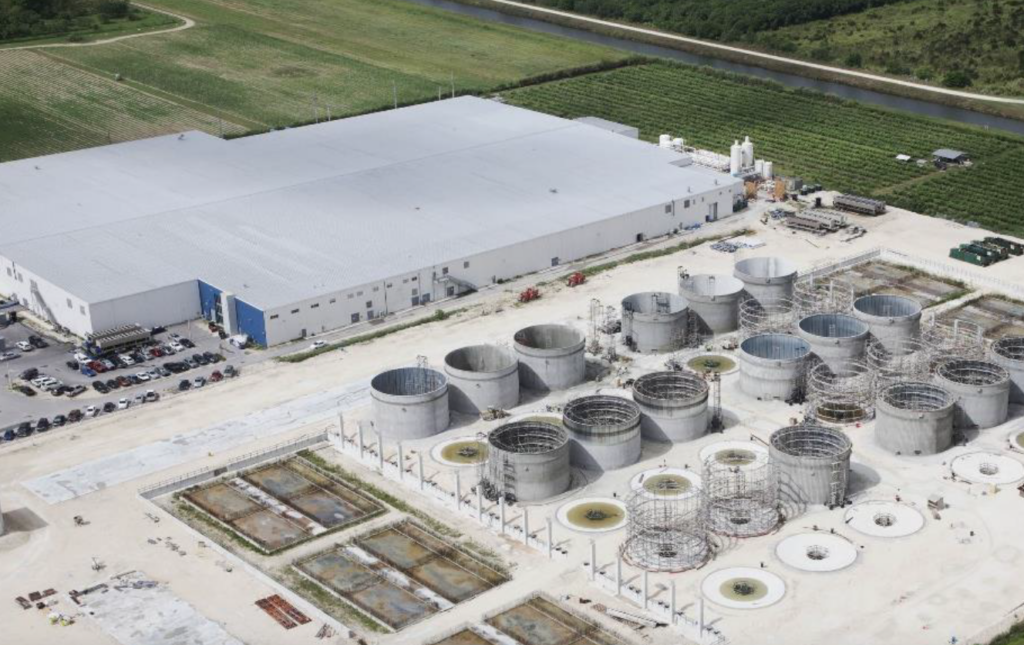
In a blunt message on the Oslo Stock Exchange today, Atlantic Sapphire warns that if agreement is not reached within the next week, the company will be at risk of default.
It had previously said, on 6 February, that it was evaluating options to secure necessary liquidity.
Its latest statement says: “Since then, Atlantic Sapphire has continued to refine its budgets and concluded that, based on an elevated level of market uncertainty and required buffer, the company needs USD 25-30 million (£18.8m to £22m) in order to have sufficient headroom to be able to achieve EBITDA break-even on its Phase 1 operations.”
Atlantic Sapphire is currently in discussions with its largest shareholders and key stakeholders to secure such financing.
Although it expects to reach an agreement with the relevant parties, no conclusion has been reached to date.
The statement continues: “Based on the current state of negotiations, the board of directors of Atlantic Sapphire believe it is reasonable, with significant revisions to the company’s capital structure, to be able to attract and secure new capital to the business.
“If the company has not been able to resolve its near-term liquidity requirement by March 31, 2026 (next Tuesday), it will be in technical default of certain of its agreements with lenders.
“In connection with the financial calendar amendment published today, the company has extended its current closed period to facilitate that certain key shareholders may enter into an agreement regarding the financing of the company.
“As a result, the publication date for the annual financial accounts for the financial year ending 31 December 2025 has been amended from 23 April 2026 to 30 April 2026.”
The company, which has been developing its pioneering Bluehouse® (land-raised) salmon farming over several years, said at the beginning of February that biological performance had been stable. But it added that certain cost reduction and efficiency initiatives had taken longer than initially assumed to fully materialise, and the company’s financial development remained sensitive to execution timing and market conditions.
Why not try these links to see what our Fish Farmer AI can tell you.
(Please note this is an experimental service)
You May Also Like






© 2026 Fish Farmer.