




Jellyfish make unwelcome return
Large numbers of jellyfish have been making an unwelcome return along the Skagerrak coast area of Norway.


Jellyfish
The arrival of these visitors over the past few weeks poses a threat to the salmon farms in the region, but so far there are no reports of fish farms in the area coming under severe attack.
A species called String jellyfish caused serious problems at several Norwegian fish farms two years ago, costing companies several million krone.
The Norwegian Marine Institute said these latest jellyfish “had coloured the coast red and blue”, adding that “some downwind sailors” had once again found their way to the coast.
Both the red stinger jellyfish (Cyanea capillata) and the blue stinger jellyfish (Cyanea lamarckii) are common visitors along the Norwegian coast.
“The jellyfish summer has been very hectic,” says Norwegian Marine Institute scientist Tone Falkenhaug.
She said July was marked by mass occurrences of jellyfish along the entire Skagerrak coast, and there were unusually many blue jellyfish in particular.
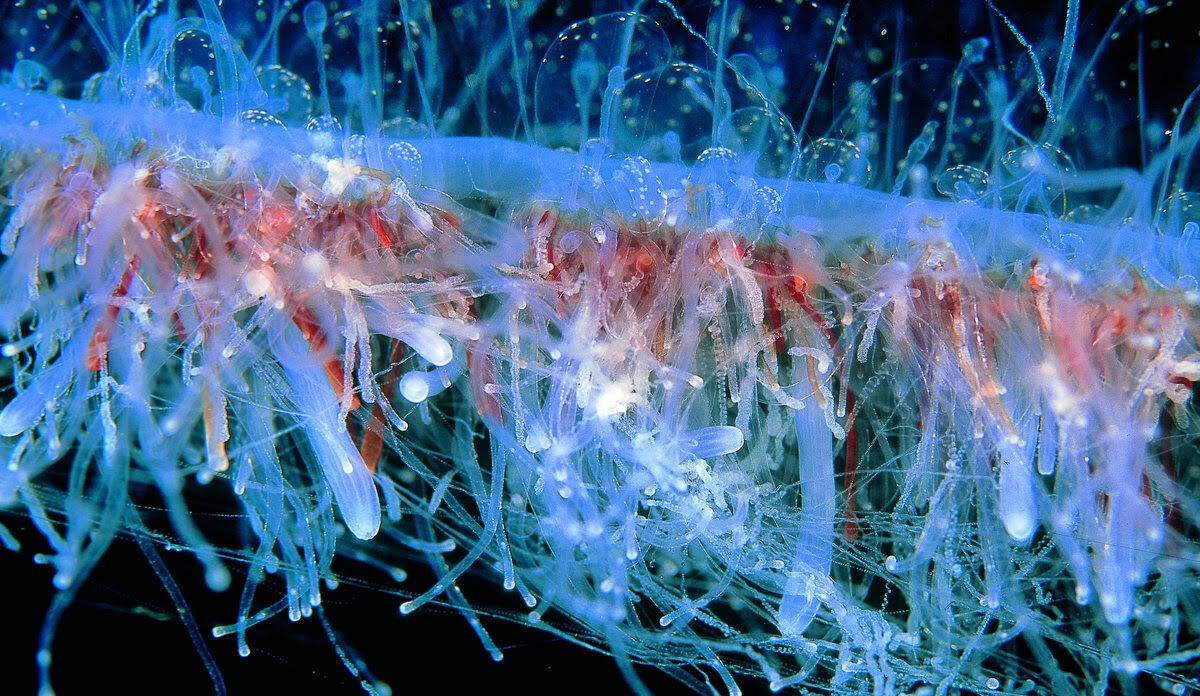
And this year a species known as the “Windward Sailor” or more officially the “Velella velellawas” is back after a three year absence. It first appeared off Norway in 2011.
Tone Falkenhaug added: “While wind-swept sailfish live in all oceans of the world, the jellyfish primarily lives in warmer ocean areas. It rarely comes this far north, but unusual wind and current conditions can carry it far away.
“The tiny jellyfish almost looks like a small dinghy with a sail on top. Although it is called a sail, it is more like a keel – the polyp is upside down.“
She says another alien species has also put in an arrival, namely the American jellyfish.
It was first discovered in Norwegian waters in 2005, and is now a common sight along the coast.
The American lobe jellyfish can bloom quickly and is a voracious predator, says Falkenhaug.
Assistant Technician - Mowi Scotland
RosythSalary On Application
Farm Technician (Braevallich) - Mowi Scotland
Dalmally, Argyll & Bute£29,389 to £32,914 per annum
Electrician or approved electrician - GroAqua
Fort WilliamSalary On Application
Technical support engineer - GroAqua
Fort WilliamSalary On Application
Technical Sales Engineer - GroAqua
InvernessSalary On Application
You May Also Like





© 2026 Fish Farmer.