




Flying start for trout
The UK trout sector is in pretty good shape – that’s the verdict of Oliver Robinson, Chief Executive of the British Trout Association.


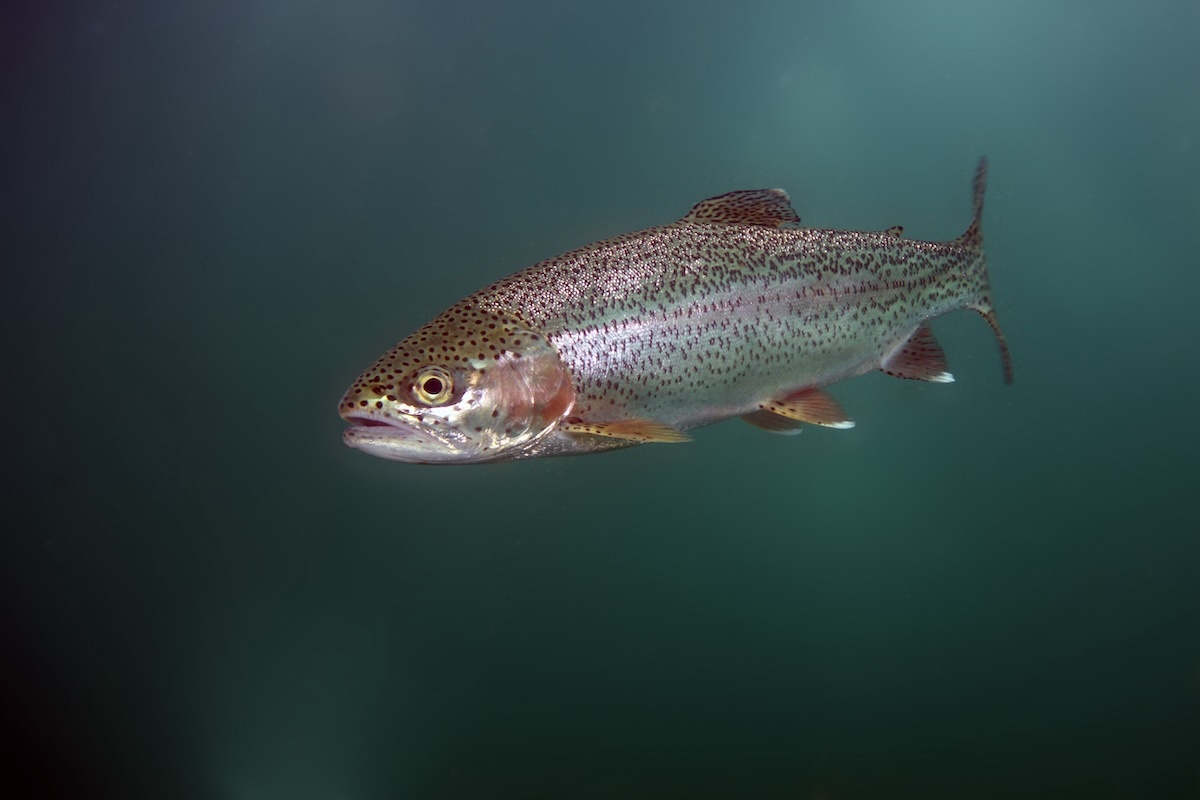
The BTA estimates that this year production of farmed trout throughout the UK will be around 10,000-11,000 tonnes – that is even taking into account the fact that the former Dawnfresh trout farm sites at Loch Etive and Loch Awe are now being used by Mowi to raise salmon post-smolts, taking out approximately 5,500 tonnes of trout production in Scotland (see below for an update on Loch Alba Trout, which has taken over some of the Dawnfresh operations).
Robinson says: “It’s been a flying start to the year – there is a demand for every trout grown in the UK and that has helped to hold the price up. Even portion trout prices have held up.”
The trend continues away from portion fish to larger fish, he notes, from 400g-800g to between 2kg and 4kg. This applies to trout grown in freshwater farms as well as to trout in marine farms.
So far the weather, even with England and Wales facing a series of heatwaves this summer, has been relatively favourable.
Robinson explains: “We have had a very wet winter, which replenished the aquifers which has kept the flow up in the chalk streams and other rivers until mid-summer. Due to the drought, the flows in the rivers are now receding very quickly and it is hoped that we will get some rain and cooler weather.
“A number of the farms are more drought tolerant, however, due to the investment that has been made in oxygenation and recirculation.”
That capital investment has been an important factor for the industry, and one of the drivers for it has been the Fisheries and Seafood Scheme (FaSS), part of the UK government’s Fishing and Coastal Growth Fund.
FaSS is open to applications from inland fisheries as well as coastal businesses, and the BTA is encouraging all its members to consider what projects might benefit from this funding. Grants are available for, to take a few examples, adding value for aquaculture products, increasing sustainability at sites and improvements for fish health and welfare.
The relationship between government and the trout sector has been very important, Robinson says: “We’ve worked very closely with DEFRA and other government departments, and they have really listened.”
Through last year, the industry was working with government on a draft covering health and welfare at time of slaughter for finfish in England and Wales. Draft guidance is with the Minister for review and the BTA is hoping that this will result in guidance being issued – this is what has already happened in Scotland – rather than legislation, as guidance will be easier and quicker to adapt to take account of factors like new technology and practices.
Vaccine availability has also been a concern. When a shortage of a key fish vaccine arose unexpectedly earlier this year, the Veterinary Medicines Directorate (VMD) was very helpful in processing a replacement quickly and clearing it for import.
At ministerial level, however, the political manoeuvring in Westminster and personnel changes in government have not made it easy to communicate the industry’s message to those at the top.
As Robinson puts it: “The uncertainty over ministerial availability is causing a great deal of frustration.”
The BTA must be relieved, therefore, that Stephen Morgan, who was appointed as Minister of State for Food, Farming and Fisheries at DEFRA in June, will remain in post following the arrival of Andy Burnham as Prime Minister – rather than having yet another change to deal with.
Trout farm makes stunning investment
Britford Trout Farm, on the River Avon near Salisbury in south-west England, is one of the fish farms investing to upgrade its operations.
Opened in 1983 by Mark Heaven, Britford soon positioned itself as a leading provider of quality trout. Over 40 years later and with a new retail partnership with Waitrose to supply, an upgrade to existing harvesting systems was needed to meet increasing welfare and traceability demands.
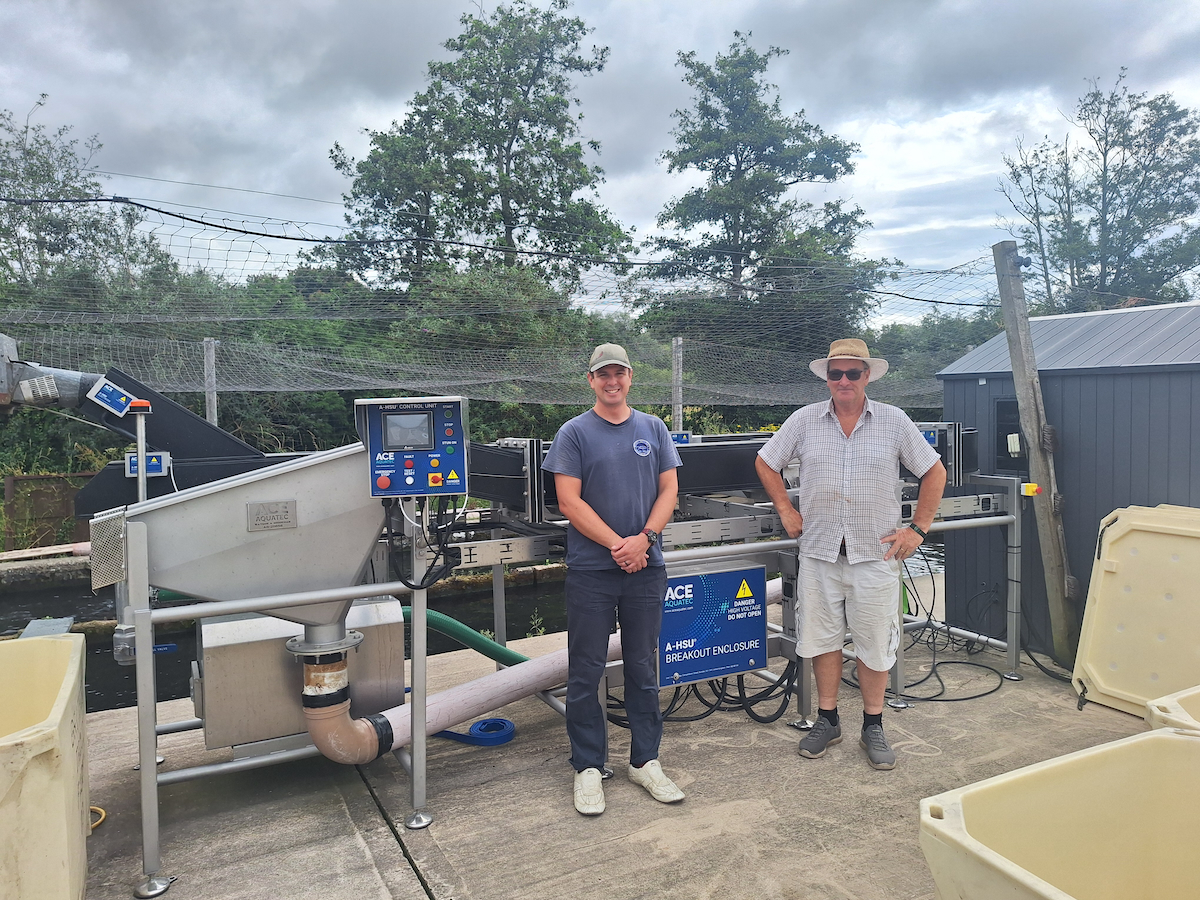
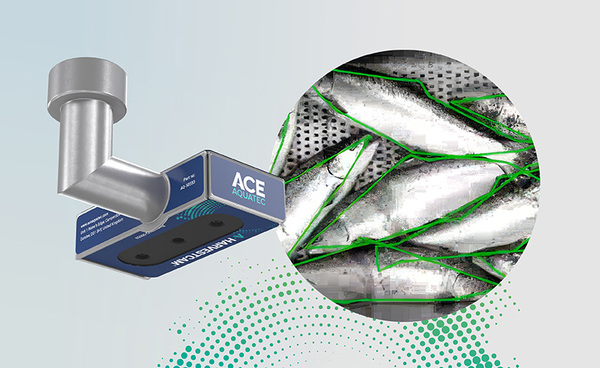
The farm has replaced outdated manual slaughter processes with new stunning technology. Britford opted for Ace Aquatec’s Humane Stunner Universal (A-HSU®), specifically designed for trout and with the ability to process up to 15 tonnes per hour.
Since the installation of the new system, Britford has seen a significant improvement of 5 - 6% in fillet yield alongside marked improvements in texture and shelf life, and enhanced welfare and traceability compliance.
The farm is now planning to scale tonnage from 200 to 350 tonnes annually and is in talks around upcoming commercial opportunities with other UK supermarkets.
Additional support from the British Trout Association and a £30,000 Fisheries and Seafood Scheme (FaSS) grant helped make this capital investment viable.
Jack Heaven, Business Partner at Britford Trout Farm, said: “We’ve been in the trout business for a long time, but our own methods of stunning were not sufficient for future demand so we needed a harvesting solution that reflected the high standards we set for our business and our customers.
“Since installing Ace Aquatec’s humane stunner, we’ve seen significant improvements in both efficiency and product quality. The harvesting process is smoother and more streamlined, and we’ve received extremely positive feedback from our processor.”
Innovation at Loch Alba
When salmon producer Mowi took over the farming assets of the Dawnfresh Group in 2023, it looked as if one of the two remaining sea trout farming operations in Scotland would eventually be moving over to salmon.
The former Dawnfresh sites at Loch Etive and Loch Awe are indeed now being used by Mowi to rear salmon smolts, but in 2025 Mowi sold some key elements of the Dawnfresh business to Stewart Graham, the entrepreneur who founded the Gael Force Group, and these continue with trout production.
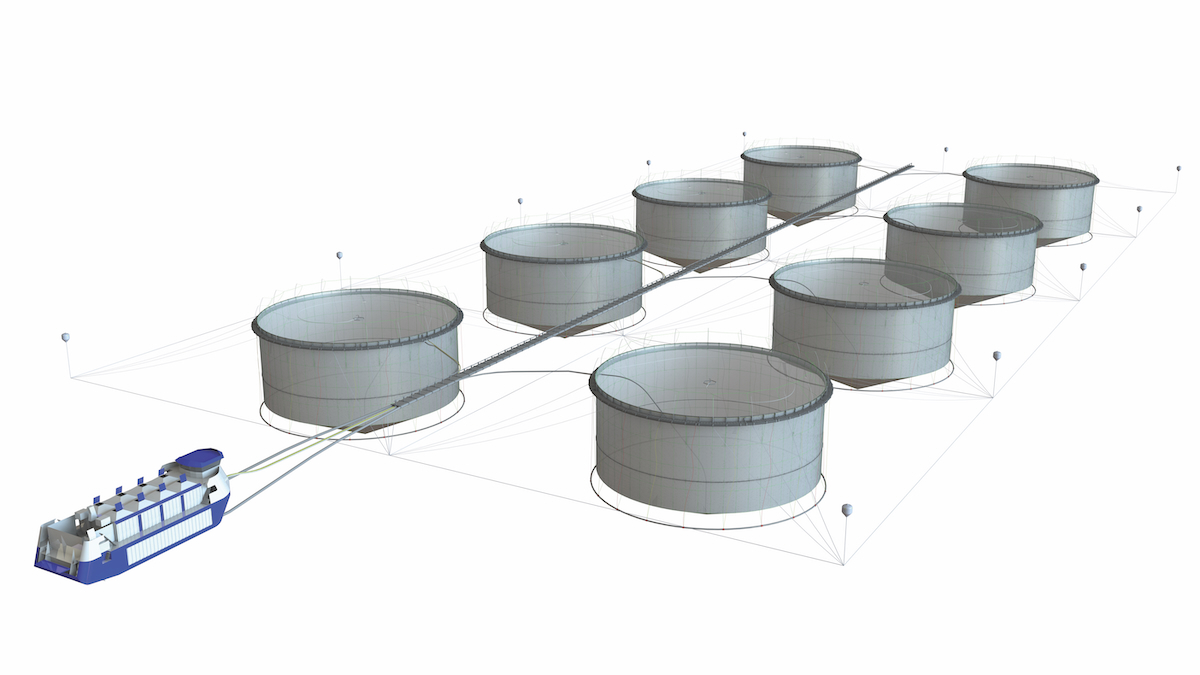
The company set up to run the trout farms – originally named SeaQure Farming and now trading as Loch Alba Trout – is a separate entity from Gael Force, but will be collaborating closely with it as, effectively, a test bed for Gael Force’s SeaQureFarm™ semi-closed fish farm system.
Loch Alba’s operations include the Dawnfresh hatcheries (St Mungo’s and Frandy), juvenile growing at Kinnaird and farm sites at Ardnish and Loch Earn. Ardnish has been earmarked as the site for trialling the SeaQureWell, a semi-closed system which is part of the overarching SeaQureFarm system that Gael Force has designed and which will be able to capture 90% of waste from the cage.
The system is a floating cage with an impermeable bag suspended from a cage collar. It draws its water from depths below the level at which sea lice are generally found.
Graham says: “The process of installation and installing the control and monitoring systems is now being worked through.”
Planning consent has been granted subject to certain conditions, including the submission of waste management and seabed monitoring plans.
He adds: “The authorities and the regulators have actually been very constructive, but it’s a complex and burdensome process.”
The cage has a volume of 20,000 cubic metres and Graham plans to start production at 20kg per cubic metre and then move to 30, and then 40 kilos per cubic metre.
Each unit should be able to produce 800 tons and the plan is to eventually have four units on the site.
The trout is now marketed as Loch Alba Trout, although so far this is a brand for the seafood trade rather than targeted at retail customers. Processing takes place at the Loch Duart processing plant in Dingwall.
Loch Alba is also trialling its own brand of hot smoked trout and this, Graham says, has had “extraordinary” feedback.
Meanwhile David MacGillivray, formerly a regional manager with Mowi, is heading operations and Lucy Fry has been recruited as Chief Sustainability Officer.
Graham says the venture has got off to a good start: “We have, thus far, not had challenges we haven’t been able to deal with… but I’m well aware this is farming, and this is biology, and things will not always go so well.
“We have such an experienced and committed team there and, you know, it’s kind of old-fashioned farming that we’re currently doing. That will all change when we bring the SeaQureWells into play. Then, I’m sure we’ll have some more learning to do!”
Gael Force is up against suppliers in the Norwegian salmon sector, but Graham believes that the SeaQureWell will turn out to be very competitively priced and that it will benefit from being tried and tested in the real world.
After more than 40 years in the business as a supplier, Graham is now on the other side of the fence as a farmer. He has been able to bring to bear those decades of experience, including providing turnkey solutions for fish farming customers, on this venture, and he describes the journey so far as “fantastic”.
His vision for where semi-closed cages can fit into fish farming is as a complementary stage in production rather than as a replacement for traditional net-pen farms.
Graham is sceptical about using semi-closed containment in high-energy sites, viewing them instead as opportunities for near-shore or inshore environments where environmental carrying capacity for fish farming is limited.
He sees potential for these systems in post-smolt facilities for salmon (and the equivalent for sea trout) and for increasing tonnage at sites currently not viable for open net pens.
Over the next 12 months, Graham expects that we will see the first trout in the new cage system and this, of course, will be the ultimate test.
Kames: trout and halibut
Kames Fish Farming is a long‑established, family‑run Scottish trout producer best known for its “steelhead” rainbow trout raised in sea cages. In recent years the company has focused on improving provenance, genetics and sustainability while promoting its product to chefs and consumers.
Managing Director Andrew Cannon says: “It’s been a very good year so far.”
Kames has been investing in its broodstock over the years, and the company has run its broodstock production at the Selcoth trout farm in Dumfriesshire since May 2025, renting from Olly and Shara Routledge, the owners.
The facility operates on green lines – powered by solar and water energy – and water quality is great too, Cannon says.
His ambition is straightforward: “We want to create a Scottish nucleus for trout.”
Kames has now even sold ova to trout farms in England, for the first time. The aim is for Scotland to become self-sufficient in trout ova. Currently, it’s not possible to import trout ova from Denmark and Norway, which leaves the USA as the only overseas source, so ensuring a home-grown supply is strategically important.
Also, the Kames strain has been tried and tested, in each generation, in Scottish conditions, which Cannon sees as an advantage: “Every year, we are seeing incremental gains in survival and growth.”
The company is also working with breeding and genetic specialists Xelect to help refine and improve the stock.
Kames has also increased its freshwater production capacity, acquiring a formerly disused raceway-based trout farm near Callander in the Highlands. Cannon hopes to see the first fish on site in Q4 this year or early 2027.
This will enable the company to grow its juveniles to a larger size in freshwater than would have been possible in tanks.
Trout has been hit by the same price issues as salmon this year, but Cannon says the Kames brand and reputation have helped its position in the market. The MòR Atlantic Trout brand, launched last year, is primarily being used to target the US market, where the Kames name is not so well known.
Is Cannon interested in the semi-closed cage approach, now being trialled by Loch Alba Trout?
His view is: “It’s brilliant for the industry but is it for us?”
Cannon feels this technology is probably more for the big salmon producers. He also notes that at Kames, they like to give their fish space in the cages rather than stock at high density, and place their pens in locations where the tides and currents give the fish something to swim against and build up their strength.
Meanwhile, Kames is taking part in a different kind of experiment. The company is working with Otter Ferry Seafish and Otter Ferry’s owner, Amar Seafoods, to rear halibut at a farm site on Loch Melfort not currently being used for trout. The project is being supported by Highlands and Islands Enterprise and involves about 40,000 halibut.
As Cannon puts it: “It’s great to be part of this story.”
Why not try these links to see what our Fish Farmer AI can tell you.
(Please note this is an experimental service)
You May Also Like





© 2026 Fish Farmer.