





Wellbeing on a plate
Norway may be the world’s largest producer of farmed salmon and a major force in whitefish such as cod and haddock, but don’t expect to find it selling cheap in the country’s shops.


Quality fresh seafood in Norway can be expensive due in part to strong export demand and the overall high cost of living which has long been a feature of life in Norway.
These are just two of the factors that appear to be putting people off buying it. The country’s Seafood Council recently published a report showing that Norwegians now eat over three kilograms less seafood per person than they did ten years ago.
The report is based on quantity and purchasing figures from grocery stores, and considers the average for the population as a whole.
But there is some light at the end of the tunnel. A couple of years ago it was children who were turning up their noses at fish, leading to fears they would continue the habit into adult life.
A more recent report from the Seafood Council, however, shows that this trend is being reversed.
Whether this is due to sporting heroes such as Norway and Manchester City footballing maestro Erling Haaland openly promoting seafood or to other factors is still open to debate.
The good news is that salmon has become fashionable again among the country’s younger generation.
Since good eating habits are established at an early age, the Seafood Council has been monitoring consumption in the youngest age groups – those around primary school age.
Its latest survey shows positive figures for this group. They now eat seafood far more often than just three years ago.
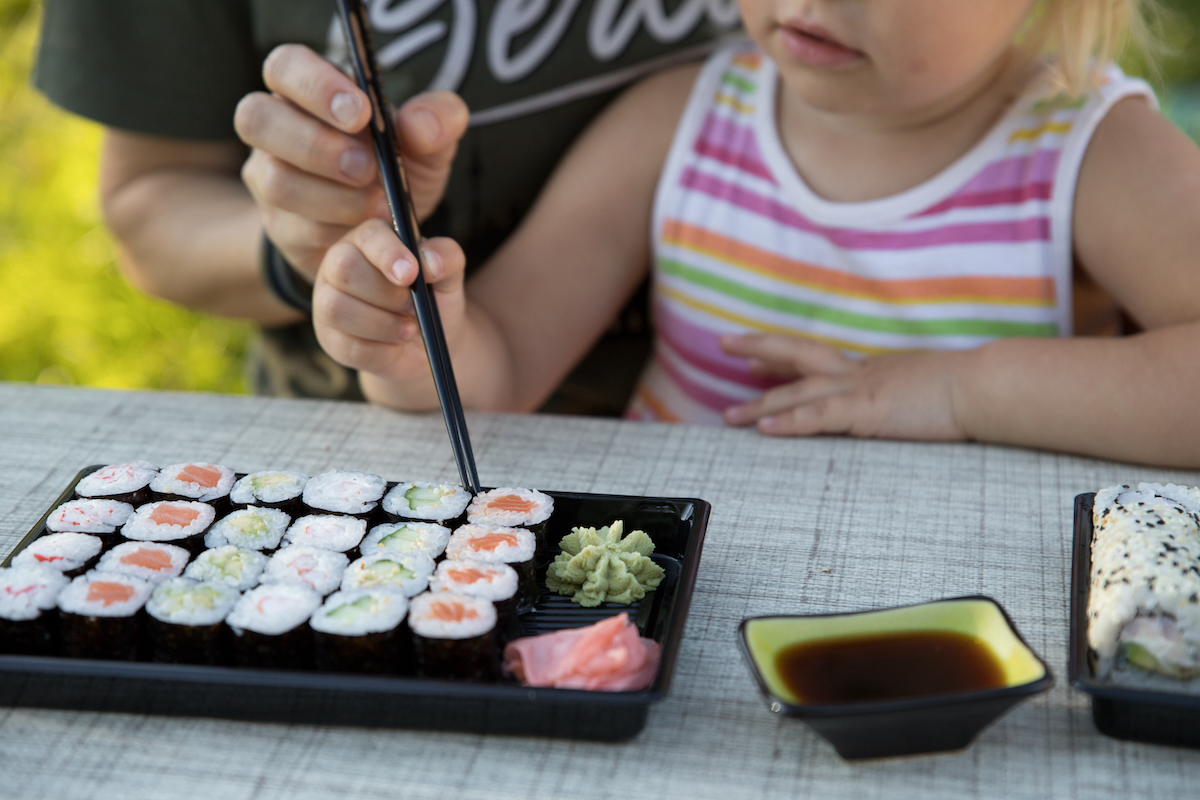
Agnete Bell, Norwegian Team Manager at the Seafood Council, believes the sushi trend has now become a children’s favourite and she is clearly happy about this.
The Norway team runs, among other things, the recipe promotion site Godfisk, aimed at consumers at home, which contains seafood recipes, tips and inspiration to make choosing fish and shellfish easier.
“We are particularly keen to reach out to families with children and young people who have moved away from home and have not yet established their own families,” says Bell.

Halting the decline
The new survey was conducted by Ipsos for the Norwegian Seafood Council. It has, among other things, mapped favourite meals and the frequency of fish meals.
To monitor developments in young people’s seafood consumption, similar surveys have been conducted regularly in recent years.
Previous reports, using figures from grocery chains, show that in 2015 the population ate an average of 21.5 kilograms (47 lbs) of fish and shellfish per person during over a year.
But nine years later the amount had fallen to 18 kilograms (39 lbs) per person which meant consumption was down by 12%. New figures show the decline has clearly been halted with some 71% of youngsters reporting that they ate fish once or twice a week compared to 64% three years ago.
“It is a significant increase, and it is gratifying that the numbers point in a positive direction. Perhaps it is about fish no longer being perceived as just something healthy, but also something good,” says Bell.
A deeper examination of the figures show that 60% say they eat fish for dinner once or twice a week, 8% say they eat fish for dinner three to five times a week and 3% that they eat fish for dinner almost every day.
The figures are also encouraging when it comes to the group of young people who consume far too little fish and seafood.
In the recent survey from 2025, 30% said they eat fish less often than once a week, compared to 35% three years ago.
This, says the Seafood Council, means that more and more Norwegian children and young people seem to be following the Norwegian Directorate of Health’s dietary advice: “Choose fish and seafood for dinner two to three times a week and preferably spread it out.”
The survey also shows that there is a slight increase in those who have fish spreads on their bread. Here, 23% say that they eat spreads such as shrimp salad, caviar, herring or mackerel in tomato at least once or twice a week or more often. In 2022, the proportion was 20%.
There are significantly more children and young people in Oslo - where there are so many more food choices - who eat fish every day compared to the total (10% versus 3%).
There are also significantly more Oslo children who eat fish three to five times a week than the total (17% versus 8%).
Girls seem to be leading the way. The survey shows that most girls, especially those over 16 years of age, eat fish as often as three times a week or more.
This may be related to the fact that this group is more concerned with diet and healthy eating habits, believes Agnete Bell.
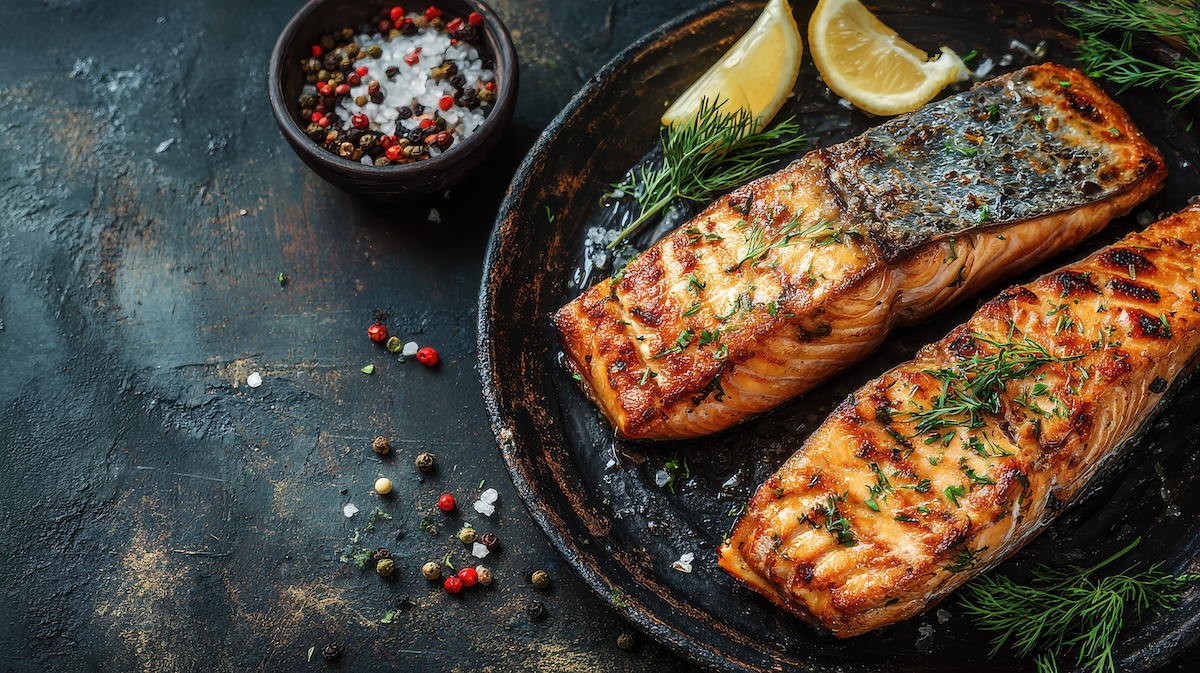
Sushi is a clear favourite fish among young people. When asked which seafood dinner dishes young people like the most, fried salmon and trout come in first place.
In the questionnaire, participants could select up to seven of 17 dishes. After sushi comes fish fingers, fish & chips and fish gratin. This is about the same ranking as in 2022, but both sushi and poke bowls have become more popular at the expense of fried salmon and trout, fish gratin and boiled cod, among other things.
Sushi and poke bowls are often chosen on the weekend when people want to enjoy something a little extra.
“This suggests that the choice is about desire and not duty,“ says Bell.
However, when participants were asked to choose their favourite dinner dishes regardless of ingredients, sushi came in third place. Tacos and pizzas are still strong rivals.
There are approximately 792,000 people between the ages of eight and 19 living in Norway. When 30% of these eat fish less than once a week, this amounts to approximately 240,000 children and young people who eat far too little fish.
Anna Reibo Jentoft, Head of the dietary programme Fiskesprell, says: “Therefore, we must continue the work of increasing seafood consumption among children and young people.”
The programme is aimed at children and is a collaboration between the Ministry of Trade, Industry and Fisheries, the Ministry of Health and Care Services and the Norwegian Seafood Council.
Jentoft says: “Our goal is to make seafood a natural and pleasurable choice for even more young people.”
Fiskesprell holds courses for kindergartens, after-school care centres and primary schools across the country. It also offers its own teaching portal and provides financial support for purchasing seafood for teaching and events.
As many as 66% of all kindergartens in Norway have participated in Fiskesprell courses. Of these, about 60% report that the children eat more fish and that the general diet in the kindergarten has become healthier.
The challenge now is to discover if this positive Norwegian development can be copied in other countries such as the UK.
Fish remains popular in Britain but mainly in the form of high fat batter-covered fish and chips, which is certainly not healthy in excess.
The other barrier is that once relatively cheap fish such as cod and haddock have become prohibitively expensive, and are likely to remain so.
Maybe like Norway, the secret is to catch them young and work on from there. But with so many fast food outlets and shops selling less healthy food, it is going to be a tough task.
Why not try these links to see what our Fish Farmer AI can tell you.
(Please note this is an experimental service)
You May Also Like






© 2026 Fish Farmer.