ao link

Stocked, but unsustainable
One of the biggest problems, I think, that plagues current fisheries management is the same thing that plagues a lot of society’s problems: inertia,” said Douglas Tave, Manager at AveAquaculture, and former hatchery manager at the Los Lunas Silvery Minnow Refugium, a conservation hatchery breeding endangered Rio Grande silvery minnows.

Linked InXFacebook
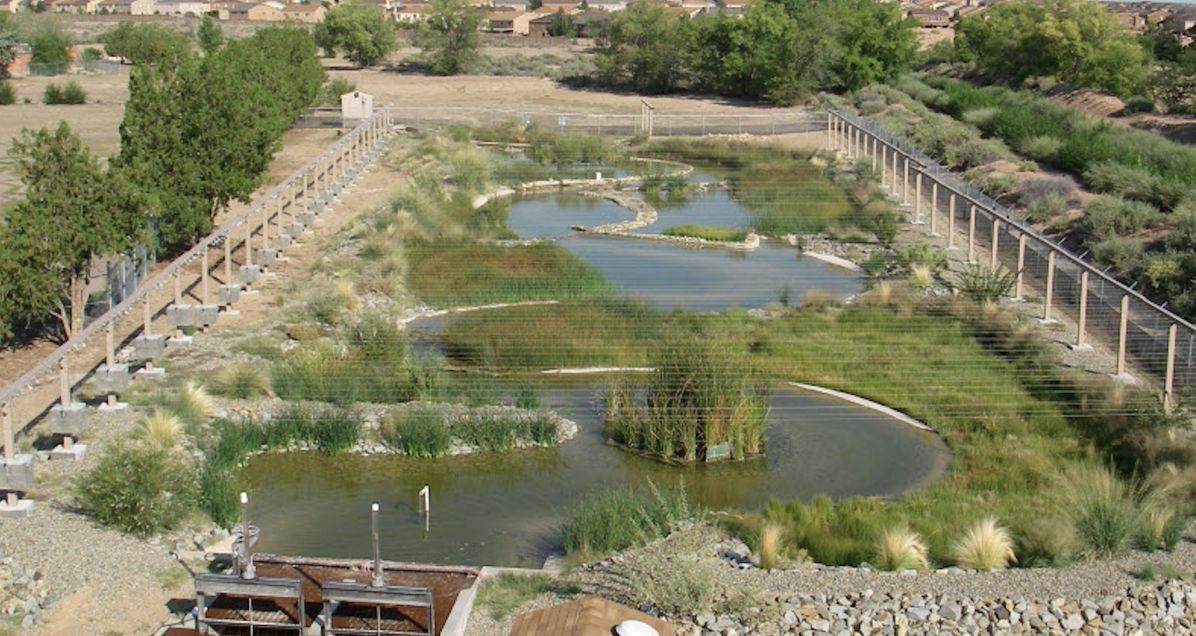
aerial view Los Lunas web
An aerial view Los Lunas.

Tave goes on: “Augmentation can be used as one component of fisheries management. But continuing to stock and stock and stock doesn’t improve fisheries management. My personal thoughts are stocking fewer, but better fish, might be a better approach.”


Augmentation is the business of aquaculture hatcheries, which strive to boost populations of fish and other aquatic animals. While they successfully supply fish farms with everything from trout and shrimp to octopi, they often fail on the natural end of things. For instance, hatchery fish can change ecosystems, interbreed with wild populations and compete with them.


Nonetheless, given nearly 13% of marine fish and a quarter of freshwater fish are threatened with extinction, we need all the tools we can get to boost fish populations. Yet, the question remains: are hatcheries still up to the task?

gravid female Los Lunas hatcheryweb
Gravid female Los Lunas hatchery.

High costs, low returns


First of all, in spite of their main objective, hatchery releases can actually decrease the abundance of wild fish populations.


“If you think about it, first we have to take some of the fish from the water to use as brood stock,” said Kathy Hessler, Assistant Dean for Animal Legal Education at George Washington University Law School. “And so that’s already exacerbating the problem. And then we return to the water fish that have to compete with the fish who lived there their whole lives.”


For instance, hatchery fish can compete with wild fish populations for prey, leading to reduced growth, reproduction and population declines. But that’s just the tip of the iceberg – since hatchery and wild fish differ at the genetic level.


“People don’t realise it, but domestication starts the moment you bring the fish to the hatchery,” said Tave. “Those that can survive begin the domestication process, and then everything else you do is driving domestication, so that’s changing the genetics of the population ... when you stock these fish in the wild, they’re genetically a mismatch to the wild, and they also have behavioural problems. They don’t know what predators are, for one thing.”


As a result, hatchery fish often have poorer survival rates in natural environments compared to wild fish. Further, hatchery fish tend to have fewer offspring, along with difficulties mating, navigating, and avoiding predators, explained Hessler.


However, some hatchery fish can interbreed with wild fish – diluting the wild gene pool and lowering their productivity and resistance to infections. Because of these issues, hatcheries often fail to create self-sustaining wild populations.


“It’s a zero-sum game, because you have to keep putting more and more hatchery fish in to keep getting the returns that you have,” said Brian Bennett, Community and Social Media Manager at Wild Steelhead Coalition.


Finally, hatchery returns obscure the true status of wild fish, explained Bennett, making it difficult to assess population health.


Complicating things further, the scale of hatcheries is enormous. In 2024, the U.S. Fish and Wildlife Service’s National Fish Hatchery System produced 223 million fish and aquatic animals. While some facilities support threatened or endangered species, the majority boost recreational fishing and economic development.


Additionally, many of these efforts are funded by taxpayers at significant costs. Hessler has found estimates of $400 per hatchery fish (£298) up to an astounding $500,000 (more than £370,000). These exorbitant rates link back to the biology of the fish themselves. For example, Pacific salmon females can lay thousands of eggs, but fewer than 1% survive to become the next generation.


“That’s a pretty low survival rate, which helps you understand why the cost is so high, because you have to have all of this infrastructure and you have to have millions and millions of eggs right before you get a decent return,” said Hessler.


Further, the fees for running and maintaining hatcheries’ often aging infrastructure are quite high, explained Hessler.

minnows at Los Lunas hatcheryweb
Minnows at Los Lunas hatchery.

Reimagining hatcheries


Nonetheless, despite a problematic performance in many areas, hatcheries do have some positives. For instance, hatcheries can increase populations of threatened and endangered species, provide research opportunities and support the recreational and commercial fishing industries.


“People don’t realise how important to the economy fishing is,” said Tave. “And it’s a great source of recreation for many people.”


Case in point, global capture fisheries generated US $141 billion (£105bn) in 2020, while also supporting millions of jobs.


Some conservation hatcheries are taking a different approach to fish breeding – and maintaining better genetic diversity as a result. 


The Los Lunas Silvery Minnow Refugium is one example. In this naturalised facility, staff vary the speeds and patterns of water flow and simulate floods to induce spawning. In addition, they don’t feed the fish, but instead let them forage for river plants and invertebrates on their own. For a species that schools, this is critical.
“Any fish that have been fed when they get into the school exhibits more aggressive behaviour, causing the school to become more dispersed…” said Tave.


However, the behaviour of these groups is vital, since they transmit information about predators.


“If the school is dispersed, it takes longer for that information to pass through the school, which will increase their risk of predation.”


As a result of their efforts, the staff have observed natural behaviours in the minnows – including avoiding predators, schooling and seeking shelter in plants.

Young trout being poured into a growout tank at a fish hatchery AdobeStock 277817435
Young trout being poured into a grow-out tank at a fish hatchery.

Repairing rivers


Besides revamping hatcheries, another solution to fish decline is tackling the root causes themselves.


“I think if we look at the problems that are actually causing the reduction in fish populations, then it may be different answers in different places,” said Hessler. “So maybe it’s the dams coming down in some places, paying attention to clean water and water temperature, water quality issues, and certainly reducing fishing, if we really want to increase the populations.”


In addition to habitat restoration, imposing fishing bans, promoting more plant-based diets, or even eating invasive fish, could help species recover. However, Hessler points out that fishing may need to be stopped for several years before fish populations become self-sustaining again. Limiting hatchery releases to certain areas is also an option.


“One of the things we would like to see is what we would call wild gene banks,” said Bennett. “So you would designate certain watersheds as wild gene banks.


There’s no hatchery input in those rivers. And if we’re not saying all rivers, you could designate eight watersheds. The problem is, it’s going to take a generation. It doesn’t happen overnight.”


Such actions would help safeguard the genetic diversity of wild fish populations.


Ensuring sustainable fish populations is critical for both the environment, food security and the economy. Reforming hatcheries or closing at least some of them, along with habitat restoration, could be a step in the right direction for many wild fish populations.


“I mean the best hatchery is a wild river…” said Bennett. “So, our thing would be to give wild fish a chance. And they’ll come back.” 

Linked InXFacebook
Add New Comment
You must be logged in to comment.
Team Leader (Logistics) - Mowi Scotland
RosythRosythSalary On ApplicationSalary On Application

Broodstock Operative - Bakkafrost Scotland Limited
HS3 3HBHS3 3HB£26,436.80 per annum£26,436.80 per annum

Automation Project Engineer - Bakkafrost Scotland Limited
IV54 8XHIV54 8XH£54,750 per annum£54,750 per annum

Husbandry Operative, Loch Melfort, Argyll - Kames
ObanOban£27,500 to £30,500 per annum£27,500 to £30,500 per annum

Fish Husbandry Operative, Isle of Skye. Accommodation provided. - Kames
Dunvegan, Isle of SkyeDunvegan, Isle of Skye£29,000 to £31,000 per annum£29,000 to £31,000 per annum
Fish Farmer Magazine
IPSO
Facebook
X
Linked In

© 2026 Fish Farmer.