




Repurposing waste
Fish hatcheries and recirculating aquaculture systems (RAS) generate waste, in both solid and liquid form. This is both a problem and an opportunity for producers. A problem, because this waste needs to be treated and disposed of in an environmentally sound way; and an opportunity, because it contains nutrients that can be repurposed to help with other forms of food production, or to create energy.


As the old Yorkshire saying goes, “Where there’s muck, there’s brass [money].”
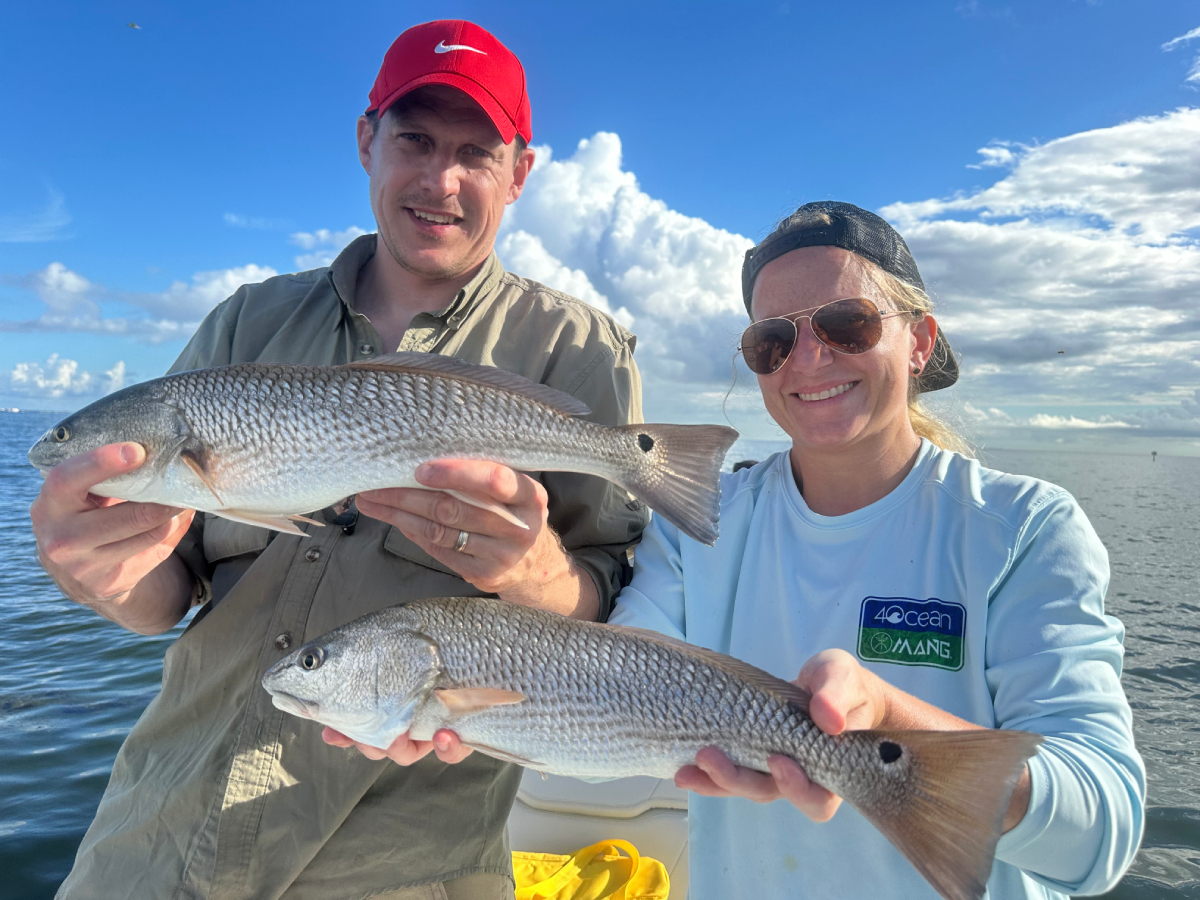
Pine Island Redfish is a pioneering US aquaculture company based in Florida that has become the first in the country to commercially farm red drum (also known as redfish) using land-based recirculating aquaculture system (RAS) technology. Founded by CEO Megan Sorby and her husband Tom, the company celebrated its first harvest in March 2025.
Red drum is a saltwater species native to the US Atlantic coast and Gulf of Mexico, popular with anglers and consumers but severely overharvested in the past. Commercial fishing of wild red drum has been banned since 2007 due to stock depletion, with demand previously met largely by imports. Pine Island Redfish’s RAS farming model provides a sustainable, local source of this premium fish, available now at select Publix stores and restaurants in Florida.
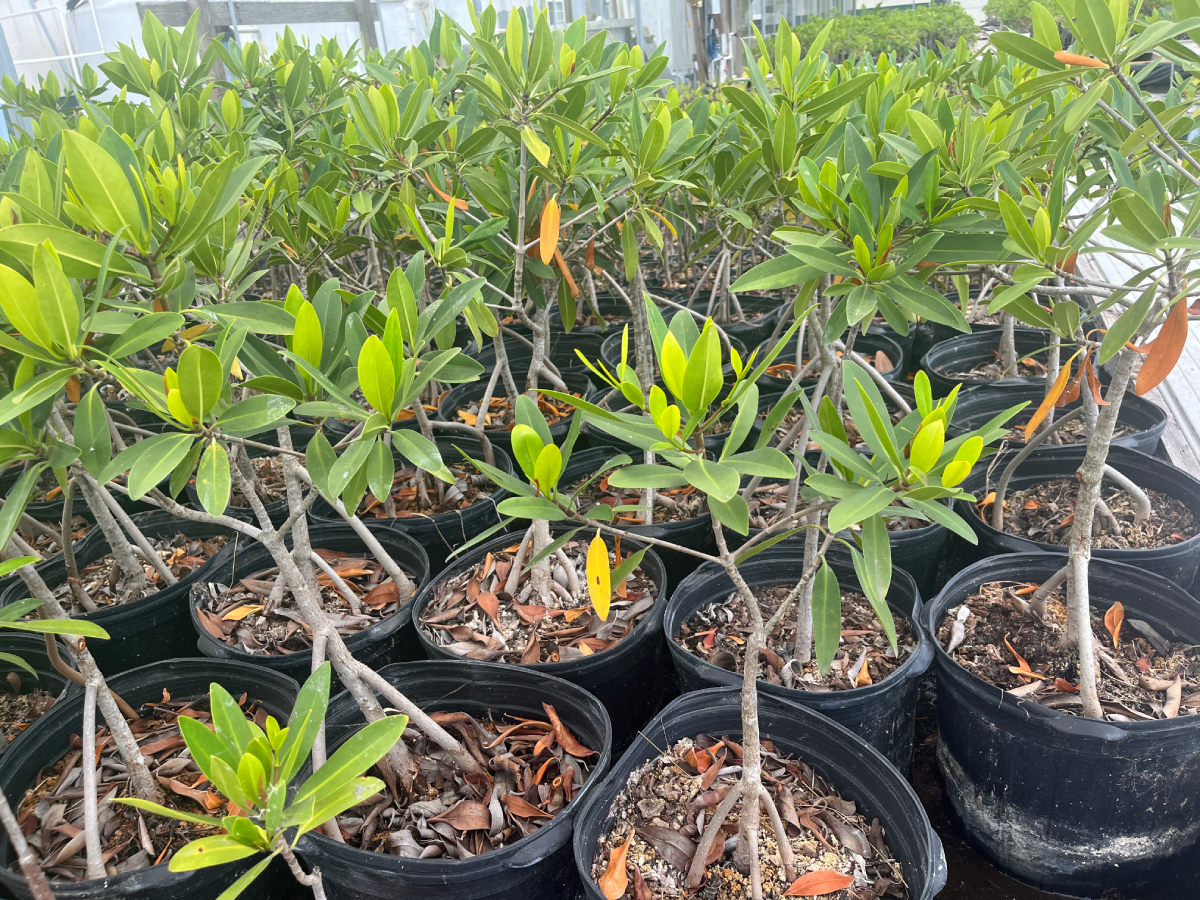
The company’s sustainability mission extends beyond fish production. Its regenerative RAS technology repurposes fish waste nutrients to cultivate over 5,000 mangroves and nutrient-dense halophytes like sea purslane and barilla, contributing to coastal restoration efforts along Florida’s Gulf Coast, where many of the mangrove forests have been severely depleted.
Megan Sorby explains: “Red drum is native only to our coasts, but also it exists in a coastal ecosystem that is very much dependent on the existence of mangroves for nursery space, for not just redfish, but for all of the fish that are here in South Florida.
“Virtually all of our highest grossing sport fish start their lives huddled underneath mangroves, where they’re well protected. So it was one of those happy coincidences and we said, ‘I wonder if there’s a link to be made here?’”
The link involved using solid waste from the RAS system’s drum filters, dewatered, as compost for growing mangrove seedlings, while the liquid waste also contains important nutrients, especially nitrogen and phosphorus.
Sorby says: “What is so fabulous about RAS is that, because we’re monitoring that water all the time, we know how much nitrogen there is and in what form, and we know how much phosphorus, and in what form, is coming out of the system. So, we can actually use that as a way to know how many plants we need to uptake that amount of nitrogen and phosphorus, and how much retention time is needed in order for those plants to have adequate time to absorb those nutrients. It actually offers a level of control that probably most conventional nurseries have to work really hard at.”
The Pine Island team have been working with Florida’s Mote Marine Laboratory & Aquarium, the not-for-profit MANG Foundation and a group of volunteers to grow the mangroves and plant them out, restoring valuable habitat.
Pine Island Redfish operates on a fully permitted 150-acre site on Pine Island, Florida, chosen for its suitability for both aquaculture and agriculture. The site benefits from natural sand-filtered seawater and on-site nutrient recycling, aligning with water-efficient and climate-resilient practices.
Having gone through the first harvest cycle at the pilot stage, Megan and Tom are now raising capital to expand the operation to a fully commercial scale, with the aim of producing up to 1000 metric tons annually.
The ongoing mangrove project has not only established Pine Island’s sustainable credentials, but also created opportunities for dialogue with more potential customers for the company’s redfish.
And there is another way that the company could apply circular economy principles, Megan Sorby suggests: “We have learned, with other species, that waste components, even with the salty nature of our waste, when cut with other manure can be used in anaerobic digestion as a potential energy source.
“So, wouldn’t it be phenomenal if we get to the point, like some of the cattle producers or dairy producers, where we are running anaerobic digestors on our sites and supplementing our own energy? How cool would that be? These are the things that all take time and scale, and a concerted effort, to develop.
“You know, it can’t just be one producer saying, ‘Hey, we’re going to walk this road by ourselves.’ We must come together as a sector in order to demonstrate we can lead all protein production in regenerative practices. Pine Island is the model for scalable regeneration, and we know others will come to join as we continue to deliver on all our projections.”
From waste to forests
In Scotland, fish hatchery waste is also being put to good use, to help restore a very different kind of forest.
A project to recycle waste at an aquaculture hatchery in Wester Ross has secured up to £630,290 from Highlands and Islands Enterprise (HIE). Bakkafrost Scotland is leading the project, which has a total investment value of more than £2.5m.
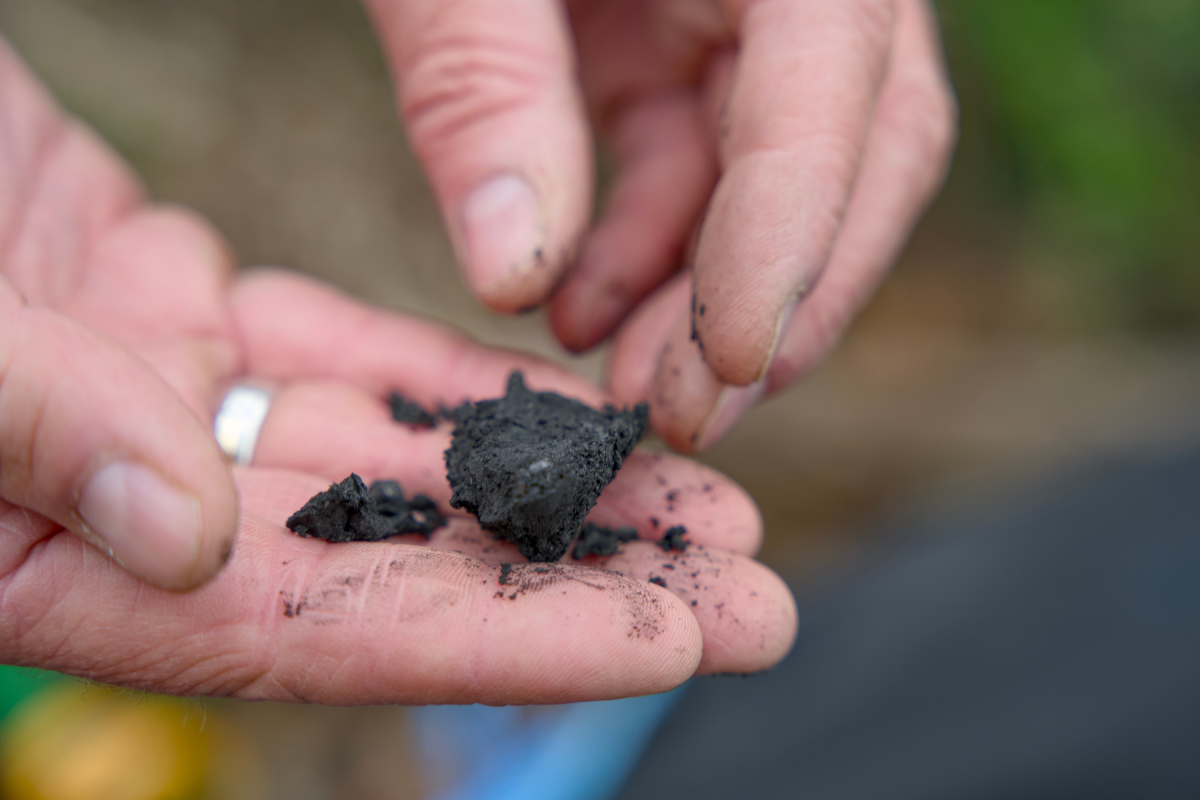
In the first of its kind in Scotland, the initiative will make use of the process known as pyrolysis to convert aquaculture waste into biochar, which will be used by the forestry sector.
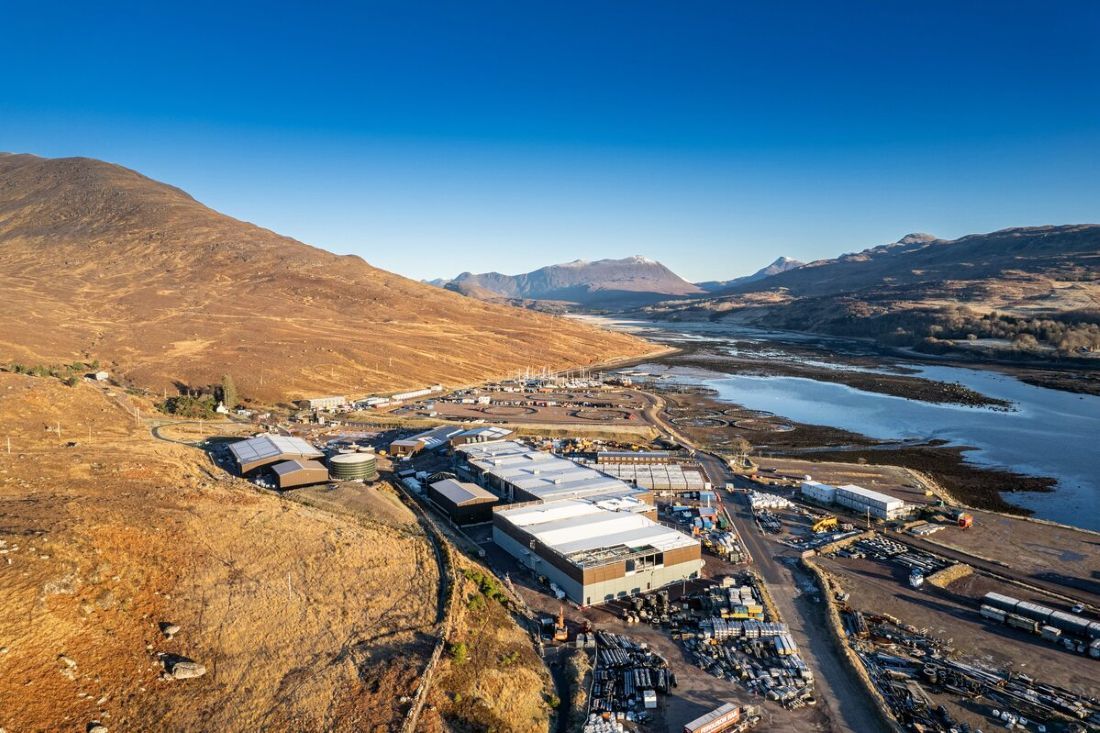
Bakkafrost is one of the largest producers of farmed salmon in Scotland. Since buying the Scottish Salmon Company in 2019, the company has made significant strategic investments in Scotland, most notably in a new recirculating aquaculture system (RAS) hatchery at Kishorn in Wester Ross.
The new hatchery enables the business to produce their own smolts at an increased volume and size, ensuring that they are more robust, with better survival rates, once they are released into sea cages. The enclosed RAS system captures fish waste, which will be processed in the new pyrolysis facility.
Pyrolysis converts aquaculture waste into biochar effectively through a controlled thermal decomposition process carried out in the absence of oxygen. Specifically, in the case of Bakkafrost Scotland’s system at its Applecross hatchery, the process begins with sludge from the recirculating aquaculture system (RAS), which is initially about 97% water. This sludge undergoes filtration to reduce water content to around 80%, increasing the dry matter to about 20%.
Next, the sludge is dried at approximately 300°C to form pellets. These pellets are then heated further to about 700°C in an oxygen-free environment during pyrolysis. This high-temperature treatment thermally decomposes the organic material without combustion, resulting in an inert biochar product with a high stable carbon content.
The system is designed to absorb and repurpose heat internally, enhancing energy efficiency. The resulting biochar serves as a fertiliser and soil improver, improving soil structure and water retention while permanently locking away carbon. This approach not only valorises aquaculture waste but also supports circular economy goals by turning what was previously a waste stream into a valuable product for use in sectors like forestry.
In summary, pyrolysis effectively converts aquaculture sludge by drying, pelletising, and thermally decomposing it at high temperatures without oxygen, producing stable biochar that benefits soil health and carbon sequestration.
Alastair Nicolson, HIE’s Area Manager for Lochaber, Skye and Wester Ross, says: “We welcome this innovative project, that turns what was a waste stream into a product that enhances the natural environment. It also reduces the volume of waste that needs to be transported out of the area in line with the business’s commitment to reduce its impact on the environment.”
Ian Laister, Managing Director, Bakkafrost Scotland, said: “In a recirculating aquaculture system facility like our Applecross site, quantities of waste materials are generated which must be separated from the water. Traditionally this material has been considered as waste for disposal, but technological advancements have allowed us to introduce an environmentally friendly management process to convert waste and produce fertiliser for use in forestry.
“The pyrolysis system delivers on our sustainability goals, creating a circular economy of production. It will be operational by the end of the year.”
Why not try these links to see what our Fish Farmer AI can tell you.
(Please note this is an experimental service)
You May Also Like



© 2026 Fish Farmer.