
ao link

Not just sushi: aquaculture in Japan
Japan wants to accelerate development of its domestic fish farming sector in years to come, reports Eugene Gerden.

Linked InXFacebook
Kurose-Suisans-ASC-certified-yellowtail-farm-in-Kushima-City-20241218.jpg
Kurose Suisan’s ASC-certified yellowtail farm in Kushima City, Miyazaki Prefecture

Japan wants to accelerate the development of its domestic fish farming sector in years to come. Its government hopes this will contribute to the growth of domestic fish consumption, after its steep decline in recent years.


According to the country’s recently released Fishery White Paper, the per capita consumption of fish in Japan in 2023 dropped to a new low of 22 kilograms; nearly half of the 40.2 kilograms per capita consumed in 2001.


One of the reasons is the ever-growing competition from the meat sector.


Japan’s fishing and aquaculture production peaked in 1984 (12.82 million tonnes) and then declined sharply around 1995, continuing a gradual downward trend since then to stand at 4.36 million tonnes at the beginning of 2020s. Currently the annual aquaculture output in Japan slightly exceeds one million tonnes. The segment contributes to about 20% of all fish produced in the country, while its share is steadily growing.


Tomoya Matsuyama, Professor at the Aquabioresource Creation Centre, Faculty of Agriculture, Kyushu University, believes the current decline of fish consumption in Japan is due to a decline in population and changes in dietary habits.


While at present Japan still remains the world’s leading country in terms of per capita fish consumption, there is a possibility such a situation may change in years to come.

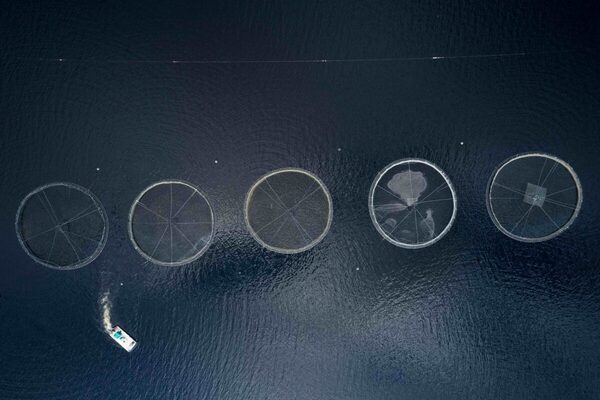
Japan-Salmon-Farm-became-the-first-in-Japan-to-introduce-a-remote-feeding-system-using-barges-in-2022-(photo-Okamura-Foods)-20241218.jpg
Japan Salmon Farm, the first in Japan to introduce a remote feeding system using barges

There are serious restrictions on the increase of fish production in the country in the short-term, but the growth of the fish farming sector currently remains one of the priorities for Japan’s government. This goes hand in hand with the major reform of the country’s fisheries sector, which was launched by the state in 2018 in order to strengthen the position of Japan as one of the world’s largest fish-producing and consuming nations.


According to Daiki Komatsu, an official spokesman of the division of Cultivation and Aquaculture of Japanese Fisheries Agency, the Japanese farmed fish market has been generally rising in recent years (up by 35% in terms of value during the period of 2022-2023). According to data from the Japanese Fisheries Agency, it reached almost 400 billion yen (£2.1bn) in 2023.


Currently the development of the sector is regulated by the existing state strategy For the Growth of Aquaculture in Japan, which runs until 2030. This focuses particular attention on increasing exports of farmed fish from Japan.


The strategy designates yellowtail, red sea bream, bluefin tuna, salmon/trout, and more recently farmed fish species (grouper, etc) as strategic aquaculture products for Japan and sets targets for export volume and value for each product for 2030.


Komatsu said that the Fisheries Agency has many subsidy options available for the growth of aquaculture and can also support the sector through encouraging the introduction of some modern technologies and promotion of more active use of alternative feed. The agency also focuses on sustainability as a tool to expand the spread of farmed fish production in Japan and as a selling point to enter new export markets (primarily those of south-east Asia).

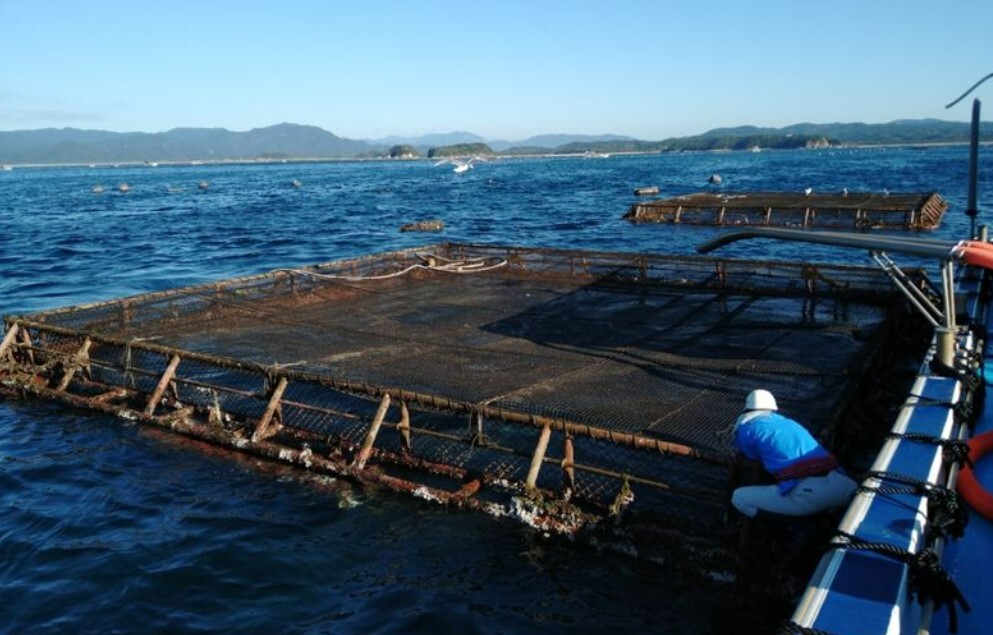
Fish-farm-in-Ainan-Japan_AdobeStock_520351416-20241218.jpg
Fish farm in Ainan Town, Ehime Prefecture

According to Makiko Karasawa, Regional Business Development Manager at Indoguna Singapore Pte Ltd, a subsidiary of Thailand’s largest conglomerate, CP (Charoen Pokphand) Group, in south-east Asia, the demand for sustainable seafood decreased due to the emphasis on cheapness during the Covid-19 pandemic, but it has now returned, and there is a good chance that awareness of sustainability will increase in the future.


Karasawa and other Japanese analysts in the field of aquaculture believe that should provide a good chance for Japanese fish farming companies, which use the principles of sustainability in their production processes to further strengthen their position in the markets of regional states.


In the meantime, in addition to exports, there are plans for the development of full-scale fish farming in Japan, paying a particular focus on a certain list of species.


As Takahiko Okada, Director of the Kindai University Aquaculture Centre, recently said in an interview with the Japanese Nikkei magazine, there are plans to produce yellowtail, amberjack, bluefin tuna and Japanese eel on a full-scale basis by 2050, which involves all stages of production and growing.


According to Okada, the development of the full-scale fish farming target is set out in the “Green Food System Strategy”, which was earlier approved by the Japanese Ministry of Agriculture, Forestry and Fisheries.

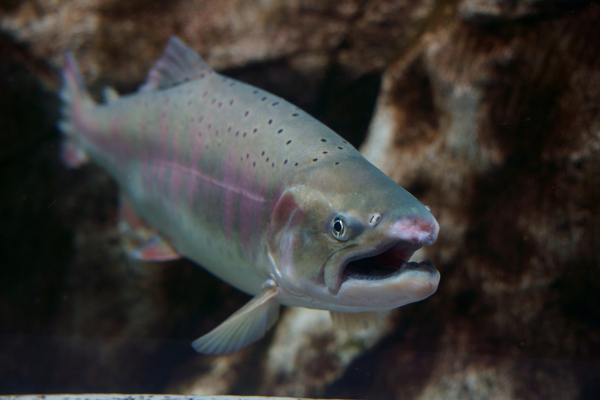
Rainbow-trout-farm-Azumino_AdobeStock_492254603-20241218.jpg
Rainbow trout farm, Azumino City

In recent years, the Japanese farmed fish sector has faced consolidation and the appearance of large businesses. The number of operators has decreased, due to the ever-growing costs and lack of workers for the industry, caused by a rapidly ageing local population. The attraction of personnel (including those from abroad) for the industry is currently causing serious difficulties for Japanese fish farmers, as most of the potential workers they are looking to attract prefer to go to Australia, New Zealand and some Western nations, where working conditions are usually better, while salaries are higher.


Currently production materials (especially feed costs) account for the majority of expenses for Japanese fish farmers, making profitability low and making it difficult to obtain the funds necessary for business improvement and productivity improvement from farmers’ own funds.


Director of the Aquaculture Division of the Japanese Fisheries Agency, Hitoshi Fujita said: “In order for Japan’s aquaculture products to be evaluated in domestic and international markets and to be supplied steadily in the future, it is necessary to develop fast-growing varieties, develop alternative fishmeal feed, reduce manpower and labour, and reduce costs by making effective use of fishing grounds.”


In the meantime, controversy about wastewater released from the Fukushima Daiichi Nuclear Power Plant has damaged the reputation of sea fishing around at least part of the Japanese coast and has also hurt fish farming in Japan in general. Since the release of treated water from the reactor, China has suspended imports of Japanese seafood products, and Hong Kong has suspended the import of seafood from 10 prefectures, including Fukushima and Miyagi.


Hitoshi Endo, a fish farmer who grows and processes scallops and sea squirts at Yorisohama in Ishinomaki City, said in an interview with Japanese business paper NHC that he has been exporting scallops to Hong Kong for about 10 years, and in some years he made about 25 million yen (£130,000) in sales. However, he said, he has lost his sales channel due to the import suspension measures following the release of treated water. It is currently difficult for small and medium-sized businesses to find other overseas export destinations, and other Japanese fish farmers are facing similar problems.

Japan-family-meal_AdobeStock_880299655-20241218.jpg
Family meal in Japan

Why not try these links to see what our Fish Farmer AI can tell you.
(Please note this is an experimental service) 

How can Japan increase domestic fish consumption sustainably?What strategies are in place to boost Japanese fish exports?How does Japan plan to address aquaculture labor shortages?What technologies are being introduced to improve fish farming efficiency?How is Japan ensuring sustainability in its aquaculture practices?
Linked InXFacebook
Add New Comment
You must be logged in to comment.
HGV Driver - Mowi Scotland
RosythRosythSalary On ApplicationSalary On Application

Team Leader (Hygiene Night Shift) - Mowi Scotland
RosythRosythSalary On ApplicationSalary On Application

Marine Operative - Bakkafrost Scotland Limited
IV51 9DDIV51 9DD£35,677.16 per annum£35,677.16 per annum

Electrical Engineer with PLC Programming - Bakkafrost Scotland Limited
IV54 8XHIV54 8XH£60,030 per annum£60,030 per annum

Farm Technician (Glenfinnan) - Mowi Scotland
LochaberLochaber£29,389 to £32,914 per annum£29,389 to £32,914 per annum
Fish Farmer Magazine
IPSO
Facebook
X
Linked In

© 2026 Fish Farmer.