




Land-based farming: BC’s blue opportunity?
A global aquaculture transformation may be underway – and British Columbia risks being left behind.


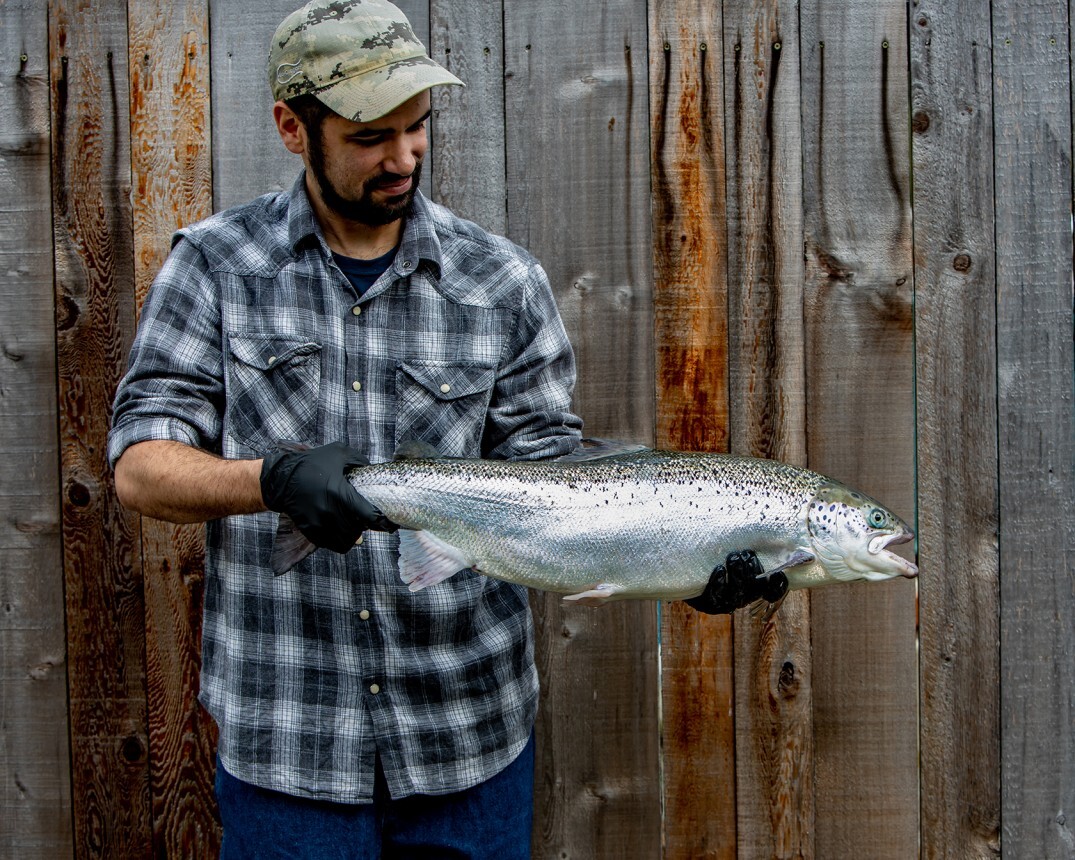
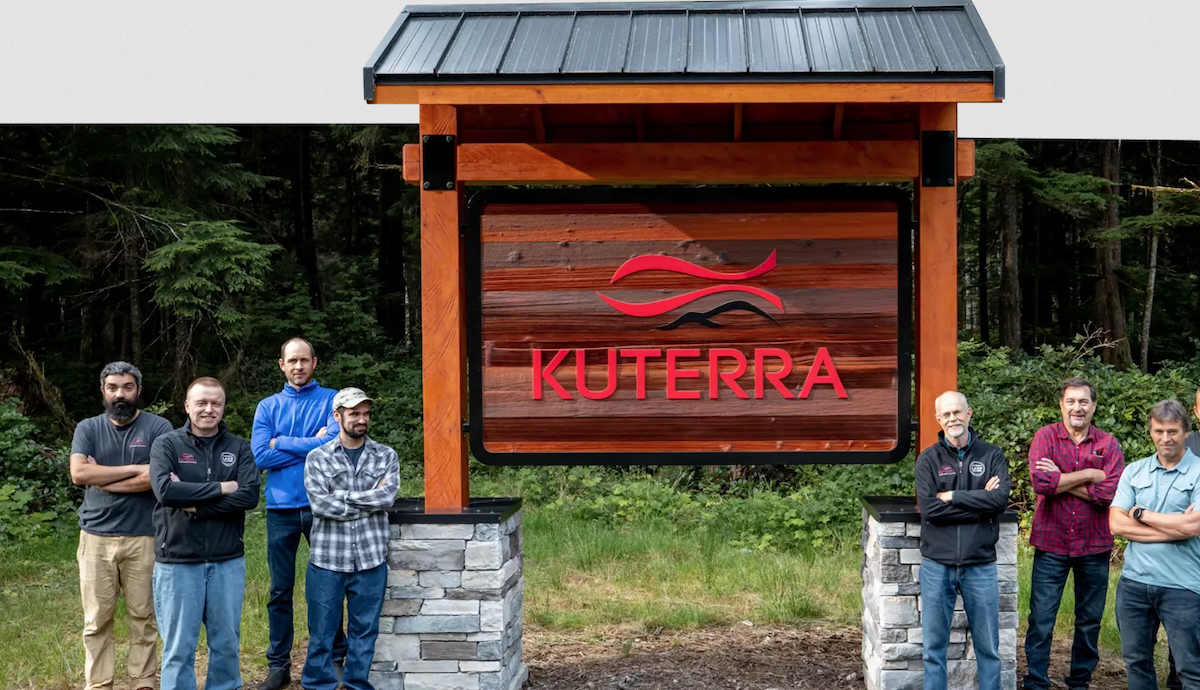
In a nondescript facility in Port McNeill in BC, a quiet revolution began. It would eventually reshape the global salmon farming industry. Kuterra, a land-based Atlantic salmon farm operating in partnership with the ‘Namgis First Nation, became North America’s first commercial-scale facility of its kind.
By proving that premium-quality salmon could be raised economically on land rather than in ocean net pens, Kuterra sparked what industry observers now call aquaculture’s “new disrupter”.
Today, more than 70 land-based salmon farming projects are in development worldwide. Billions of dollars are flowing into the sector through IPOs and institutional investments. Traditional ocean farming giants – like Mowi, Grieg, and Leroy companies that once dismissed land-based farming as impractical – are now entering joint ventures and reconsidering their strategies. Yet paradoxically, it’s BC which now finds itself on the sidelines of an economic opportunity that could generate thousands of jobs and hundreds of millions in annual revenue.
The explosive growth in land-based salmon farming stems from converging pressures on traditional ocean-based aquaculture. Existing ocean farming practices have approached what industry analysts describe as “carrying capacity”. Warming oceans, increasingly frequent algal blooms, and declining dissolved oxygen levels are making it tough to use traditional net-pen locations. Notably, there have been several studies (predominantly by Dr William Cheung’s group) which predict increasing suitable habitat for mariculture in the North Pacific/Arctic with ice loss, but the potential for expansion into these areas will depend on governmental policy.
Social licence issues compound these environmental challenges. Washington State has moved to phase out net-pen salmon farming. In BC, the federal government’s decision to close salmon farms in the Discovery Islands has sent shockwaves through coastal communities. These regulatory shifts signal to investors that ocean-based farming faces an uncertain future, accelerating the search for alternatives.
Land-based farming offers what ocean operations increasingly cannot: a controlled, reliable farming environment immune to many of the challenges plaguing traditional aquaculture. Fish raised in recirculating aquaculture systems grow in precisely managed conditions, free from sea lice, algal blooms, and the other environmental variables that can devastate ocean-based operations.
A global race is already underway
The scale of investment flowing into land-based salmon farming is staggering. Atlantic Sapphire has deployed US $275m (£207m) into its Florida operation, which is now shipping food fish to market from its first module and is planning to scale to 220,000 tons of annual production, if it can continue to raise enough capital to do so. AquaCon has secured US $1bn (£754m) in funding for a facility targeting 100,000 tons of annual capacity. Scandinavian companies are building or operating salmon farms in China, Japan and South Korea.
These aren’t speculative ventures. Eighteen large-scale farms of 10,000 tons or greater are currently under construction globally. Eleven large-scale and nine small-scale farms have already delivered their first harvests to market. The technology works, the fish sell, and investors are responding.
Traditional salmon farming companies recognise the writing on the wall. Grieg Seafood, an Oslo-listed player and one of the traditional farming giants (although it has recently scaled back, selling some of its operations to Cermaq), has made joint investments in two 3,000-ton facilities, becoming the first major ocean farmer to enter the land-based arena. Mowi, the world’s largest salmon farmer, has dramatically reversed course, with executives now stating that “everything we see that can be profitable, we will do”.
BC entered this race with remarkable natural advantages. The province offers low-cost, low-carbon hydroelectric power – a crucial factor for energy-intensive recirculating aquaculture systems. An established aquaculture workforce already trained in salmon farming represents an asset global competitors struggle to replicate. Industry reports identify the acute shortage of skilled workers as a major barrier to success worldwide.
One notable expert believes that this is actually one of the barriers for BC’s move to land-based. We talked to Dr Andrea Frommel, Assistant Professor and Chair in Sustainable Aquaculture on the Faculty of Land and Food Systems at University of BC. Her studies show that “the technology involved in RAS systems is very complex and the training is completely lacking here. RAS is another beast entirely from net pen farming. Scandinavia spearheaded RAS technology and teach it in many institutions, but you will be hard pressed to find this training in BC (and most of Canada).
“At UBC, we launched a graduate certificate in aquaculture several years ago that had RAS technology as one of its components. But with the government flip-flopping on their decision to phase out net pens, this creates so much uncertainty around the future of the industry, that no one wants to invest in this type of education. With low enrolment, the certificate was not sustainable, and we’ve put it on hold indefinitely.”
The province’s infrastructure advantages extend throughout the supply chain. Feed mills already operate at scale, with leading research expertise in alternative diets available through the Department of Fisheries and Oceans and private entities like Taplow. Fish health and veterinary science professionals are trained and present. Equipment suppliers like AKVA and ScaleAQ maintain operations supporting existing land-based broodstock and stocking facilities. Fish processing facilities and transportation networks stand ready to serve expanded production.
BC’s temperate coastal locations offer ideal ground and ocean water temperatures that support low-cost operations. (For RAS, one would still need to cool the water in the facility, but as mentioned earlier, BC has plentiful and cheap hydro.) Multiple genetic strains of desirable species – steelhead trout, Atlantic salmon, Arctic char, coho, and sockeye – are already available and raised in provincial farms. Workforce training programmes at Vancouver Island University and the University of BC provide educational pathways into the industry. But as Andrea Frommel puts it, above, training is no longer available due to uncertainty. Clearly, BC’s government needs to make a decision and stick with it, as the continuous changing mandates make planning any future of the industry impossible. The province sits close to major US markets with low distribution costs.
These first-mover advantages, however, diminish as industry clusters form elsewhere. Each dollar invested in Maine, Florida, or Norway represents not just a lost opportunity for BC but a strengthening competitive position for other jurisdictions.
The economic case
A financial modelling study sponsored by the Fraser Basin Council paints a compelling picture of what a mature land-based salmon farming industry could mean for BC. The base-case scenario analysed an industry producing 50,000 tons annually through individual farms operating at 3,000-ton scale.
The capital investment required totals approximately CAN $1.1bn (£597m) to establish the industry. Annual operations would generate $400m (£217m) in revenue, with the farming sector producing net income of $79m per year (£43m). Processing, trucking, and sales activities associated with handling the farmed salmon would contribute an additional $114m annually (£62m).
The economic multiplier effects extend far beyond the farms themselves. Direct, indirect, and induced economic impacts from ongoing farm and processing operations would total $837m (£454m) in annual expenditures, contributing $348m (£189m) to provincial GDP. The industry would support 2,685 jobs with total household incomes of $142m (£77m) and generate $70m (£38m) in annual tax revenues.
Construction represents a separate, substantial economic impact. Building out the industry would create a one-time economic stimulus of $1.7bn in expenditures (£922m), supporting more than 4,000 jobs during the construction phase and generating $113m (£61m) in tax revenues.
For coastal communities facing job losses from Discovery Islands closures and declining wild fisheries, these numbers represent not abstract economic modelling but potential livelihoods and community sustainability.
Small scale, big impact
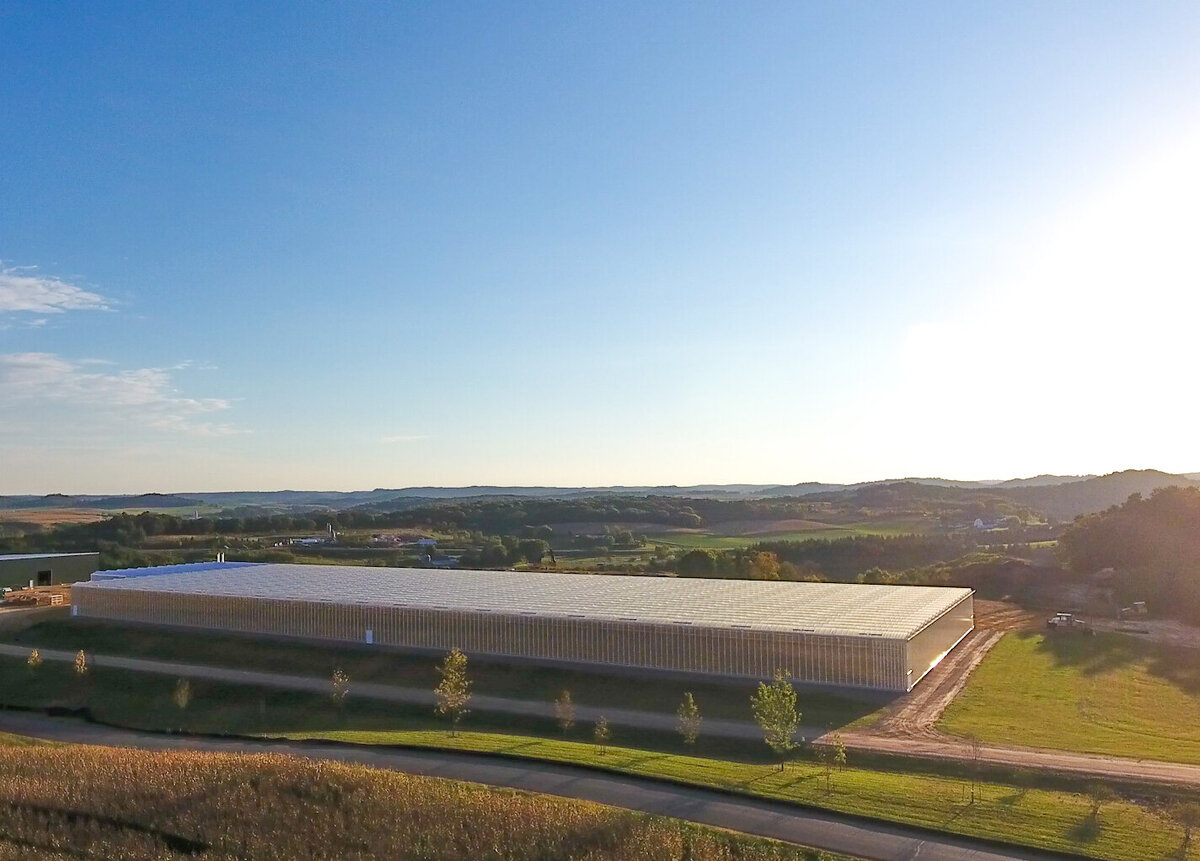
While mega-facilities capture headlines, smaller-scale operations offer a compelling alternative model particularly suited to BC’s distributed coastal communities. Farms producing 100 to 500 tons annually, often coupled with aquaponic greenhouse operations for vegetable production, require investments roughly a 50th the size of major facilities.
Superior Fresh in Wisconsin, operating at 700 tons, demonstrates the viability of this approach. These smaller operations achieve proven success with rapid return on investment and shorter timeframes to first revenue. They provide food security through geographically diversified, locally grown produce and salmon. When co-located with communities that have fish processing facilities serving seasonal wild fisheries, they can transform seasonal jobs into full-time employment.
The caveat remains significant: even small-scale land farming demands a committed, technically astute workforce. This isn’t hobby farming. Success requires sophisticated understanding of recirculating aquaculture systems, fish biology, water chemistry, and integrated operations management.
BC’s existing success stories
Despite policy headwinds, BC can already point to notable land-based farming successes. Beyond Kuterra’s pioneering operation, Golden Eagle has a superb facility on Saltspring Island, and the company is rearing sablefish in RAS – and is dedicated to environmental sustainability.
Miracle Springs in Mission produces 100 tons, split between Arctic char and steelhead, serving the white tablecloth restaurant market while also producing eggs and fry for other production companies. Their maintenance of genetic broodstock for both species represents a crucial foundation for industry growth. These hatcheries are built with a flow-through system.
Target Marine, acquired by Grieg in 2007, raises coho and sturgeon. Sumas Lake Live produces tilapia. PR Aqua Corp, based in Nanaimo, has emerged as a world-leading aquaculture design and technology provider, serving as designer of the Kuterra facility and lead process designer for a 20,000-ton farm under development in Maine.
Organic Ocean Corp operates as a sustainable seafood distributor, marketing land-based salmon’s advantages: milder flavour profiles, firm texture from quality animal welfare conditions, freedom from therapeutants and antibiotics, top sustainability rankings from Seafood Watch and Ocean Wise, minimal environmental impact, absence of kudoa (a microscopic marine parasite), shorter supply chains yielding fresher fish, and stable year-round pricing.
These operations demonstrate that BC possesses both the technical capability and market access to succeed at land-based salmon farming. What’s missing is the policy environment to catalyse broader growth.
The window is closing
BC faces what might be termed a “no-win scenario”: the net-pen industry is in retraction, wild fisheries are diminished or closed, sport fisheries face restrictions, and job losses appear inevitable. What can be done?
Immediate actions could include promoting cultured seaweed farming; integrating wild fishery, farmed salmon, and land-based production volumes into processing and transportation sectors, and utilising existing educational institutions to retrain Discovery Islands workers.
Over a three-year horizon, catalysing land-based salmon aquaculture through incentives for small-scale coupled salmon and aquaponic facilities in communities, while encouraging major operators to invest in large-scale land-based operations as net-pen infrastructure ages out, could transform the province’s aquaculture landscape.
The long-term vision requires continued investment in wild salmon rehabilitation to rebuild fisheries, pursued in parallel with – not in opposition to – sustainable farmed salmon production.
What’s required is not technological breakthrough – the technology works and continues improving – but political will, in order to send a clear signal that BC is open for business in land-based aquaculture. The province’s natural advantages in hydroelectric power, existing workforce, processing infrastructure, and market access remain real.
According to Frommel, one reason the aquaculture sector is reluctant to invest is that it makes economic sense, for the short term anyway, to simply hang fire and hope that a change in administration, or in government policy, will make the problem go away.
As she puts it: “One of the issues I see here is that it is still way cheaper and easier to farm salmon in the ocean than on land, because the industry does not cover the costs to the environment.
“Were they to have to pay environmental taxes of some sort and would these be alleviated in closed-containment systems, plus a subsidy to build a RAS, the cost gap wouldn’t be as huge.
“Another issue I see is that public perception of Atlantic salmon is not great. Along with RAS, there would probably need to be a change in species as well, coho, Arctic char and sablefish being great alternatives. Personally, I don’t think we should rely on any piscivorous fish for aquaculture and should instead look at lower trophic levels – I’m doing some research into wolf eel on an insect diet, as well as co-culture of seaweeds and oysters.”
The current situation in BC is quite dynamic. Consider just two recent developments.
First, in January of this year, local news outlet the Ladysmith Chronicle reported that the BC-based Homalco First Nation is exploring the possibility of entering the land-based salmon farming business on Vancouver Island.
The Campbell River area-based First Nation recently revealed it is conducting a feasibility study for a commercial, land-based salmon farm to be located in its traditional territories. The proposed facility would use recirculating aquaculture systems (RAS) to raise Pacific salmon – coho – in a completely controlled and contained environment.
The Homalco First Nation is not the first indigenous community to test the land-based waters of salmon farming on Vancouver Island. The ‘Namgis First Nation launched an operation in 2017 outside Port McNeill that raised Atlantic salmon when it first opened, aiming to prove that sustainable, land-based aquaculture was possible. However, the farm later switched to steelhead trout, and has been leasing its operations to Kuterra since 2019. In 2024, Kuterra reported harvesting four tons of steelhead a week, which was roughly 2,000 fish.
In February of this year, SeaWest News reported “after more than three years of stalled efforts to raise private capital, Gold River Aquafarms is challenging provincial and federal governments to match their food security rhetoric with financial support for its land-based fish farm project on Vancouver Island.
“The company is trying to raise $110m (£60m) to build a first-of-its-kind in BC, land-based RAS fish farm to produce 3,000 tonnes per year of fresh steelhead salmon on the site of a re-purposed pulp and paper mill.”
A blue revolution in salmon farming is underway. BC can lead it, follow it, or be left behind by it. The choice, for now, remains open. But the window is closing.
Why not try these links to see what our Fish Farmer AI can tell you.
(Please note this is an experimental service)
You May Also Like




© 2026 Fish Farmer.