Despite experiencing its fair share of missteps and setbacks, the kelp industry in North America is in good shape and has the potential for serious growth over the next few years. That’s the message in “State of the Kelp Industry”, a report published by not-for-profit organisation GreenWave, which was set up to help advise and support regenerative ocean farmers.

The report says: “Over the past decade, commercial kelp farming in North America has transformed from a handful of intrepid seaweed farmers and companies to a budding regenerative industry.
“Collectively, we’ve tinkered, toiled, and innovated, giving shape to a new blue economy.
“The industry’s early development has not been without setbacks. Riding the momentum of the broader climate-mitigation narrative, more than US $100m [£76m] in public and private capital was funnelled into high-concept ‘moonshots’.
“This influx of speculative capital pulled the nascent industry away from its roots in farmer ownership, regional economic development, and ecological stewardship, and toward a low-value, technology-driven model of seaweed production.”
This speculative turn took several forms. The US Department of Energy invested $22m (£16.6m) in seaweed biofuels and offshore automation; Kelp Blue raised tens of millions in venture capital, positioning Alaska as a North American testbed for planetary-scale kelp ambitions; and Running Tide sold $30m (£22.7m) in carbon-removal credits to Shopify, Microsoft and Stripe based on plans to sink millions of biodegradable “seaweed pucks” to the seafloor.
While these moonshots yielded some technical advances, GreenWave argues, they ultimately failed to deliver durable value or the foundations for a viable industry.
By focusing on speculative markets, the report says, these high profile projects diverted investment away from things the industry needed: building infrastructure, developing processing capacity and creating actionable business models.
The report goes further: “It also distorted industry culture, encouraging hyper-competition, secrecy, and aggressive IP [intellectual property] protection at a time when collaboration was essential to address shared early-stage industry bottlenecks.”
Fortunately, that was not the only investment taking place. GreenWave argues that a more modest but durable trajectory was taking shape from the ground up, to create the foundation for a domestic kelp industry in the US and Canada.
This also faced its challenges and setbacks. The GreenWave report says: “Kelp farmers grappled with seed quality issues and processing and permitting bottlenecks. They also contended with forces out of their control – warming waters, powerful winter storms, tariffs and staff cuts at US federal agencies.”
First-movers like Atlantic Sea Farms, 12 Tides, and AKUA built their businesses around speciality food products, marketing kelp to consumers as a “climate hero ingredient”.
In parallel with the experience of producers in Scotland, however, it turned out that marketing seaweed as a speciality foodstuff for human consumption has its limitations, especially in a market where consumers are not used to seeing seaweed on their plate.
The three companies mentioned above have since closed or contracted, GreenWave notes, and others are sitting on stranded inventory.
The report argues: “Boutique food products played an important role in advancing early-stage local supply chains, but they were not positioned to carry the industry to scale.”

So where is the industry now? GreenWave, having crunched the numbers, reports on some key measures:
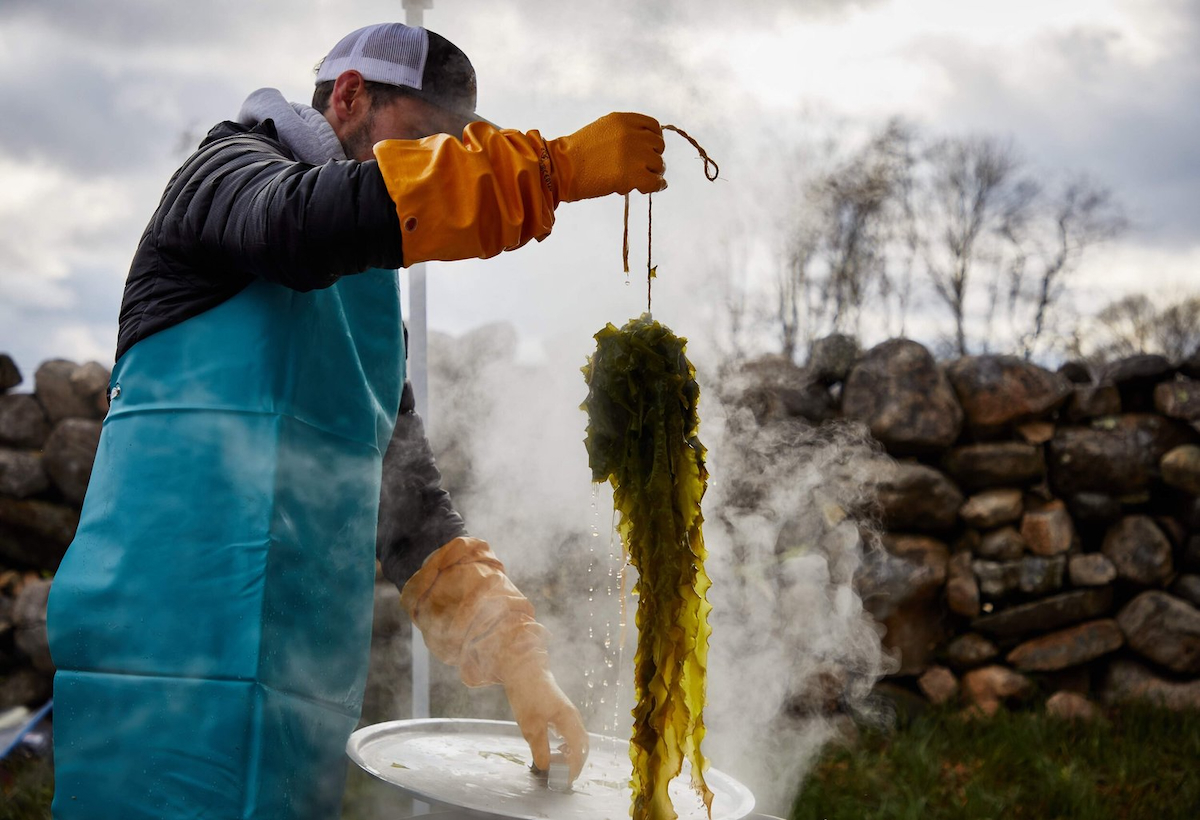
1. Nursery and farm expansion: Kelp nurseries grew from just a handful in 2015 to more than 50 facilities in 2025 across the US and Canada. 248 kelp farming licences cover approximately 6,256 acres (2,535 hectares).
2. Gametophyte breakthroughs: New nursery protocols and modular containerised systems have dramatically increased seed viability, extended growing seasons and improved yields, while cutting labour costs in half and doubling output.
3. Cooperative formation: Alaska’s first producer-led kelp cooperative, Kodiak Ocean Growers, launched in March 2025.
4. Right-sized finance: GreenWave’s Kelp Climate Fund –which has distributed over $1.6m (£1.2m) to more than 70 farmers since 2021 – along with debt financing from community development financial institutions well-versed in kelp farming, provides farmers with the financial stability needed to purchase essential infrastructure and optimise production.
5. Yield achievements: Southern New England achieved sample weights of up to 11.6-29.5 pounds per foot (17.3-43.9 kilograms per metre) in 2024, demonstrating the industry’s production potential when optimal conditions are met.
6. Infrastructure innovation: Semi-automated harvest equipment like the Harvest Buddy, with a capacity of 6,000 pounds per hour (2,722 kilogram per hour), has improved harvesting efficiency. Much-needed processing capacity has been added, including a new 30,000-pound-per-day (13,608-kilogram-per-day) dehydrator in Maine and a 3,000-pound-per-hour (1,361-kilogram-per-hour) shredder in Connecticut.
7. Data-driven knowledge growth: Implementation of the My Kelp app (GreenWave’s tool for ocean farmers) enabled systematic data collection from 70 farms, with early data supporting certification audits, loan applications and improved yield forecasting.
8. Market diversification: The industry has moved away from highly speculative sectors like biofuel and blue carbon, and is diversifying beyond food into biostimulants, cosmetics, functional ingredients and biomaterials.
9. Follow-on investment: Macro Oceans, Cascadia Seaweed, and Ocean Rainforest raised more than $17m (£12.9m) between 2023 and 2025, indicating continued investor confidence in a variety of end markets.
10. Supply chain coordination: Forward contracts established for the 2026 season represent increased coordination between farmers and buyers. GreenWave’s value chain coordination program and app, Seaweed Source, is connecting supply with demand, with 39 buyers reporting purchasing potential approaching 5.5 million pounds (2,495 tonnes) wet weight across diverse market segments.
Based on these findings, the GreenWave report estimates that the US and Canada now have the capacity to produce more than 4,536 tonnes of kelp per year, if current operations are fully optimised and mobilised.
The report concludes: “The fact that our industry can now meet demand at scale is one of the major success stories of the past decade. The questions now are sharper: What level of growth is truly right‑sized? Where is real product‑market fit emerging? How do we scale shared regional processing infrastructure? And what must happen to keep farmers in business as supply chains mature?
“The industry is at a critical inflection point, with real opportunities for alignment and scale now coming into view. The choices made in the next few years will determine whether this production capacity translates into a durable industry or remains fragmented and misaligned.”

Why not try these links to see what our Fish Farmer AI can tell you.
(Please note this is an experimental service)