
ao link

India: A big bet on aquaculture
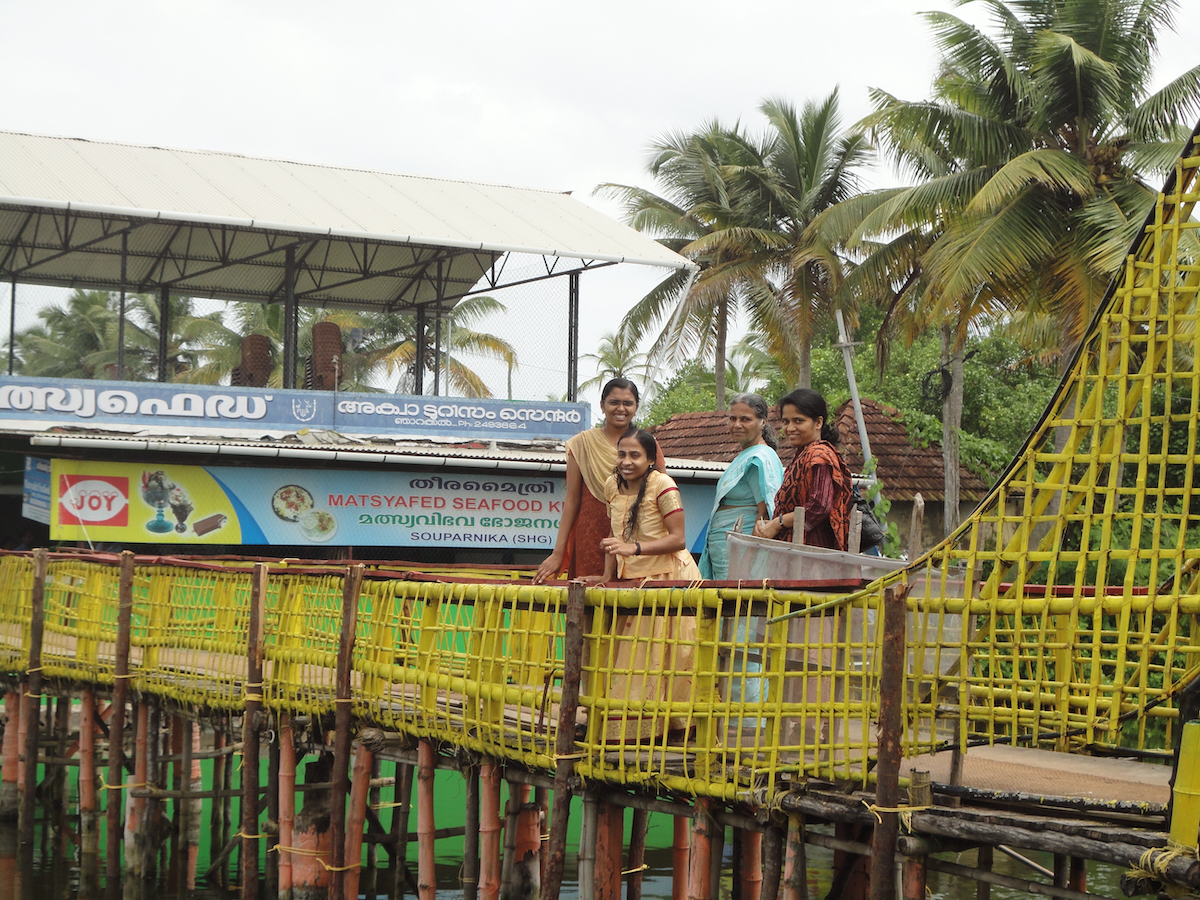
In an important vote of confidence on the future of aquaculture, writes Gordon Feller, the World Bank has approved large-scale projects in order to support India’s ambitious aquaculture initiatives.

Linked InXFacebook
Fish farm India wiki commons web
Fish farm, India

This includes an unprecedented US $150m (around £114m) loan known as “The Fisheries Sector COVID-19 Recovery Project”. At the height of the pandemic, in 2020-21, India’s substantial fisheries industry saw losses of about $5.5 billion (£4.2bn) – and fish production fell almost 40% in that one year.


This World Bank loan was designed to complement the Indian national government’s own aquaculture scheme, which is called the Pradhan Mantri Matsya Sampada Yojana (PMMSY).


The overarching aim is to make the aquaculture sector in India more sustainable and climate-resilient. The methods which are being funded include improving access to finance, introducing modern practices, and providing technical support. In practice, this means a concerted effort is now underway to help micro-enterprises access working capital, to enhance risk management against losses, and to provide performance-based grants.


Support for micro-enterprises is sometimes channelled through an Indian entity known as Micro Units Development and Refinance Agency Limited. It was established on 8 April 2015 as a wholly-owned subsidiary of the Small Industries Development Bank of India.


MUDRA’s authorised capital is approximately US $563m (£425m), with a paid-up capital of about US $189m (£143m). As of September 2024, its net worth stands at roughly US $508m (£303m), while deposits from banks total around US $3.28 billion (£2.5bn), reflecting its substantial financial scale and lending capacity.


The agency’s mandate is to support micro and small business units across India - estimated at around 57.7 million units. Through its flagship programme, the Pradhan Mantri MUDRA Yojana programme, MUDRA sanctioned loans totalling approximately US $28.04 billion (£21.15bn) for over 25 million micro-enterprises, providing affordable credit via partner banks and financial institutions.


The current effort is building on some progress made by important past projects in India. One of those was The Shrimp and Fish Culture Project, which provided support for brackish water aquaculture in some of the country’s most crucial states - like Andhra Pradesh, West Bengal and Orissa.

tiger prawn AdobeStock 1696109105 web
Tiger prawn

Support from the PM

India’s Prime Minister Narendra Modi recently chaired a meeting to review the progress in, and plans for, the fisheries sector. One area where he’s been focused is on plans that aim to advance deep-sea fishing and seafood exports. India’s politics tend to favour efforts which bolster rural livelihoods, and this helps to explain why the fisheries sector is seen by Modi to be vital. With a coastline stretching over a vast Exclusive Economic Zone of 2.02 million sq km, the country holds immense marine potential, estimated at 5.31 million tonnes of fish products.


The central government statistics bureau says that India’s coastal states (and other Indian territories) are home to approximately 3,477 fishing villages, contributing 72% of India’s total fish production and accounting for 76% of its seafood exports.


The central government launched several initiatives to promote sustainability and strengthen marine fisheries, including three that have garnered international attention: the Marine Fisheries Census Operations; the Turtle Excluder Device project; and the Standard Operating Procedure for the Vessel Communication and Support System.


Commenting on PMMSY, the national government’s Department of Fisheries, part of the Ministry of Fisheries, Animal Husbandry and Dairying, says that it wants to “bring about ecologically healthy, economically viable, and socially inclusive development of the fisheries sector of India”. The national Minister in charge of that department, Rajiv Ranjan Singh, recently said: “Through schemes like PMMSY … a significant boost has been given to the fisheries sector for the creation of modern infrastructure, such as fishing harbours, hatcheries, feed mills, and cold chains.”


PMMSY is addressing what the department sees as “critical gaps in the fisheries value chain from fish production, productivity and quality to technology, post-harvest infrastructure and marketing”. It aims to “modernise and strengthen the value chain, enhance traceability and establish a robust fisheries management framework while simultaneously ensuring the socio-economic welfare of fishers and fish farmers”.


In 2018 the national government created the Fisheries Infrastructure Development Fund (FIDF). The goal was to strengthen and modernise the country’s fisheries sector. Managed by the Department of Fisheries, the FIDF provides long-term, low-interest finance to both public and private stakeholders for developing essential fisheries infrastructure. With a total of US $847m (£639m), FIDF supports projects such as fishing harbours, fish landing centres, cold chain facilities, aquaculture units, fish processing plants, hatcheries, and laboratories for quality assurance.


FIDF’s main aim is to enhance fish production and productivity, reduce post-harvest losses, improve value addition, and promote export competitiveness. It also seeks to create employment opportunities for fishers and entrepreneurs, contributing to the broader vision of the Blue Revolution.


Key lending agencies – such as the National Bank for Agriculture and Rural Development, the National Cooperatives Development Corporation, and others –provide concessional finance.

Aeration systems in an Aqua pond near Eluru (photo iMahesh) web
Aeration systems in an Aqua pond near Eluru (photo iMahesh)

Evaluating success

The government claims three key accomplishments as PMMSY’s “wins”:


• Enhancement of fish production from 10.26 million metric tonnes (2014-15) to 13.75 million metric tonnes (2018-19)


• Productivity increased from 2.3 tonnes per hectare to 3.3 per tonnes per hectare


• Exports increased from US $4.03 billion (£3.04bn) to US $5.25 billion (£4bn) (2018-19)

PMMSY’s key objectives are listed in this way by the government:


• Harness the potential of the fisheries sector in a sustainable, responsible, inclusive and equitable manner


• Enhance fish production and productivity through expansion, intensification, diversification and      productive utilisation of land and water


• Modernise and strengthen the value chain including post-harvest management and quality improvement


• Double fishers and fish farmers’ incomes and generate meaningful employment


• Enhance the contribution of the fisheries sector to Agricultural GVA and exports


• Ensure social, physical and economic security for fishers and fish farmers


• Build a robust fisheries management and regulatory framework

PMMSY’s key targets are listed in this way by the government:


• Increasing fish production to 22 million metric tonnes by 2024-25 from 13.75 million metric tonnes in 2018-19.


• Enhancing aquaculture productivity to five tonnes per hectare from the current national average of three tonnes.


• Augmenting domestic fish consumption from 5kg to 12kg per capita.


• Increasing contribution of fisheries sector to the Agriculture Gross Value Added (GVA) to about 9% by 2024-25 from 7.28% in 2018-19. (GVA measures the value of goods and services produced in a specific sector - in this case, agriculture - minus the cost of inputs and raw materials used in production.)


• Doubling export earnings to US $11.28 billion (£8.47bn) by 2024-25 from US $5.25 billion (£4bn) in 2018-19.


• Facilitating private investment and growth of entrepreneurship in the fisheries sector.


• Reduction of post-harvest losses from the reported 20-25% to about 10%.


• Generating 5.5 million direct and indirect employment opportunities along the value chain.


• Doubling the incomes of fishers and fish farmers.

The ultimate test, however, will be what the Indian aquaculture sector looks like over the next few years. 

Shrimp farm on the backwaters of Kollam AdobeStock 79252581 web
Shrimp farm on the backwaters of Kollam

Why not try these links to see what our Fish Farmer AI can tell you.
(Please note this is an experimental service) 

How does PMMSY improve sustainability in India's aquaculture sector?What role does MUDRA play in supporting micro-enterprises in fisheries?How will the Fisheries Infrastructure Development Fund enhance fish production?What strategies are used to reduce post-harvest losses in Indian fisheries?How is traceability being strengthened across India's fisheries value chain?
Linked InXFacebook
Add New Comment
You must be logged in to comment.
HGV Driver - Mowi Scotland
RosythRosythSalary On ApplicationSalary On Application

Team Leader (Hygiene Night Shift) - Mowi Scotland
RosythRosythSalary On ApplicationSalary On Application

Marine Operative - Bakkafrost Scotland Limited
IV51 9DDIV51 9DD£35,677.16 per annum£35,677.16 per annum

Electrical Engineer with PLC Programming - Bakkafrost Scotland Limited
IV54 8XHIV54 8XH£60,030 per annum£60,030 per annum

Farm Technician (Glenfinnan) - Mowi Scotland
LochaberLochaber£29,389 to £32,914 per annum£29,389 to £32,914 per annum
Fish Farmer Magazine
IPSO
Facebook
X
Linked In

© 2026 Fish Farmer.