




Going Dutch
Perspectives for Sustainable Production and Sales” was the theme of a shellfish farming conference and trade show held in Goes, in the Netherlands, at the end of January.
It was opened via video link by European Commissioner Fisheries and Oceans, Costas Kadis, who majored on the opportunities for growth in shellfish farming and consumption in Europe.



The event centred on the prospects for production and consumption in the future, given that shellfish are a healthy food, and farming is good for nature. Interestingly, over two-thirds (68%) of the mussels produced are farmed organically.
The conference also acknowledged current issues with both production and sales. The mussel harvest in the Netherlands declined by nearly 30 per cent in 2024 compared to 2023, and at just over 21,700 tonnes, it is around 80% below the level recorded in 1994.
This decline is attributed in part to natural factors, such as a restriction in seed catching areas, increased rainfall, and man made changes to local hydrography, with consequential variability in primary productivity.
The shortage of mussels is partly met by imports, but elsewhere in Europe, production is also under pressure. According to the Producers’ Organisation for the Dutch Mussel Industry, around two thirds (65%) of mussel sales from the Netherlands are destined for the Belgian market.
The conference sessions examined causes, remedies, and prospects, looking at how the issue is being addressed elsewhere in Europe, and especially at how to address consumer requirements and encourage a new generation to become shellfish eaters. It also addressed the need to attract more young people into the wider industry through publicising the variety of careers and jobs available.
Turning to oysters, some 27.3 million shells were cultivated in 2024 (2,700 tonnes), mainly (94%) the Zeeland Creuse (Pacific oyster, Magallana gigas), according to provisional figures from Statistics Netherlands (CBS).
A conference session on sales, organised in collaboration with the Netherlands Fish Bureau’s SeaNext project – which has a remit to raise awareness of seafood – looked at what drives mussel and oyster consumption, at trends in consumer behaviour, and how young consumers are currently being reached. It questioned whether the supply of shellfish matches demand and sought to understand how shellfish could attract more attention in supermarkets. A presentation by Donaat Mortelmans from retail chain Colruyt, gave insight into the Belgian voracious appetite for shellfish.
Colruyt’s research found that one in 10 Belgians had eaten fresh seafood during the previous day, and the top five choices were salmon, scampi, cod, shrimps and mussels. Summer and autumn were the most popular times to buy mussels, 60% of people eat them at home and 40% prefer to eat them outdoors or in restaurants. The 18-24 age group were the most frequent purchasers and, interestingly, significantly more men than women chose mussels.
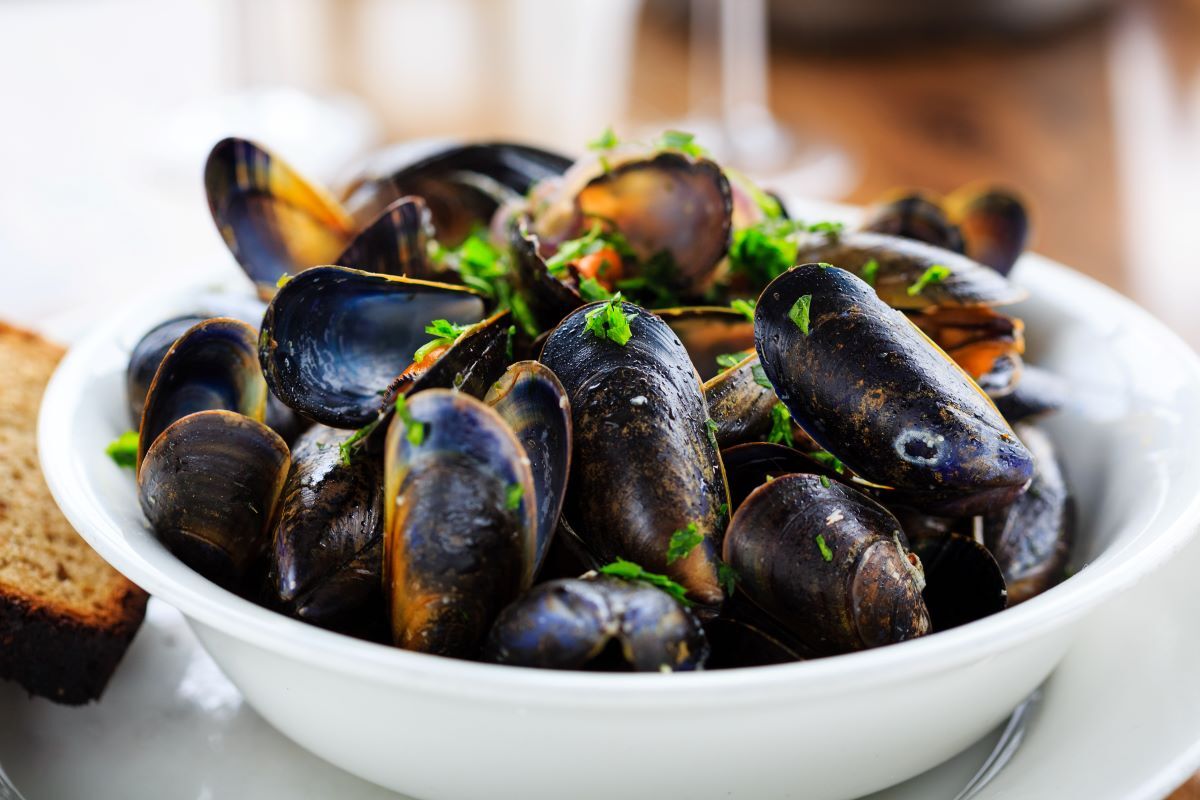
However, the trend for home consumption of seafood in general is gradually reducing, and for mussels, it decreased by 25% between 2016 and 2024. One of the main reasons is price and people are turning to supermarkets and hard discounters, and seeking active promotions to choose when to purchase seafood.
Dr Eleanor Adamson, from the Fishmongers’ Company in the UK, spoke about her organisation’s involvement in introducing around 60,000 teenagers to seafood per year, through the popular Fish in Schools Hero Programme, which works to inspire the next generation of seafood lovers by getting fish into food technology classrooms across the country. The Company’s Fisheries Charitable Trust supports the programme through core funding and industry connections, delivering thousands of tonnes of seafood into UK schools, and training teachers to be confident in preparing and cooking seafood with students.
Her research showed that the protein used by food teachers in schools was mostly chicken, with less than 20% using seafood – mainly salmon, and less than 1% using frozen prawns as the shellfish offering.
Dr Adamson explained that the UK population consumes roughly one portion of seafood per week, and in retail, shellfish is the smallest seafood sector, with mussel making up less than 10%. Out of home, the under-24 age group choose mussels more than older generations.
The seafood cookery sessions also include discussions on biology, nutrition, careers, culture, the environment, ethics and engineering. Delegates heard that young consumers’ issues with seafood include taste, smell, sustainability, cost, and the ethics of eating animal protein.
Many talk about needing plant-based and alternative proteins such as cultured meat and fungi products to enhance sustainability, health, and food security.
This means there is a need to provide greater education about how sustainable seafood production could play an essential part. In short, we need the oatmilk experience to be transferred to seafood, such as oysters – nobody had heard of oatmilk just a few years ago and now it is ubiquitous!
Alternative uses for mussels explored by the Submariner network in the Baltic Sea, include incorporation as an ingredient in poultry feed, which is low value, and in pet food which is higher value. Shells can be crushed for use in gardens as a soil enhancer.
On the farming side, speakers looked at production trends, spatial requirements, issues and solutions, the prospects for combining with other sectors such as recreation, and at innovations in the sector. It also addressed how young people approach mussel and oyster farming, and culminated in a panel discussion with young shellfish farmers and the audience.
The growing interest among women to take on important positions in the shellfish industry was tackled by Sarah Holmyard, director of UK Women in Seafood, who explained the situation in the UK, and spoke of her own experience in climbing the ladder through a series of seafood positions to reach board level. She explained that women needed to ask questions and be brave about stepping into what remains a man’s world, but that there are many rewards for getting involved at any level.
A sizeable Scottish delegation, organised by Seafood from Scotland, attended the conference and also benefited from a two-day learning journey, during which they were able to visit mussel and oyster farms, processing units and equipment manufacturers.
Why not try these links to see what our Fish Farmer AI can tell you.
(Please note this is an experimental service)
You May Also Like



Sign up to our daily Newsletters
Permission Statement

Yes! I would like to be sent emails from Fish Farmer Magazine
I understand that my personal information will not be shared with any third parties, and will only be used to provide me with useful targeted articles as indicated.
I'm also aware that I can un-subscribe at any point either from each email notification or on My Account screen.



© 2026 Fish Farmer.