Trondheim’s Spektrum arena buzzed with energy as Aqua Nor 2025 kicked off, the halls alive with cutting-edge technology, animated conversations and the constant hum of people moving between stands.

For Scotland, Aqua Nor is more than a trade fair: it is a chance to showcase our innovation, connect with peers from around the world, demonstrate that we are ready to tackle the challenges ahead and seize every exciting opportunity in this fast-moving, innovative sector.
It is also a reminder of just how dynamic the sector is, with new ideas, technologies and collaborations emerging every year, and how much the industry benefits from sharing knowledge and experiences across borders.
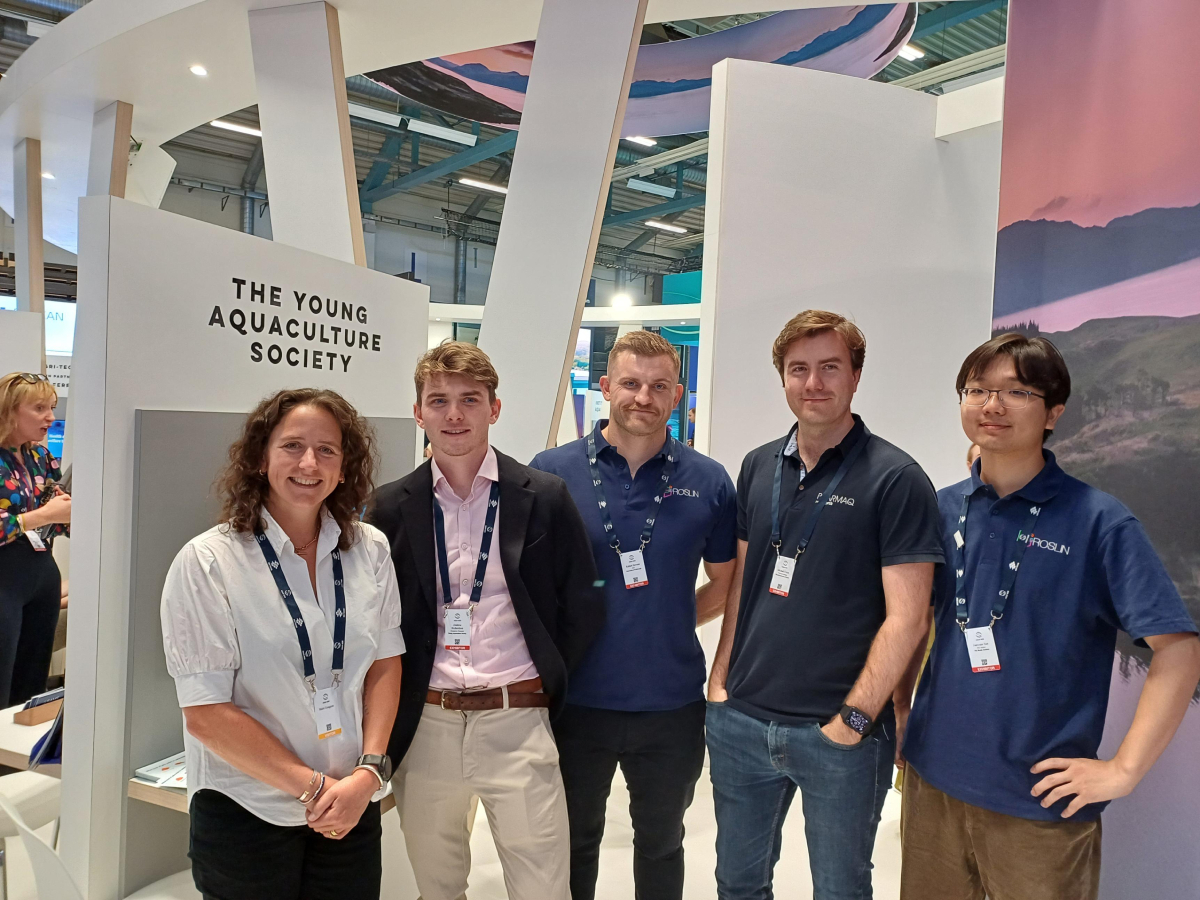
One of the highlights this year was representing the Young Aquaculture Society (YAS). As founder and current President, I was proud to see young professionals from Scotland, Norway, Canada, and Tasmania take the stage at the Scottish Pavilion, hosted by Highlands and Islands Enterprise (HIE) and the Sustainable Aquaculture Innovation Centre (SAIC).
The panel was moderated by social media influencer James Sibley and focused on giving the next generation a voice in the sector.
The discussion covered career pathways, representation and advocacy. These young leaders radiated the energy, curiosity and ambition that will drive salmon farming forward in the years to come.
Initiatives like the Next Generation Seafood Alliance, supported by ISFA, connect more than 3,000 members across Norway, the UK and Canada, with an online following exceeding 10,000. Iceland’s Young Aquaculture Network (YANI) is the latest addition, showing that youth engagement in aquaculture is gaining momentum worldwide.
Chatting with peers from Canada and Norway, it was obvious how much can be gained from swapping experiences and practical solutions, especially as environmental and regulatory challenges evolve.
Seeing how others tackle similar issues sparks fresh ideas, strengthens the global salmon community and reinforces the value of international collaboration.
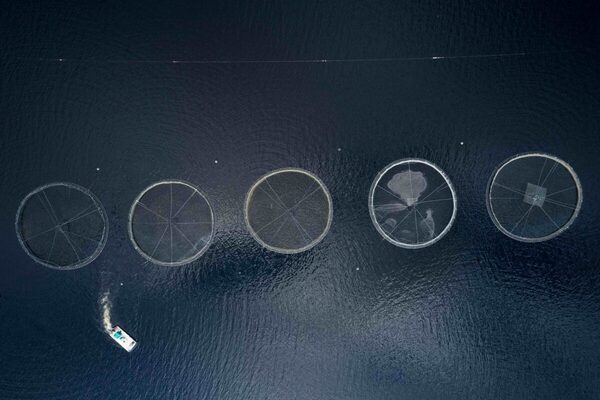
Innovation was everywhere. One striking example was a semi-enclosed offshore system designed to improve fish welfare while withstanding harsh conditions, a vivid demonstration of engineering catching up with ambition.
Several Salmon Scotland members showcased tools to optimise stock management, reduce sea lice and enhance fish health.
No single technology provides all the answers, but this growing basket of tools is vital to sustain expansion and maintain strong performance.
The event also provided plenty of informal moments for conversation and learning, where ideas could be shared face-to-face, something that is difficult to replicate online, and allowed for new partnerships and collaborations to emerge naturally, sparking ideas that could shape future projects.
Seeing a variety of approaches side by side also helps inspire confidence in practical, long-term solutions for farmers of all scales.
Key discussions focused on sustainability, regulation and market trends. One topic that kept coming up was the low price of salmon, which, ironically, reflects how well fish are performing in producing countries, particularly our own.
Record-breaking low mortalities in the first half of this year are a clear sign of the sector’s success, but they also underline the need to capture strong market opportunities quickly.
That’s why it is so important to see further trade talks to remove the 10% tariff on Scottish salmon exports to the US, as well as the swift implementation of the Sanitary and Phytosanitary (SPS) measures under the EU trade deal.
Strong biological performance must be paired with smart market strategy to maintain growth.

Policy engagement was another highlight. YAS members met Cabinet Secretary for Rural Affairs, Land Reform and Islands Mairi Gougeon, discussing how young professional networks can become long-term stakeholders in supporting regulators.
Her endorsement of initiatives like the Scottish Association of Young Farmers Clubs (SAYFC) reinforced the value of nurturing youth engagement to shape the sector’s future.
Scottish salmon is thriving like never before, thanks to more than £1 billion of investment in technology, fish health and environmental management. Between January and June 2025, monthly survival rates averaged an astonishing 99.12%, the best start to a year since voluntary reporting began in 2018. This strong start builds on last year’s progress, when cumulative mortality fell by more than a third in 2024.
These record-breaking figures are more than numbers. They mean more of our world-class product reaching plates at home and abroad, boosting the economy and supporting coastal communities.
We are excited by the prospect of exports breaking the £1 billion barrier for the first time, with salmon exports from Scotland up 33% to £941m in the 12 months to the end of June, putting them on track to surpass the previous calendar record of £844m set in 2024.
The innovations celebrated at Aqua Nor are having a real-world impact, supporting rural communities, strengthening food security and cementing Scotland’s reputation as a global leader in sustainable salmon production.
Attending Aqua Nor 2025 was a reminder that the future of salmon is bright. It is not just the technologies or the scale of the event that impress, it is the people: young professionals, innovators, regulators and farmers, all driving the sector forward.
Walking the pavilion, seeing the next generation of leaders engage with cutting-edge technology and hearing about ambitious projects from around the world, it is clear that Scotland is a hub of innovation, talent and ambition, ready to meet the challenges and exciting opportunities that lie ahead, and to continue building Scotland’s global reputation for innovation and excellence.
Andrew Richardson is President of the Young Aquaculture Society.
Why not try these links to see what our Fish Farmer AI can tell you.
(Please note this is an experimental service)