



A matter of taste
Every year as Christmas comes around, the mainstream newspapers publish the results of their reviews of different ranges of festive foods.
This year, The Guardian asked their in-house eco-chef to sample a range of the ‘most sustainable, delicious and well-priced smoked salmon’ for the Christmas table.


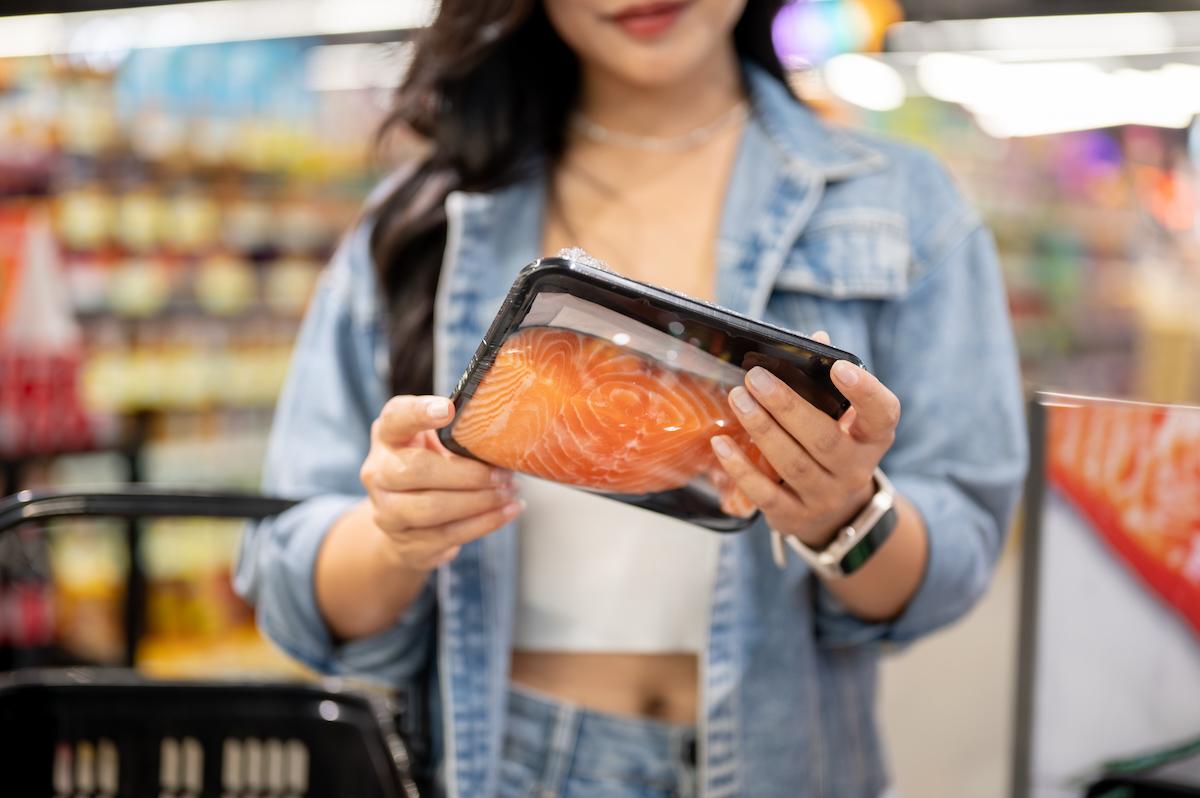
Every year, I see similar reviews and feel the comparisons made do not exactly compare like with like. It’s like saying I would like to review a range of cars, from the most expensive petrol engined BMW to the smallest electric Renault Zoe. They are both cars, but are they comparable?
The same question could be asked of The Guardian’s smoked salmon review in December 2025, as the products tasted ranged from wild sockeye salmon to organic farmed-raised, to smoked salmon flavoured with maple syrup. However, it seems that in this taste test, eco-chef Tom Hunt appeared more interested in the sustainability credentials of the salmon than the taste.
Tom began by saying that smoked salmon is one of Christmas’s purest pleasures, yet salmon farms have a ‘well-earned reputation for poor welfare and environmental damage’. Clearly, Tom was pinning his colours to the mast. He continued that his main guide was the Marine Conservation Society’s Good Fish Guide, which rates wild-caught Alaskan salmon as the best choice, and ranks Aquaculture Stewardship Council’s certified salmon as a good choice.
Tom then said that if the reader is interested in the wider impacts of salmon farming, they should check out ‘Off the Table’.
I wouldn’t be surprised if Tom is unaware that ‘Off the Table’ is a campaign run by anglers who blame salmon farms for the demise of the wild salmon they want to catch.
He then went on to rate ten smoked salmon offerings. Unsurprisingly, his choice for best overall smoked salmon was ‘Leap’ wild smoked sockeye salmon (£8.00-£9.25/100g), which he awarded four stars out of five. He highlighted the sustainability credential whilst saying that it has dark flesh and a rich smoky aroma, adding that it is deeply flavoured and satisfyingly firm.
I am not a great fan of the Leap brand because it comes with the slogan ‘Free, not farmed’. The fish and seafood sector has an already difficult job getting consumers to eat fish and seafood, so it is not helpful to promote one form of product by implying a negative image of other formats.
Whilst Tom says in the review that Leap sockeye with four stars is the best smoked salmon overall, he has awarded four other smoked salmon four stars out of five, the same as his best overall. Yet, there is no clarification as to why one four-star rated salmon is better than any other with the same rating, except the salmon is sockeye not Atlantic.
Those awarded four stars include M&S’s smoked sockeye salmon (£6.40/100g), Sainsburys ‘Taste the Difference’ Hebridean smoked salmon (£4.75/100g), The Coop’s Irresistible beech and oak smoked salmon (£6.30/100g), and ‘London Smoke & Cure’ smoked salmon (£9.45/100g) – a small company smoking fish and other foods in south London.
Tom awards three stars to Jon Ross smoked salmon (£7.95/160g), Mowi superior smoked salmon £5.75/100g), Tesco organic smoked salmon £5.75/100g), and Forman’s smoked salmon (£6.25/100g). Finally, Morrisons, The Best maple cured smoked salmon (£4.50/100g) is given just two stars, despite Tom saying it has excellent flavour and presentation for this price.
I’m not sure I agree with all his pricings, as I know I can buy cheaper if I shop judiciously. Certainly, Leap smoked sockeye salmon could be bought in the run-up to Christmas for £5.95, saving £3.30, which is an interesting level of saving. This is because it was possible to buy a 100g pack of smoked salmon for as little as £3.30, or less, and probably have as good or even better experience than Tom.
Every supermarket offers their customers a standard pack of own-label smoked salmon and I thought it would be an interesting exercise to taste test and compare them at the same time. It was a tough job, but someone had to do it!
Whilst Tom Hunt seemed more concerned about sustainability of the fish, the taste comes more from the cure and the smoke. This means that there were subtle differences between each smoked salmon, but all had been smoked with a mild smoke rather than the strong smoked used in some supermarket products. The differences were either due to the smoke, with some being bland whilst some had a slight acrid taste, or due to the oil content, with some greasy and some dry.
But I stress the differences were very subtle, and in my opinion not sufficient to make any shopper want to travel to another supermarket to buy a different own-label smoked salmon.
The smoked salmon tasted were:
• Aldi £2.49/100g – No origin but smoked in Scotland.
• Asda £3.00/100g – Norwegian salmon but could have been Scottish smoked in Scotland.
• Lidl £2.99/100g – Norwegian salmon smoked in Poland.
• M&S £5.00/100g – Scottish salmon smoked in Scotland.
• Morrisons £2.30/60g – Norwegian or Scottish smoked in England.
• Sainsburys £3.75/100g – Scottish salmon smoked in Scotland.
• Tesco £3/ 100g (saving 75p) – Norwegian salmon but could have been Scottish smoked in Scotland.
• Waitrose £5.50 /100g – Scottish salmon smoked in Scotland.
The smoked salmon that edged ahead were from Asda, Aldi and Morrisons, but the margins were small. The combination that seemed to work was with flesh that was a little oily, and a smoke that could be tasted, but not enough to mask the taste of the salmon. I would have had no hesitation in serving most of these salmon at Christmas rather than paying out much more for what is judged to be more of a premium offering. It is a testament to the quality of farmed salmon that smoked salmon can be sold for comparatively so little.
The big question is how do these smoked salmon compare with Tom Hunt’s overall winner?
The trouble here is that Atlantic salmon is a different fish to sockeye salmon, and the difference is not just farmed or wild as many consumers seem to believe.
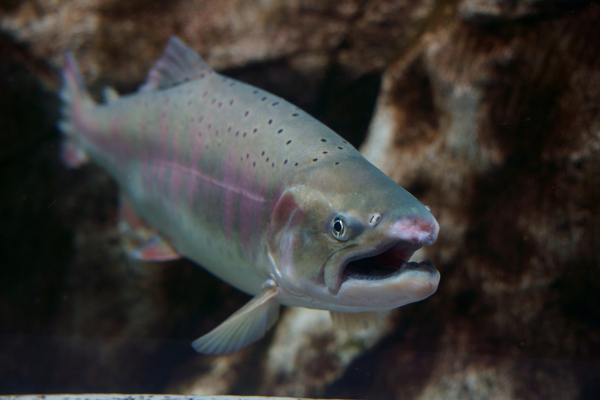
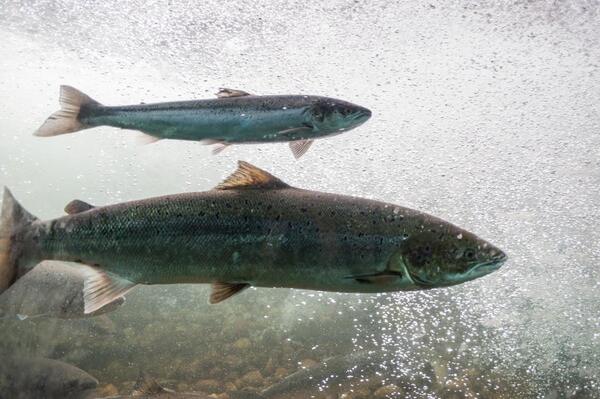
Sockeye salmon are more closely related to rainbow trout than Atlantic salmon. The five species of Pacific salmon, of which sockeye is just one, have a different taste and texture profile to Atlantic salmon, and this can catch consumers out. The fish are less oily and have a much tighter texture, and thus have a very different eating quality. This is very much reflected in the smoked sockeye salmon sold under the Leap brand.
When the smoked sockeye is tasted against smoked Atlantic salmon, the Atlantic salmon wins every time. Of course, eating smoked sockeye salmon on its own is probably a different experience because the difference is not apparent. However, when tasted alongside even the cheapest smoked Atlantic salmon, the different nature of sockeye makes it a less pleasant experience.
I might be tempted to say that those more used to eating Pacific salmon might have a different preference, but then seeing the amount of farmed Atlantic salmon for sale in the US, perhaps the preference there is for Atlantic salmon, too.
Why not try these links to see what our Fish Farmer AI can tell you.
(Please note this is an experimental service)
You May Also Like



Sign up to our daily Newsletters
Permission Statement

Yes! I would like to be sent emails from Fish Farmer Magazine
I understand that my personal information will not be shared with any third parties, and will only be used to provide me with useful targeted articles as indicated.
I'm also aware that I can un-subscribe at any point either from each email notification or on My Account screen.


© 2026 Fish Farmer.