




UK seafood industry bouncing back, says key report
The UK seafood industry is outpacing national trade generally despite significant global uncertainty - and thanks in part to strong salmon growth, says the national industry body Seafish.


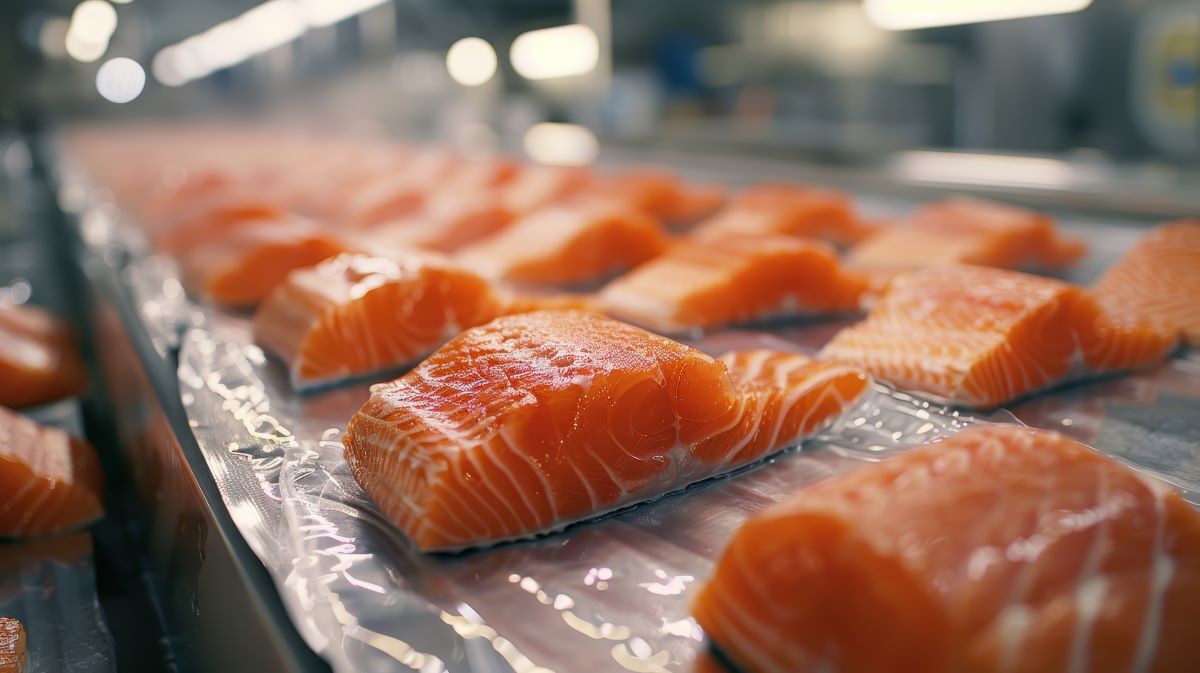
UK Salmon sales performing strongly
The just published 2024 UK trade report says that concerns over US tariffs and a challenging world-wide landscape had not gone away.
The report by Seafish has this week offered an overview of the UK seafood import and export trade, highlighting trends and examining the influence of national, international, and global events on markets.
It shows that seafood performed better than total trade in UK goods, showing growth in 2024, as export value increased 13.0% to £2-billion and import value increased by 1.6% to £3.8 billion.
Consumption in the UK also returned to full growth in 2024 as sales increased in retail and foodservice.
The report adds: “Unsurprisingly, though, high-profile global events, including the wars in Ukraine and Gaza, the threat of high tariffs from the USA, and an escalating trade war between the USA and China, have created logistical headaches for our industry, adding to those that previously existed due to Brexit.
“Despite this, there are still several reasons to be hopeful, as the report details, with agreements with India, the EU, and beyond, providing new and exciting trade opportunities for businesses.”
The report says that trade negotiations with the EU and trade agreements beyond the EU offer a promising outlook but progress will also depend on geopolitical stability and consumer demand.
“Our figures show that UK seafood imports grew in 2024, driven by rising domestic demand and shifts in global supply, with pelagic species, particularly tuna, showing strong growth.
“UK seafood exports also continued to grow in 2024, driven largely by strong performance in salmon and mackerel exports to the EU, US, and China.”
“Overall, the UK seafood sector shows signs of recovery, with a UK-EU trade agreement offering a promising sign for further progress,” adds the report.
“Future opportunities for a recovering UK seafood trade environment will depend on how recent and future trade agreements play out at home and abroad.
“Growth also hinges on the ability of businesses to adapt to increased geopolitical uncertainty.”
Why not try these links to see what our Fish Farmer AI can tell you.
(Please note this is an experimental service)
Freshwater Operative (6 month Fixed Term Contract) - Bakkafrost Scotland Limited
PH38 4ND£32,469.30 per annum
Broodstock Operative - Bakkafrost Scotland Limited
HS3 3HB£26,436.80 per annum
Automation Project Engineer - Bakkafrost Scotland Limited
IV54 8XH£54,750 per annum
Husbandry Operative, Loch Melfort, Argyll - Kames
Oban£27,500 to £30,500 per annum
Fish Husbandry Operative, Isle of Skye. Accommodation provided. - Kames
Dunvegan, Isle of Skye£29,000 to £31,000 per annum
You May Also Like







© 2026 Fish Farmer.