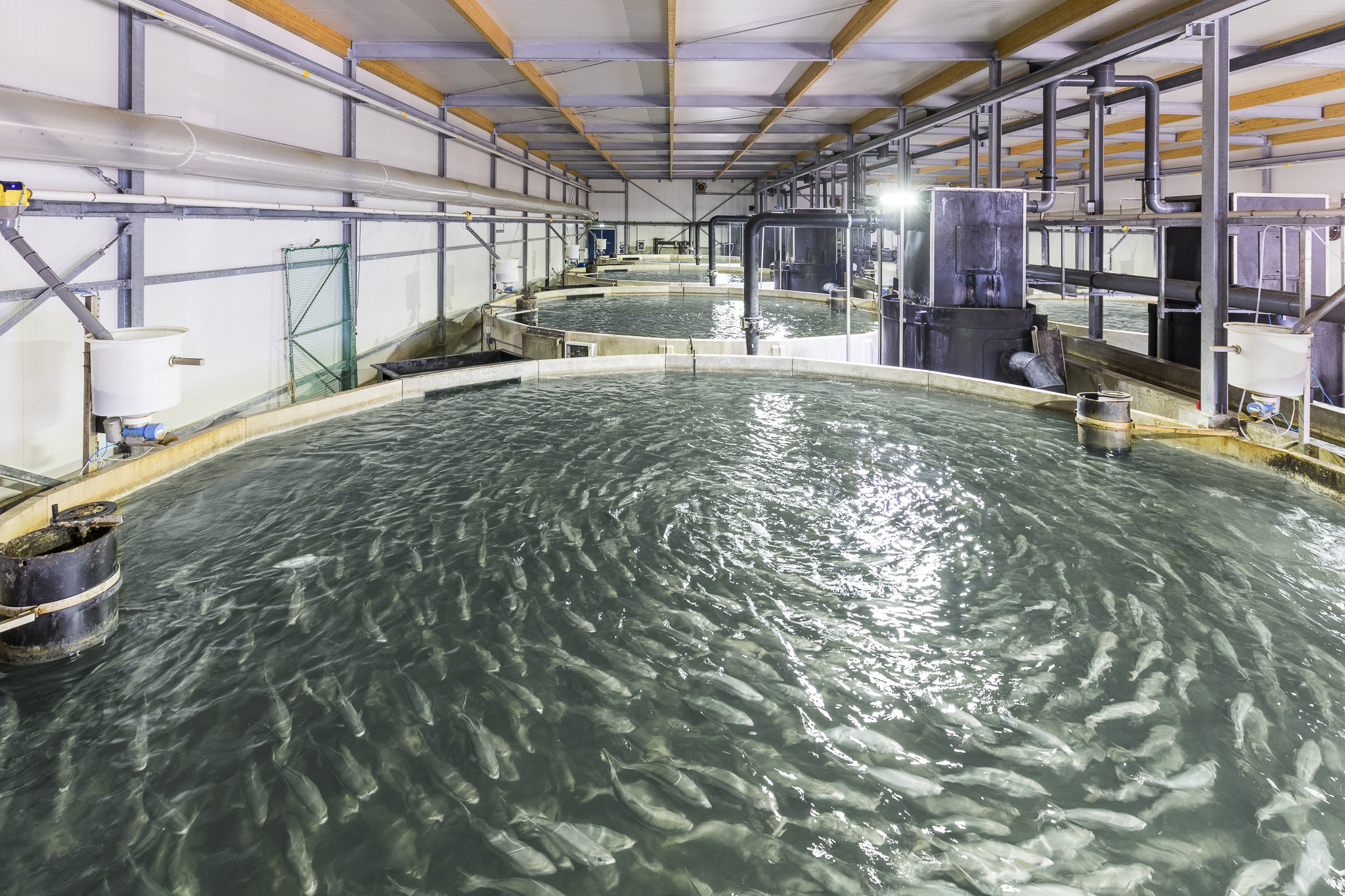
The Kingfish Company, Europe’s leading yellowtail producer, today reported a 31% increase in first half revenues on the back of a large increase in demand.

Sales volumes of this increasingly popular seafood between January and June were 41% higher at 1,301 tons while revenues jumped from €13.2m (£11m) last year to €17m ( £14.6m) this time.
Tariffs imposed by the United States are casting a shadow over the company’s performance, however, and it has decided to cut back on its marketing of fresh yellowtail in the US.
Chief Executive Vincent Erenst said: “In light of the further increased import tariffs, an unfavourable USD exchange rate, and elevated logistics costs, Kingfish has decided to scale back commercial activities of fresh yellowtail kingfish in the United States, despite the strong volume growth achieved over recent quarters.
“We will continue the sale of the US frozen product portfolio. While we view the US as a strategically important and attractive market, current conditions do not support profitable operations.”
He said the company will monitor developments closely and revisit its commercial approach once the economic environment becomes more supportive.
“Our long-term commitment to the US market remains unchanged, supported by our fully permitted Kingfish Maine project. Fresh sales in the US accounted for approximately 6% of total fresh revenue.”
The Kingfish Company’s plans for a yellowtail farm on the Maine coast, in the north-eastern US, have now received all key permits, but earlier this year the company said it was looking for a partner to take the investment to its next stage.
On a more cheerful note, Erenst reported that the first half of this year was another period of strong volume growth, driven by rising demand for yellowtail.

He said: “After earlier challenges with high biomass levels in the farm, we have now reached a balance between production and sales volumes, and farming conditions have normalised.
“These improvements are laying a solid foundation for margin improvement and long-term value creation as we scale.”
The gross margin per kilogram was €1.70 compared to €3.60 in H1 2024. The reduction was mainly explained by the lower revenue per kilogram and temporarily elevated farming costs due to a higher FCR (feed conversion ratio).
He added: “As The Kingfish Company continues to navigate through its sales and market development phase, we remain optimistic about the opportunities ahead.
“The company is focusing on accelerating revenue growth to achieve full utilisation of the production capacity, while optimising operations and making substantial investments in sales and marketing to expand its customer base.”
Last month, Erenst announced his intention to retire from the CEO position at the end of this calendar year.
Why not try these links to see what our Fish Farmer AI can tell you.
(Please note this is an experimental service)