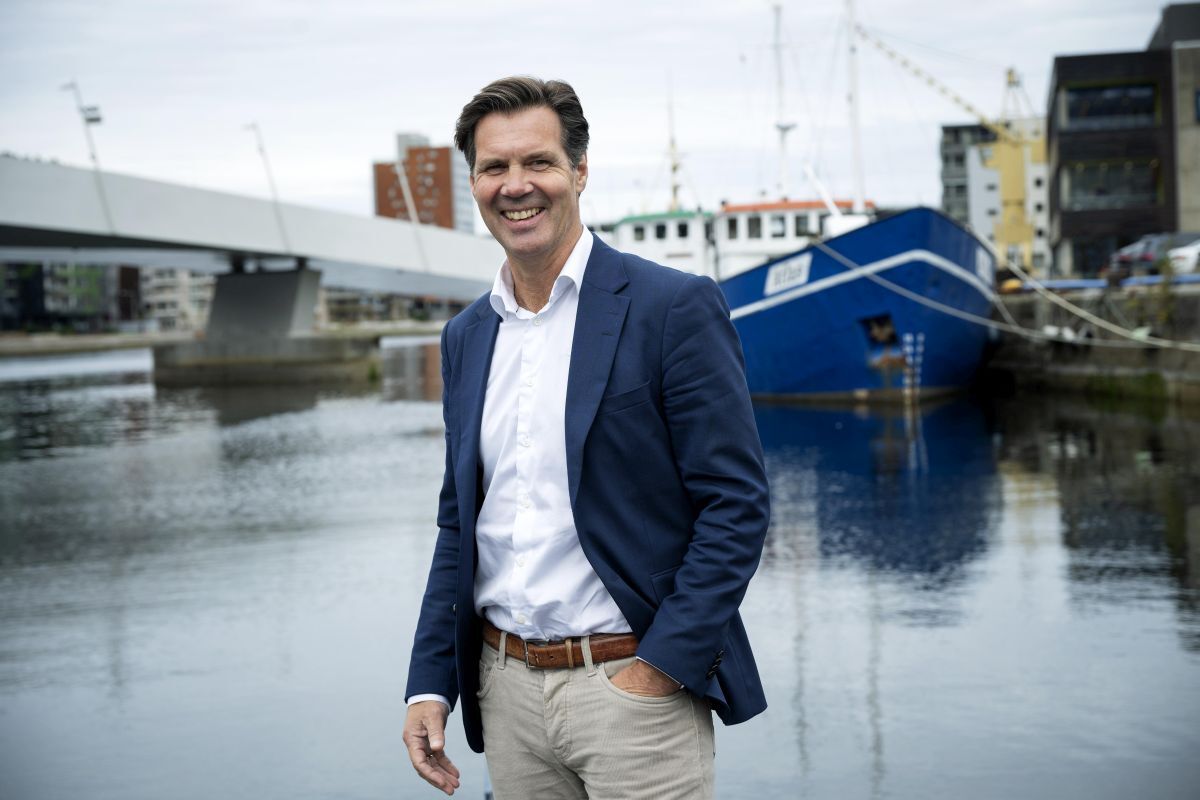
Leroy CEO Henning Beltestad. Phtoograph: Finansavisen.
The company said the results reflected good underlying operations across the group, with solid contributions from farming, and a very strong quarter in the Value-Added Processing, Sales and Distribution (VAP S&D) segment.
Lerøy is a multi-purpose seafood group, involved in salmon and trout farming, seafood processing and deep sea fishing. It also owns a half share in Scottish Sea Farms.
CEO Henning Beltestad said: “Although the year has been characterised by low salmon prices, the fourth quarter demonstrates the effect of a robust and fully integrated value chain.”
The operational EBIT in the fish farming segment amounted to NOK 564 million (£44m) in the fourth quarter of 2025, somewhat lower than in the corresponding period last year.
CEO Beltestad added: “Prices for salmon and trout improved significantly towards the end of the quarter, while biological performance was somewhat better than expected. Costs declined quarter-on-quarter, and we enter 2026 with a good biological situation.”
The VAP S&D segment delivered an operational EBIT of NOK 317 million (£24.5m) in the fourth quarter, an increase of 15% compared with the same period last year.
Beltestad said the operational EBIT for 2025 amounted to NOK 1,290 million (£100m), meaning that the ambitious target of NOK 1.25 billion set in 2022 has been achieved.
“We have built profitability over time through increased volumes, improved capacity utilisation, and targeted improvement initiatives. This represents an important milestone for Lerøy, and 2025 is clearly the best year in the history of this segment,” he said.
Lerøy’s fishing fleet delivered an operational loss of minus NOK -29 million (£2.2m) in the fourth quarter, compared with NOK 6 million (£500,000) in the same quarter last year.
Lower catch volumes as a result of reduced quotas, combined with high raw material prices, impacted margins in the land-based industry, the company reports.