




Salmon industry cannot grow without alternative feed sources, report finds
The salmon farming sector worldwide is at “breaking point” thanks to its failure to find feed alternatives to replace wild-caught fish. So says a report from the investor-backed sustainability body FAIRR.


The FAIRR Initiative is a global investor network, founded by Jeremy Coller, with a membership representing $80 trillion in assets under management. FAIRR works with institutional investors to define the material risks and opportunities linked to intensive animal agriculture and provides investor members with the research, tools and engagements necessary to integrate this information into their asset stewardship and investment decisions.
FAIRR’s latest report, released ahead of the 2025 UN Ocean Conference taking place in France on 9-13 June, is based on a four-year engagement with seven global salmon producers. It reveals a critical constraint on their growth ambitions: over-reliance on declining wild-caught fish for feed.
With farmed salmon production expected to grow 40% by 2033, and with nearly 90% of wild fish stocks already overexploited or fully exploited, the industry faces intensifying pressure to secure sustainable feed sources. This dependency on a limited and increasingly strained resource exposes investors to material supply chain risks that could undermine long-term growth and profitability.
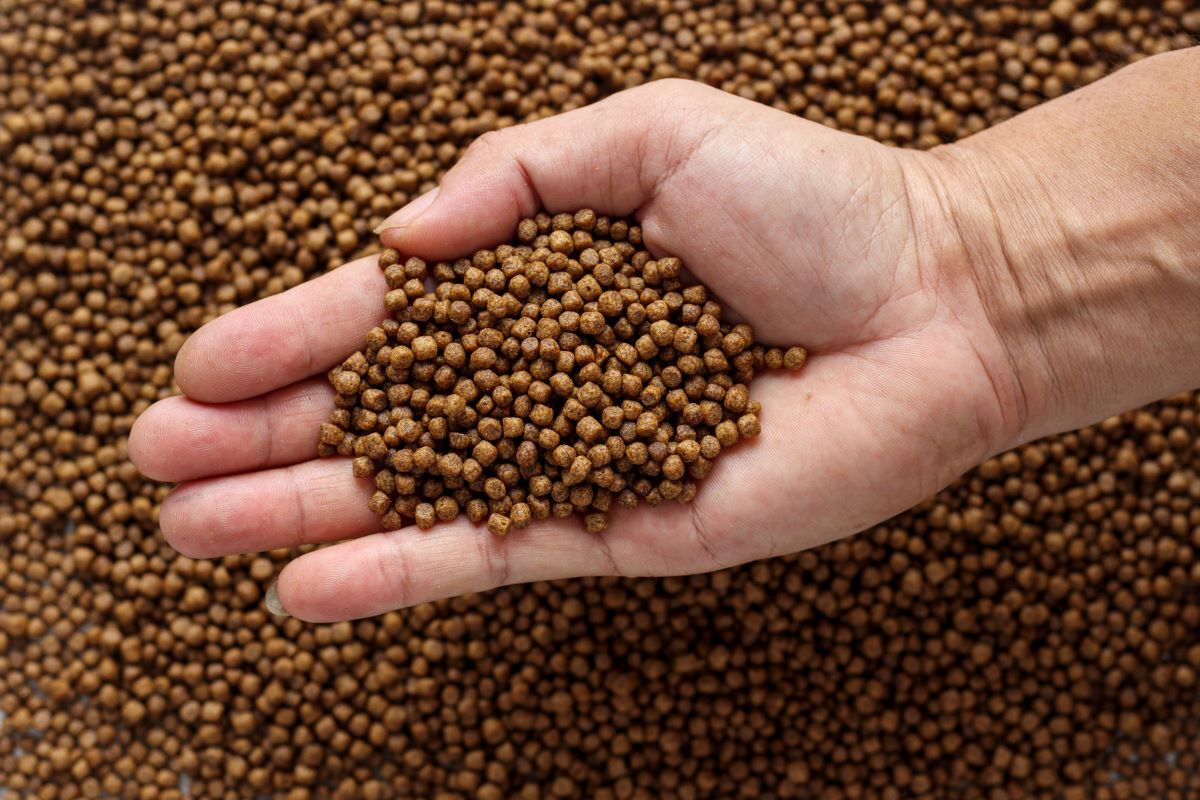
Farmed salmon rely on a feed mix including FMFO (fish meal and fish oil), which is largely sourced from wild-caught fish. All seven companies assessed by FAIRR’s Sustainable Aquaculture Engagement still rely heavily on FMFO, exposing their supply chains to operational, regulatory and reputational risks.
FAIRR’s analysis highlights that companies typically measure progress on feed usage with intensity-based metrics – which reflect the weight of wild fish required to produce a given number of farmed salmon.
Despite some marginal improvements in feed efficiency, the growth in salmon production has outpaced these gains. FAIRR’s analysis shows that only three companies have reduced the proportion of FMFO in feed since 2020 – and none by more than three percentage points.
Five companies increased their total use of fishmeal or fish oil derived directly from whole wild-caught fish over the same period, with Grieg Seafood increasing its use of fishmeal by 39%. The only exceptions were Multi X and Salmones Camanchaca, which use livestock by-products in salmon feed.
This trend presents a growing concern for investors, FAIRR says: without more sustainable feed strategies, rising production will continue to pressure marine ecosystems – escalating environmental, regulatory and supply chain risks.
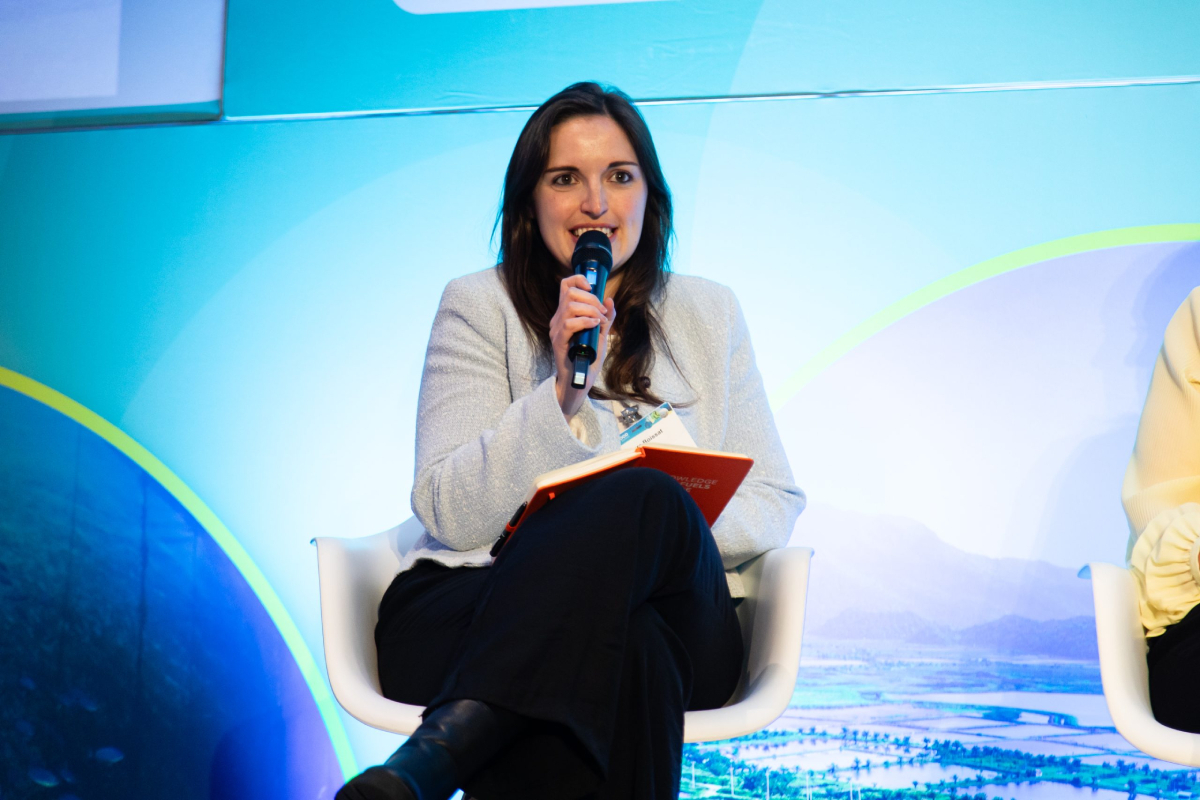
Laure Boissat, Oceans Programme Manager at FAIRR, said: “The salmon industry’s reliance on wild-caught fish for feed will continue to cause cost volatility in the near and mid term as production scales, but feed supply remains constrained. Without urgent investment in sustainable feed ingredient alternatives, this increased competition for limited natural resources puts profitability and resilience at risk.”
Salmon production outpaces feed availability
Production of fishmeal is expected to increase by 9% and fish oil by 12% between 2022 and 2032 – figures that fail to keep up with the salmon industry’s growth projections. None of the seven salmon companies assessed by FAIRR have set targets to reduce the absolute use of fish-based ingredients in feed, despite five disclosing ambitions to expand their production of salmon.
This mismatch between input availability and industry growth poses direct risks to investors. Recent volatility in feed markets, exemplified by the cancellation of Peru’s 2023 anchovy season, which drove fish oil prices up 107% year on year, has already begun to decrease margins. Mowi, the world’s largest salmon producer, reported a 70% rise in feed costs from 2021 to 2023, largely due to feed sourcing instability, though such prices stabilised in 2024.
According to the UN Food and Agriculture Organization (FAO), over one-fifth of the world’s wild fish catch is already diverted to FMFO. Furthermore, over 90% of fish used in FMFO can be consumed by humans, raising questions around resource efficiency and food security. As scrutiny of food system sustainability intensifies, the FAIRR analysis concludes, investors exposed to salmon aquaculture may face increased stakeholder and regulatory pressure.
Improved feed strategies and novel ingredients
To reduce reliance on wild-caught fish, FAIRR says, companies have mainly used two strategies – increasing their use of fish trimmings and novel alternative ingredients.
All companies expressed a commitment to using more trimmings (parts of the fish that are usually discarded), with six already increasing their use since the start of the engagement. While this shift towards fish trimmings is a positive development, FAIRR says, it is not a silver bullet solution for industry-wide growth. The availability of trimmings is limited, and increased demand may ultimately result in increased fishing operations.
Novel alternative ingredients such as algal oil, single cell proteins or insect meal – on which much hope rested in 2020 when this engagement started – have so far failed to gain traction and take on a meaningful share of feed due to negative trade-offs, such as price, scalability, nutrition, carbon footprint and consumer acceptance. Only three companies have set targets to increase their use of novel alternative ingredients, and the share of novel feed ingredients used in feed is still marginal. During meetings hosted by FAIRR between salmon producers and key investors, most companies cited algal oil as promising and insect meal as unfavourable to replace FMFO.
Accelerating sustainability and resilience in aquaculture
All the companies assessed through FAIRR’s Sustainable Aquaculture Engagement demonstrated greater transparency than other protein producers. Each company held direct dialogues with FAIRR and key investors, fostering stronger collaboration between stakeholders.
The transition of the aquaculture industry is essential to improve global food security, deliver environmental benefits and diversify revenue streams for companies and their investors. To support this transition, and building on salmon producers’ high degree of disclosures, FAIRR says, investors should encourage the salmon industry to:
- Ensure fish availability is considered in TNFD (Taskforce on Nature-related Financial Disclosures) reporting and companies’ risk assessments.
- Formalise targets for reducing the absolute use of wild-caught fish.
- Prioritise research and investment in novel alternative feed ingredients and technologies.
- Encourage companies to include plant-based alternatives in their product portfolio.
- Support the farming of aquatic species that have a lower environmental impact and do not rely on wild-caught fish for feed.
Thekla Swart, Manager, Ethics & Sustainability, Steyler Ethik Bank, commented: “As investors, we believe the aquaculture industry must shift towards sustainable feed solutions. Diversifying feed ingredients is not only an environmental imperative, but also a strategic necessity for long-term resilience.”
Why not try these links to see what our Fish Farmer AI can tell you.
(Please note this is an experimental service)
You May Also Like





© 2026 Fish Farmer.