


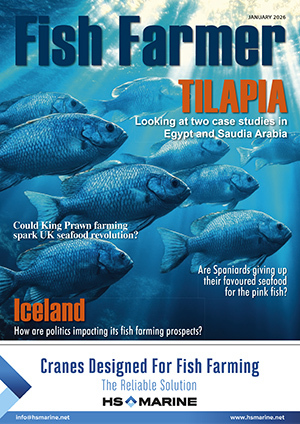

Norway expands offshore farming areas
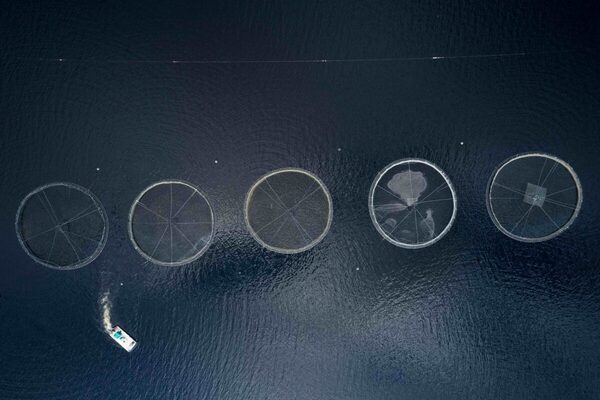
The Norwegian government has agreed to open up much larger areas for the development of offshore salmon farming.
Fisheries and Oceans Minister Marianne Sivertsen Næss said the government plans to change to an area-based approach rather than setting out individual locations.


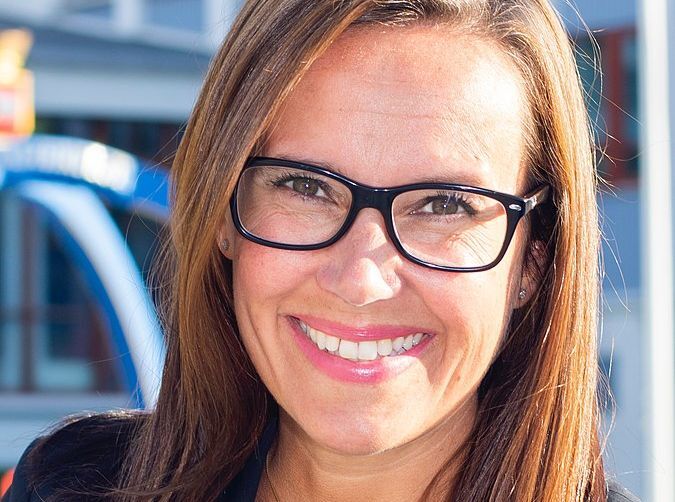
Fisheries and Oceans Minister Marianne Sivertsen Næss.
The news has generally been welcomed by the aquaculture sector, which had previously criticised the government for not moving fast enough.
Some companies had hinted that unless things were speeded up, they might move across the North Sea to areas such as Shetland.
The changes are said to give operators better predictability for planning and building necessary infrastructure such as transport, service and smolt production. This requires major investments, and the regulations will help to develop offshore aquaculture into a profitable industry.
Minister Marianne Naess said: “Offshore aquaculture is a major boost, and we must choose the most competent actors.
“Therefore, we are introducing competence requirements, which will be specified in a separate regulation, together with call areas and competition requirements. We are also developing requirements for the content of the area plan.”
In the consultation, it was proposed to harmonise the salmon allocation regulations with the regulations for impact assessments. The amendment has therefore been given language that is consistent with the regulations on impact assessments.
The proposal includes two levels of impact assessments: one at the area level and one for each location.
In the consultation responses, several key stakeholders suggested there should be only one mandatory impact assessment.
This has been followed up, and the regulations now require one project-specific impact assessment that covers the entire area. This means that detailed information is mapped and collected at an earlier stage.
Why not try these links to see what our Fish Farmer AI can tell you.
(Please note this is an experimental service)
Marine Operative - Bakkafrost Scotland Limited
PA21 2DA£35,677.16 per annum
Deckhand (Argyll Net Washer) - Mowi Scotland
Argyll & Bute£28,258 to £31,648 per annum
Freshwater Advanced Husbandry Operator - Landcatch Ltd
OrmsarySalary On Application
HGV Driver - Mowi Scotland
RosythSalary On Application
Hygiene Operative - Night - Bakkafrost Scotland Limited
Cairndow£33,273.52 per annum
You May Also Like


Sign up to our daily Newsletters
Permission Statement

Yes! I would like to be sent emails from Fish Farmer Magazine
I understand that my personal information will not be shared with any third parties, and will only be used to provide me with useful targeted articles as indicated.
I'm also aware that I can un-subscribe at any point either from each email notification or on My Account screen.
Accept
Cancel



© 2026 Fish Farmer.