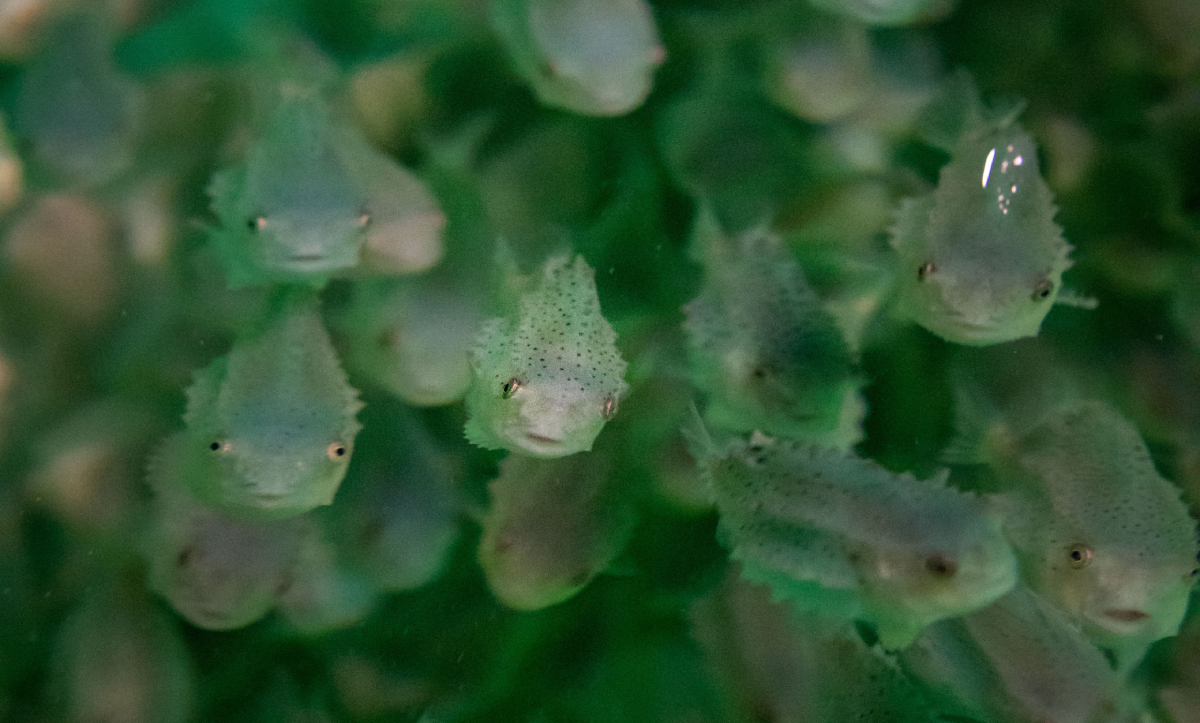
A project involving academics and industry experts in Scotland has come up with operational welfare indicators (OWIs) for lumpfish.

Lumpfish, also known as lumpsuckers, (Cyclopterus lumpus) are often deployed as cleaner fish in salmon pens, helping to reduce sea lice numbers. Their own welfare has arguably been overlooked, however, and a joint project set out to identify OWIs that would help fish farm staff to assess the health of their lumpfish.
With the assistance of the Sustainable Aquaculture Innovation Centre (SAIC), the Institute of Aquaculture (University of Stirling), Fish Vet Group, FAI Aquaculture (now FAI Farms), Ardtoe Marine Research Facility (then part of FAI Aquaculture), Bakkafrost Scotland (formerly Scottish Salmon Company), Scottish Sea Farms and Cooke Aquaculture worked together on a 24-month epidemiological study examining trends in significant disease challenges affecting lumpfish, from hatchery through sea pen deployment, and the development of OWIs specific to lumpfish, enabling practical and effective welfare assessments in both hatcheries and sea pens.
The project was divided into two work packages linked to the two objectives. The first work package focused on gathering data on the lumpfish in the hatchery and at sea. The project team monitored lumpfish over five months under standard hatchery conditions.
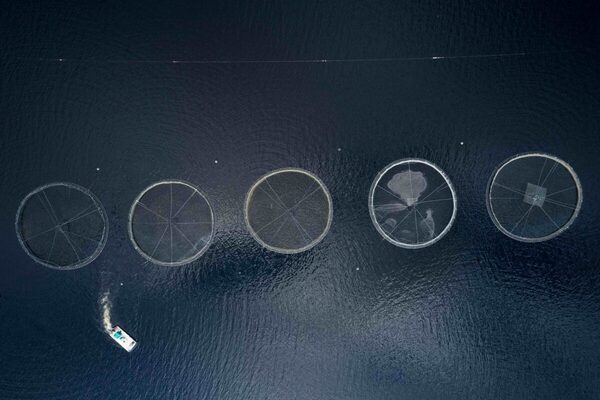
During sea cage deployment, a standardised monthly sampling protocol was applied across participating salmon farms. Workshops were held with each farm partner to demonstrate protocols, and training material was developed. Fish were sampled from at least three pens per site.
The second work package focused on analysing and assessing the collected samples against several welfare indicators, such as weight-length relationship (WLR), dorsal and caudal fin damage, lipid content, and fatty acid profile, among others.

The project successfully developed and validated several OWIs for lumpfish:
A fin damage index and scoring key were created and validated, enabling consistent assessment of fin condition in both hatchery and sea pen environments. Histological analysis supported the correlation between fin damage and tissue vulnerability to bacterial infection. These findings helped link potentially stress-inducing management procedures – such as grading, transport, and vaccination – to changes in fish condition, growth, and mortality.
Behavioural monitoring, fin scoring, and morphometric data were used to correlate growth patterns with welfare status. A new growth curve was developed to reflect the actual growth dynamics of lumpfish, offering a tool for detecting early deviations that could compromise welfare and production outcomes.
The liver colour index showed potential as a welfare and nutritional status indicator, with correlations observed between liver colour, fin condition, hepatosomatic index, and overall health. Ongoing analysis aims to inform diet development tailored to lumpfish needs, thereby improving survival and sea lice removal efficiency.
Mortality data collected from sea pens indicated seasonal patterns, with higher mortality linked to warmer summer conditions, providing a basis for further environmental risk analysis.
Sampling protocols and training materials were shared with industry partners. OWIs such as the fin damage key are now actively used at the FAI Aquaculture and Aultbea hatcheries (Aultbea was part of FAI Aquaculture at the time of the study) and in sea pens across partner sites.
SAIC said: “This project laid the foundation for standardised welfare monitoring in lumpfish aquaculture. Behavioural insights led to improved hatchery enrichment strategies that reduce aggression and increase survival in early life stages. Evaluation of hatchery practices, including grading and vaccination, resulted in best practice recommendations shared with farm staff.
“By developing practical tools, protocols, and training materials, this project has significantly advanced the sustainable integration of lumpfish into salmon farming, with lasting benefits for animal welfare and farm productivity.”
Why not try these links to see what our Fish Farmer AI can tell you.
(Please note this is an experimental service)