




England announces intention to improve farmed fish welfare
An Animal Welfare Strategy for England has been published by the Department for Environment, Food and Rural Affairs that will see the government proposing to consult on introducing standards for fish slaughter.
The measure, to be implemented by 2030, would include a proposal to ban boiling lobsters alive, recognising their capacity for pain, and would also apply to crustaceans and cephalopod molluscs, including octopuses, all of which are recognised as sentient beings under British law.


In the foreword, The Rt Hon Emma Reynolds MP, Secretary of State for Environment, Food and Rural Affairs, and Baroness Hayman of Ullock, Parliamentary Under-Secretary of State for Biosecurity, Borders and Animal Welfare, confirm the government’s commitment, “to delivering the most ambitious animal welfare programme in a generation.
“We have held roundtable discussions on priorities and worked to understand the underlying issues that lead to poor welfare. We sincerely thank everyone who took the time to contribute their views and expertise. This collaborative approach - bringing together government, industry, scientists, charities and civil society organisations will continue throughout implementation, because lasting change requires shared commitment and collective action.
“Rather than piecemeal legislation, we will take a more strategic approach - one that targets intervention where it’s most needed. This means tighter regulation where standards are weakest, effective enforcement, and working with the sector to provide animal keepers and owners additional support where they need it.”
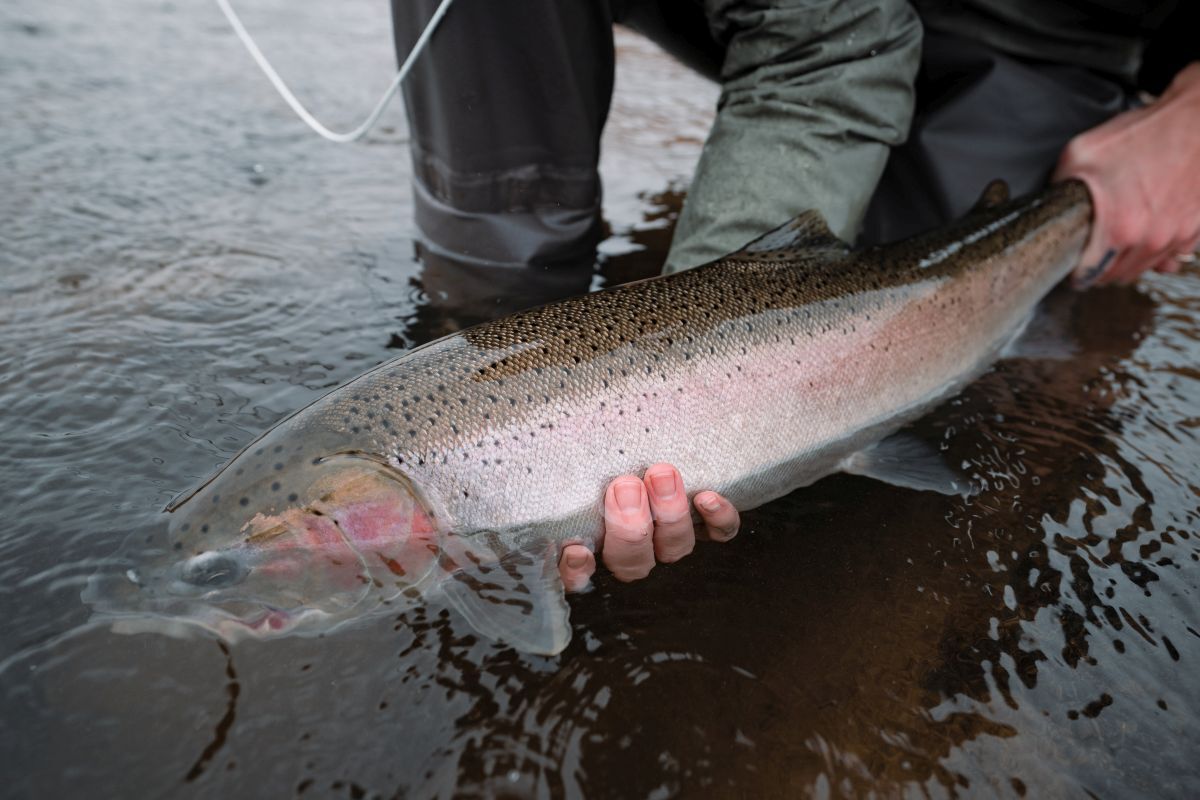
The paper, published on December 22, sees the government proposing, for the first time, to consult on introducing standards for fish slaughter: “There has been growing attention paid recently to the welfare of farmed fish, including those raised using recirculating aquaculture systems, a type of onshore fish farm, as well as calls for new legislation to set down detailed requirements at the time of killing. Whilst existing legislation on the protection of animals at the time of killing requires that farmed fish be spared avoidable pain, distress or suffering during their killing, unlike terrestrial livestock farmed fish have no further detailed protections in domestic law (such as no requirement to stun fish pre-slaughter).
“A joint government and industry working group on farmed trout has been exploring options for more detailed welfare at killing requirements for farmed fish. This co-design work has made good progress. To increase the protections, detailed requirements on killing farmed fish should now be brought into legislation.
“We also want to work with stakeholders to build the evidence base as to how fish can be farmed to ensure their welfare is safeguarded.”
To move forward with this, the government plans to:
- Introduce humane slaughter requirements for farmed fish into legislation, subject to consultation.
- Improve fish welfare during production and, as a first step, commission the AWC ’s advice on the welfare of farmed fish prior to slaughter
The paper also includes the welfare of decapod crustaceans and cephalopod molluscs, with the government saying it will:
- publish guidance on which methods of killing decapods are compatible with the existing welfare at time of killing legal requirements, including by clarifying that live boiling is not an acceptable killing method
- develop the evidence base on the movement of live decapods and cephalopods through the supply chain, through research and continued stakeholder engagement
- build the evidence base as to how the welfare of decapods can be ensured at critical points through the supply chain
Food labelling also comes under the government’s plans, with the paper stating: “Most consumers care about how their food is produced (FSA, 2024 - www.food.gov.uk/research/food-and-you-2/food-and-you-2-wave-7). However, we recognise that the current lack of consistency in food labelling makes it difficult for consumers to understand the animal welfare standards their food was produced to and make informed purchasing decisions. This lack of transparency also makes it harder for farmers to differentiate their goods and be fairly rewarded for their higher welfare products. We are committed to ensuring that consumers have access to clear information on how their food was produced.”
To support this, the government pledges work with relevant stakeholders, including farming and food industry stakeholders, vets, scientists and animal welfare NGOs to continue exploring how improved food labelling, including method-of-production labelling, could improve animal welfare.
Following the publication of the paper, the RSPCA welcomed the news, saying the measures could be an “important first step” farmed animal welfare.
RSPCA Head of Public Affairs David Bowles said: “Lower welfare farming is the single biggest animal welfare issue we face in the UK and around the world. Today, the government’s new strategy sets us on an important path to address some of the cruel practices which cause pain and suffering to millions of animals every year.
“The government has shown its commitment to animal welfare through this strategy and it is essential that it supports farmers and slaughter plants to make these critical transitions to better animal welfare. This strategy is an important first step and we look forward to continuing to work with the government and the farming industry to keep improving the lives of farmed animals.”
RSPCA Assured is the RSPCA’s ethical food label, and assesses more than 4,000 farms and businesses every year to check they’re following hundreds of higher welfare standards.
Executive director Toby Baker says: “When we visit an RSPCA Assured member farm, the importance of higher welfare farming is clear… Creating a kinder food system that benefits everyone is not an impossible dream – we know it can be done.”
David Bowles added: “This plan is a really encouraging start and will need to be backed by strong laws and enforcement and where necessary trade solutions as well as support for the farming industry, to ensure it delivers real change for animals.
“We want to work with the government, retailers, the farming industry and our partners to transition to a fairer, more compassionate and more sustainable food system, with animal welfare at its heart.”
To read the full strategy, visit www.gov.uk/government/publications/animal-welfare-strategy-for-england
Why not try these links to see what our Fish Farmer AI can tell you.
(Please note this is an experimental service)
You May Also Like





© 2026 Fish Farmer.