





Consumers are ready for food made from seafood sidestreams, survey finds
European consumers are increasingly ready to incorporate products made from seafood sidestreams into their everyday diets, according to a new survey conducted for Nordic seafood technology company Hailia.



The findings indicate that consumer acceptance, long considered a key barrier, may no longer limit the wider use of sidestreams, opening up new opportunities for seafood processors and food manufacturers to turn underutilised raw materials into scalable, value-added products. With the strongest support seen among younger (aged 24-34), urban, and highly educated consumers, the results indicate that these products are well-positioned to enter mainstream formats such as ready meals, workplace catering, and quick-service dining, Hailia said.
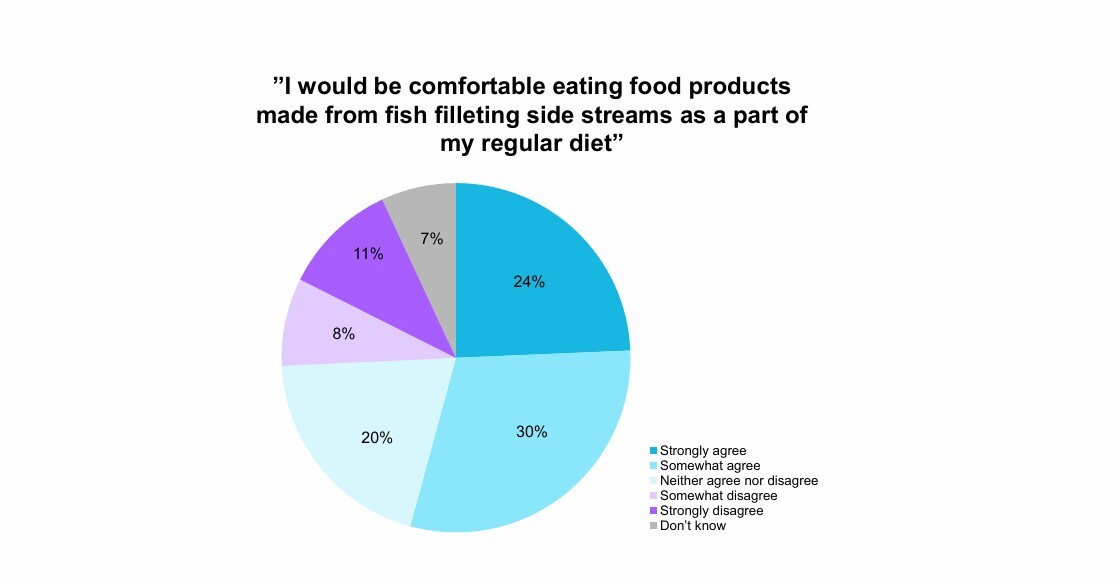
The study, based on a poll of more than 1,500 consumers, shows that respondents in Sweden and the UK have a positive attitude towards these products, with 58% and 55%, respectively, seeing food products from sidestreams as a good thing. The German market follows slightly behind at 49%. Only 19% responded negatively to the idea of these products. For food processors facing increasing pressure to improve yield, reduce waste, and meet sustainability targets, the findings suggest that consumer acceptance may no longer be a key barrier to scaling sidestream-based product innovation.
When asked which situations or use cases products from sidestreams would be most suitable, a large proportion of respondents answered that they could see these products in ready meals, quick-service restaurants, and cafeterias in workplaces or public institutions.
Many consumers also indicated openness to using such ingredients in home cooking, reinforcing their versatility across both consumer-facing products and business-to-business ingredient applications. Notably, 59% of respondents reported a positive attitude towards sidestream-based products in lunch catering, compared to just 16% who responded negatively, highlighting strong potential in institutional and contract catering segments.
Among the most common answers, respondents stated that these products would be a good alternative source for protein, make it easier to consume fish as part of convenient, everyday diets, and provide the sustainability and ethical benefits of using more of each fish for human consumption.
The main concern raised was the perception that sidestream-based products are overly processed or “artificial.” In reality, Hailia said, the production involves familiar, straightforward steps: refining, mixing, and cooking, similar to how many everyday foods like meatballs, falafel, or nuggets are prepared. Much like turning raw ingredients into smoothies, patties, or pancakes at home, these products are made using standard food preparation techniques rather than complex industrial processes.
Michaela Lindström, CEO of Hailia, said: “We see clear signals that consumers are open to incorporating these products into their daily lives, but transparency is essential to building lasting trust.
“Sidestreams are handled with the same care and quality standards as fillets, and the process itself is simple and familiar: refining, seasoning, forming, cooking. Nothing that wouldn’t happen in a professional kitchen. When people understand that, the hesitation tends to disappear. A majority are already on board, fewer than one in five are opposed, and the large group in the middle simply needs more familiarity with what these products actually are, and the chance to taste them.”
The survey shows that positive attitudes are most common among younger age groups, particularly 18-34. Also, the majority of positive respondents reported living in urban areas and cities, where ready-made meals are common, and there is more openness to trying new foods. Families with children, people with higher education, people with high-protein diets, and the environmentally conscious also report more positive attitudes towards using sidestreams for food products than other reference groups.
Why not try these links to see what our Fish Farmer AI can tell you.
(Please note this is an experimental service)
You May Also Like






© 2026 Fish Farmer.