




Under the skin: Fish Vet Society conference 2026
The skin is a critically important organ for any animal and perhaps even more so for fish. It is a first line of defence against disease and a key indicator that something is not right.


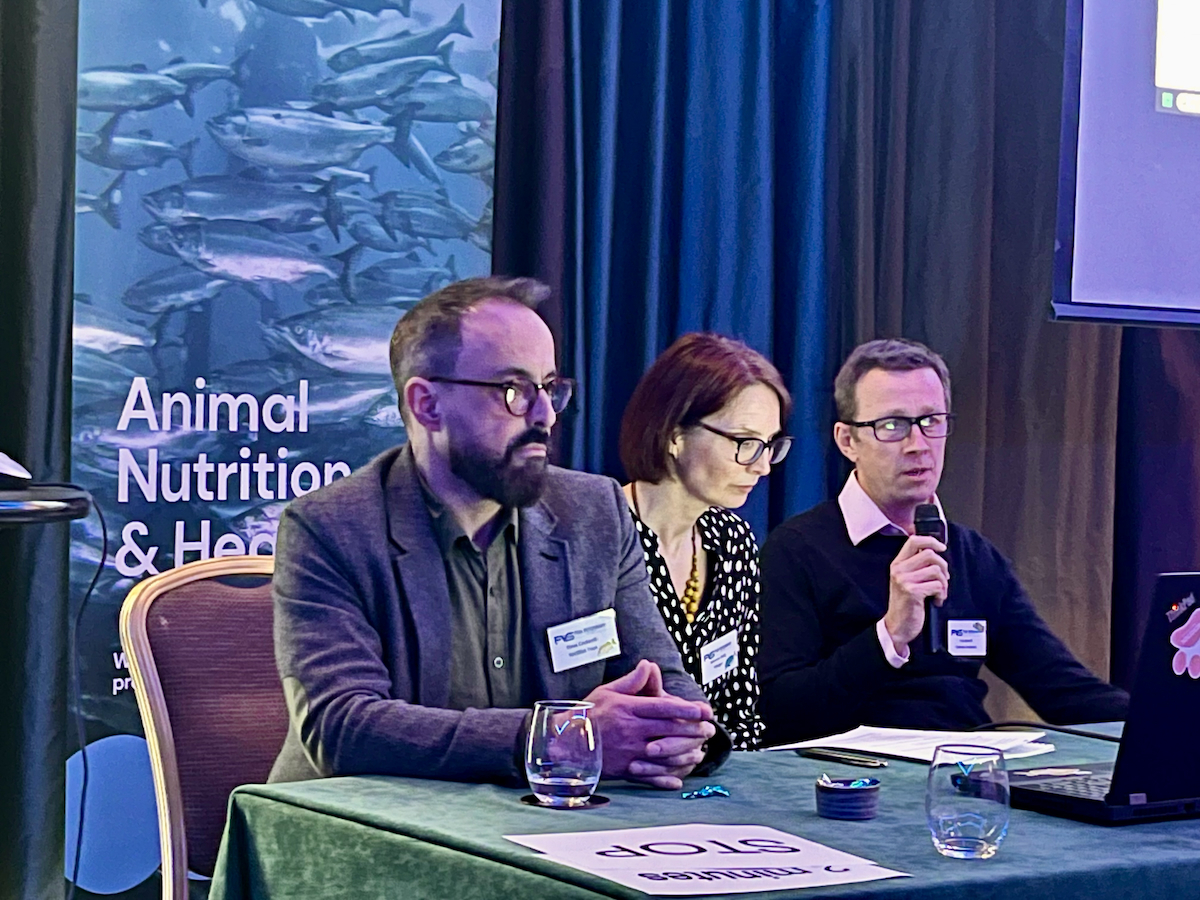
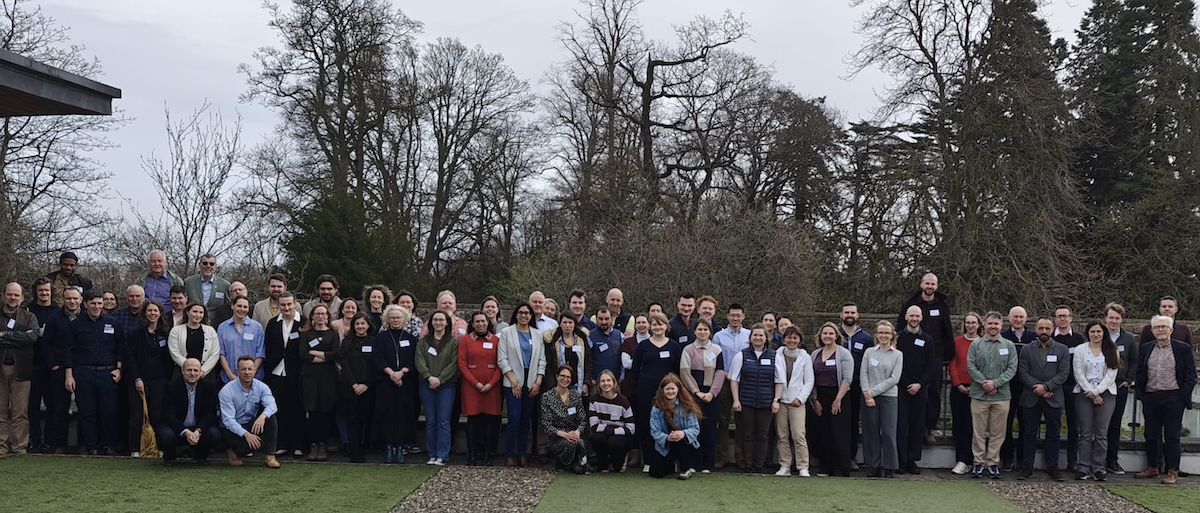
Skin health, then, was an appropriate topic for the 2026 Fish Veterinary Society Annual Spring Conference.
The conference theme was introduced by Johanna Baily, Aquatic Veterinary Pathologist at Patogen and President of the FVS, and the keynote speech was given by Jamie Smart, a veterinary surgeon with STIM.
Skin, along with behaviour, is also the most visible indicator of good or poor health, from the practitioner’s point of view. It represents a physical barrier, provides an important osmoregulatory function, produces mucus and can also provide signalling and camouflage.
As Smart explained, the pressures on skin health are changing. Fish face increased handling, with the increased use of non-medicinal treatments and changes in freshwater growing practices. New pathogens are emerging and antibiotic resistance is an increasing threat. The environment is also changing, with increasing water temperatures and more jellyfish blooms.
Particular threats include bacteria like Areomonas salmonicida, which causes furunculosis; Piscirickettsia salmonis; Moritella; and Tenacibaculum, now seen as a primary source of lesions for salmon in Ireland, and also parasites such as, in freshwater, costia and whitespot; and in seawater, the lice species Lepeophtheirus salmonis and Caligus elongatus. Jellyfish, particularly the Apolemia or “string jellyfish” have also become a problem in recent years.
Fish skin health can also be impacted by physical damage, caused for example by predator attacks, handling or net rubbing.
Smart concluded: “Skin disease is multifactorial… there are no simple answers, only better understanding of the big picture.”
Fernando Mardones, of the University of Edinburgh, followed with a view of the “epidemiological triad”: host, environment and agent. He advocated for better use of data to understand disease and the spread of pathogens, for example why an outbreak is typically clustered in a specific area.
The key, he argued, was to bring together the data that already exists, albeit in a fragmented form: for example mortality, sea lice counts, treatment records and environmental data.
That will enable practitioners to:
- Anticipate
- Prevent
- Detect and
- Respond.
Mardones said: “The data is there, we just have to make better use of it.”
Ezra Herman, of Esox Biologics, gave a talk on metagenomic surveillance for fish health. As he explained, this is an approach that transforms the way we see the microbiome – focusing on the whole community of microbes rather than just seeking to identify pathogens.
Genomic sampling involves converting the DNA taken from the fish microbiome into data, revealing which microbes are present and in what proportion – not just the “suspect” pathogens but also opportunistic and beneficial microbes. This, Herman said, provides a more holistic picture of fish health and could help to predict problems and plan treatments.
The power of genomics was also a theme for Ginevra Brocca, an independent fish and shellfish pathology consultant, who explained how “next generation sequencing” (NGS) can help us understand emerging multifactorial diseases. NGS gives more of an all-round picture of the microbes present than a conventional diagnosis could, she said.
Salmon skin issues
Two veterinary specialists from Norway gave an update on skin problems afflicting farmed salmon.
First, Snorre Gulla, of the Norwegian Veterinary Institute, gave an overview of the “winter sores” phenomenon. These are ulcers normally caused by bacteria and, as he explained, different bacteria species are associated with different types of ulcer. A Veterinary Institute study focused on two species, Moritella viscosa and Tenacibaculum.
Moritella and the finnmarkenses variant of Tenacibaculum are the most associated with ulcers, and these are both found more in northern latitudes, in the winter months. Gulla said the research suggests that higher detected levels of both of these could predict likely winter sore problems.
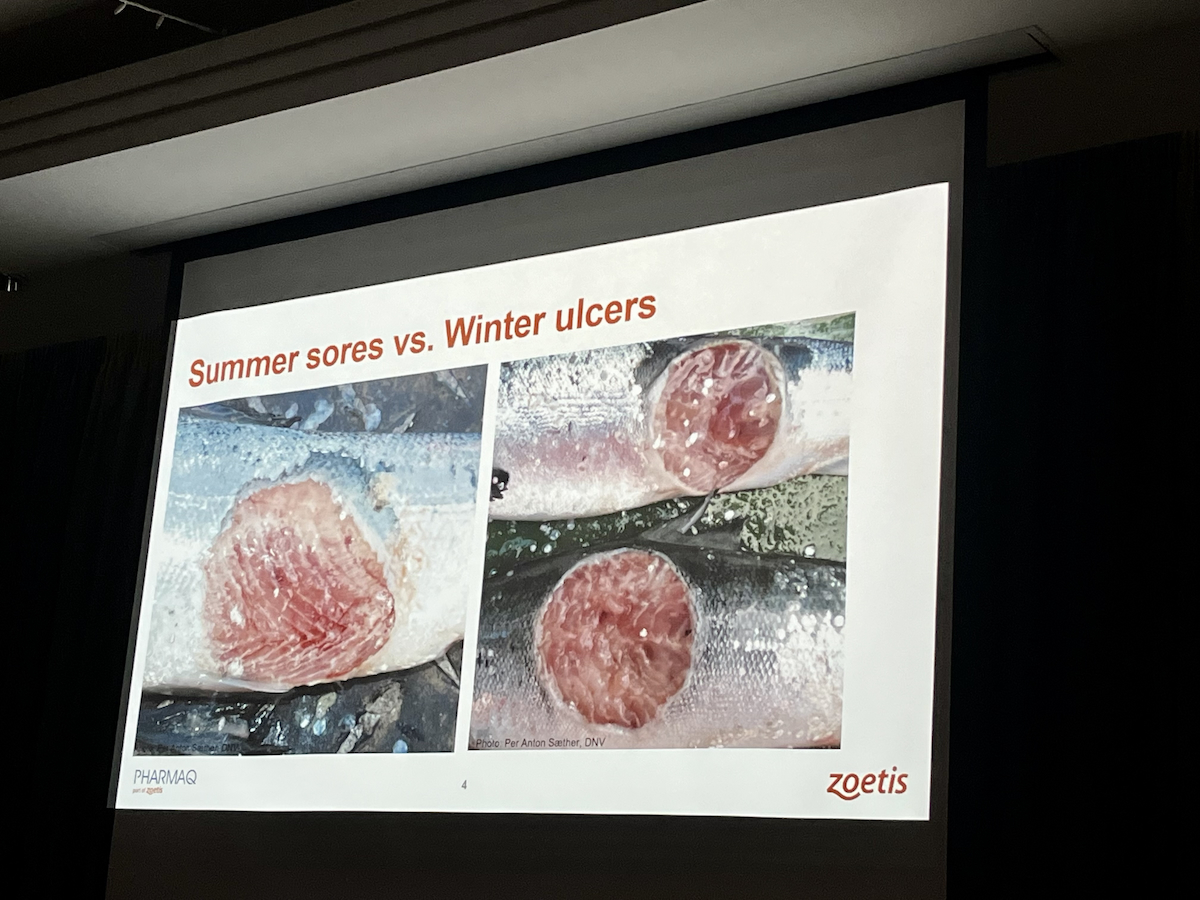
Linn Emile Knutsen, of Pharmaq, outlined a relatively new challenge, “summer sores”. This was first diagnosed in 2010 and most outbreaks appear to take place between July and September.
The cause is likely to be bacterial, she said, with Vibrio splendidis as the most likely suspect. Summer sores typically have a different appearance from winter sores, with less of a defined edge and usually presenting as just one sore.
Now, she said, with more post-smolt facilities maintaining a constant temperature throughout the year, “summer sores” have been identified year-round and not just as a seasonal problem.
Benedict Standen, of DSM Firmenich, gave a talk on the importance of mucosal health as a key first line of defence for fish, and the role of functional feed additives in helping to build healthy mucus. He presented results of a study carried out with DSM Firmenich’s proprietary additive Digestarom (as reported in Fish Farmer, January 2026).
‘More than a body wrapper’
The first day of the conference also saw a discussion on skin assessment tools. The panellists were:
- Johanna Baily, FVS (Chair)
- Dave Cockerill, Wellfish Tech
- Iain Berrill, Salmon Scotland
- Lene Sveen, Nofima (online)
- Meritxell Diez-Padrisa, Patogen (online)
The first question was: Are we using the right measures to assess fish health? The panel agreed that traditional approaches are now encompassing welfare as a key element, beyond the more obvious heath metrics.
Iain Berrill stressed: “Health and welfare must be the main drivers for what we do.”
Dave Cockerill said: “We are good at measuring wounds and identifying pathogens, but fish resilience and fish health are also important.”
“We are still probably lacking some tools,” suggested Meritxell Diez-Padrisa. She pointed out that scoring tables for assessing welfare are now increasingly a part of fish veterinary practice.
Lene Sveen noted that fish health problems are not always apparent. An individual with damaged skin might still be performing well, while one with seemingly healthy skin might have another problem, such as gill health.
She said: “We have all the technology we need – we just need to use it better.”
Dave Cockerill added that it is important to be able to collect and record data in a standard way that is consistent. As Iain Berrill noted, however, practitioners are under a great deal of pressure already, so if new tools such as welfare indices can help condense and prioritise data that will help, but too much data would not necessarily be of benefit.
Poor skin health is not only bad for the fish, as Diez-Padrisa put it, but it also leads to negative social perceptions of the aquaculture sector.
The panel agreed that vets need to see an all-round picture of fish health and not just focus on what is apparent.
As Johanna Baily put it: “We are perhaps too focused on lesions, and not enough on resilience.”
“Fish skin is much more than meets the eye”: that was the message from Nofima’s Lena Sveen in her presentation, which focused on what she called “her favourite organ”.
She took two recent examples of research in this field: first, showing how insights into the role of skin in fighting harmful bacteria had helped in the creation of a recombinant vaccine against tenacibaculosis; and secondly, an ongoing study looking at how genetic differences can help make salmon skin and mucus more resistant to sea lice.
Rose Ruiz Daniels, of the University of Stirling’s Institute of Aquaculture, continued the theme, describing her research into the key role salmon skin plays in wound healing.
As she explained: “Salmon skin heals differently from mammal skin.”
Fish skin has the ability to regenerate and remodel itself, and Ruiz Daniels is currently working on a four-year project using cellular genomics to uncover the differences that can make this more effective for some individuals than for others.
The final speaker on the first day, Dave Cockerill, spoke about the importance of “boundaries”.
He stressed: “The skin is more than a body wrapper.”
While terrestrial mammals protect themselves with what is effectively a layer of dead skin cells, fish skin is a far more complex and active organ, Cockerill said, and he stressed that it should be seen as one continuous system involving the skin, gills, gut and immune system. Stresses affecting the skin – even if they are not visible – should be taken seriously as indicators of vulnerability to disease and parasites.
Tackling fish diseases
The second day of the conference included sessions on emerging diseases and fish welfare issues.
Members of the FVS do not deal solely with farmed fish, and part of the morning was devoted to ornamental species, including: koi carp and their parasites; skin diseases of goldfish; and zebrafish welfare.
The morning also saw an interactive session on the management of skin health and disease, and a talk by Andreas Kyriakou, of Hipra Greece, on vaccination against Tenacibaculum in the Mediterranean.
Pieter van West, of the University of Aberdeen, gave an update on a pervasive freshwater problem: Saprolegnia parasitica. This water-living fungus is hard to eradicate and is a significant cause of mortality for salmon in hatcheries, as well as for wild fish in rivers and lakes.
Temperature is the biggest risk factor, he said, with warmer rivers experiencing worse outbreaks. Genomic analysis by the university has shown, however, that there are different strains of Saprolegnia in hatcheries and in the wild – indicating that cross-infection between those environments is not as common as had been thought.
There is no easy solution, he said. Chemical treatments are considered harmful to the environment; there is no widely available vaccine; copper sulphate kills the fungus but is also harmful to fish; and research indicates that salt, a commonly deployed treatment, only suppresses Saprolegnia growth and actually causes more sporulation, so once salt levels are reduced again, the fungus will spread rapidly.
Planting trees to keep rivers cool (and hoping for cold winters) can help control Saprolegnia in the wild, he said. In hatcheries, diet and stress management can help strengthen the fish’s immune system, and the University of Aberdeen has also had some success with biological agents that can inhibit the growth of Saprolegnia, although these are not yet licensed for commercial use.
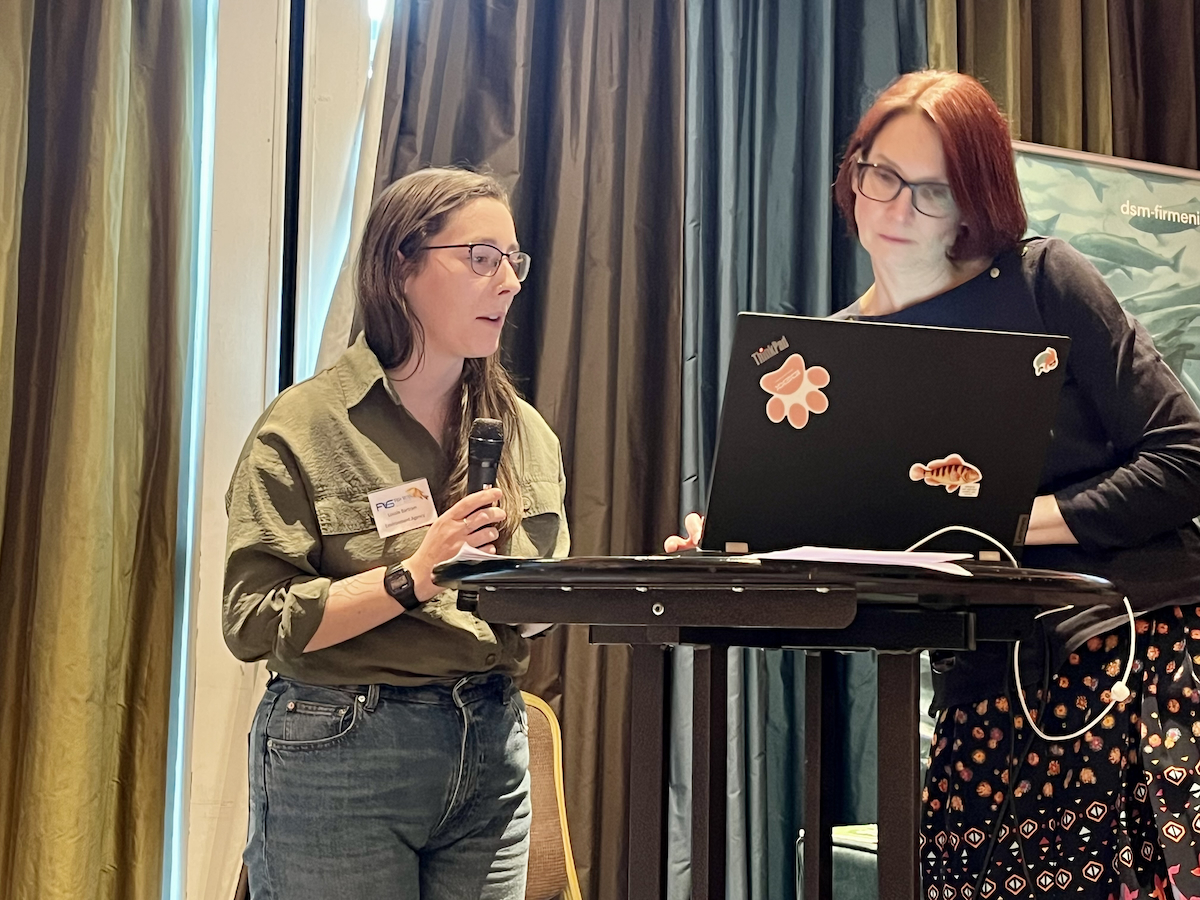
Louise Bartram, of the Environment Agency, which is responsible for managing waterways in England and Wales, talked about “red skin disease”, which appears to be a condition affecting wild salmon. Because of the difficulty in gathering anything but a very small sample from such an endangered population, she explained, it has proved hard to say definitely whether this is a new disease and if so, what its cause might be. Electron microscopy suggests that the pathogen might be a virus, although it is still too early to be sure about causation, and fortunately the mortality effects appear to be limited.
Sandra Vesanto, Fish Health Manager and Veterinarian with Mowi in Ireland, gave an update on salmonid Rickettsia septicaemia (SRS), which continues to be a problem for salmon farming in Ireland.
SRS is often, but not exclusively, associated with jellyfish attacks, and can be detected in skin lesions and/or kidney histology. As Vesanto pointed out: “Typically, summers in Ireland come with more than one problem.”
Mortalities from SRS often spike several weeks after treatment for something else, like amoebic gill disease (AGD).
A quick response is essential, Vesanto said, as soon as SRS is detected, especially as, if antibiotic treatment is delayed too long, the fish may lose their appetite and will not take the medicine. An added complication is that salmon production in Ireland has to meet organic standards, so only one medicinal treatment is permitted for each production period, and the acceptable limits for antibiotic residues in harvested fish are much lower than for conventionally grown salmon.
Vaccine trials are underway but LiVac, the vaccine widely used in the UK, has not yet been licensed for use in the European Union.
Delegates also heard from Thomas Goetz, of the University of St Andrews, about targeted acoustic startle technology (TAST) and how it can be used to deter predation by seals; and from Professor Mags Crumlish of the University of Stirling on vaccine hesitancy. The latter refers not to hesitancy on the part of the fish, but on the part of farmers in south-east Asia, where the Stirling team are working on a project to improve vaccine take-up and reduce the threat of anti-microbial resistance.
Sharon Brown, of Moredun Research Institute/University of Stirling, outlined the concept of “One Welfare”, which recognises the two-way connection between fish welfare, the environment and the workers who look after them.
The University of Stirling, and Moredun, are jointly running a survey for people working in aquaculture, to ask key questions about their own role and fish welfare, particularly as regards gill health.
Respondents will be entered into a draw and could win a £50 voucher. To take part, just go online to tinyurl.com/GillHealth.
Finally, congratulations to Olivia Mark-Wagstaff, of the University of Stirling’s Institute of Aquaculture, who won the Student Poster Award for her presentation on fish olfactory systems.
The 2026 Conference was sponsored by: DSM-Firmenich; Esox Biologics; HIPRA; Ocean Ecology; Pharmaq; Cooke Scotland; MSD Animal Health; STIM; Patogen; BioMar; Ceva-Ridgeway Biologicals; AquaPharma; and Aquatic Vets.
Why not try these links to see what our Fish Farmer AI can tell you.
(Please note this is an experimental service)
You May Also Like







© 2026 Fish Farmer.