



Norway opens the door to closed containment
Last October, the Norwegian government introduced a regulation that gives fish farmers in three of the most sea lice-challenged production areas a chance to reclaim lost biomass. But only if that biomass is produced in closed or semi-closed aquaculture systems – and those systems must meet strict performance criteria.


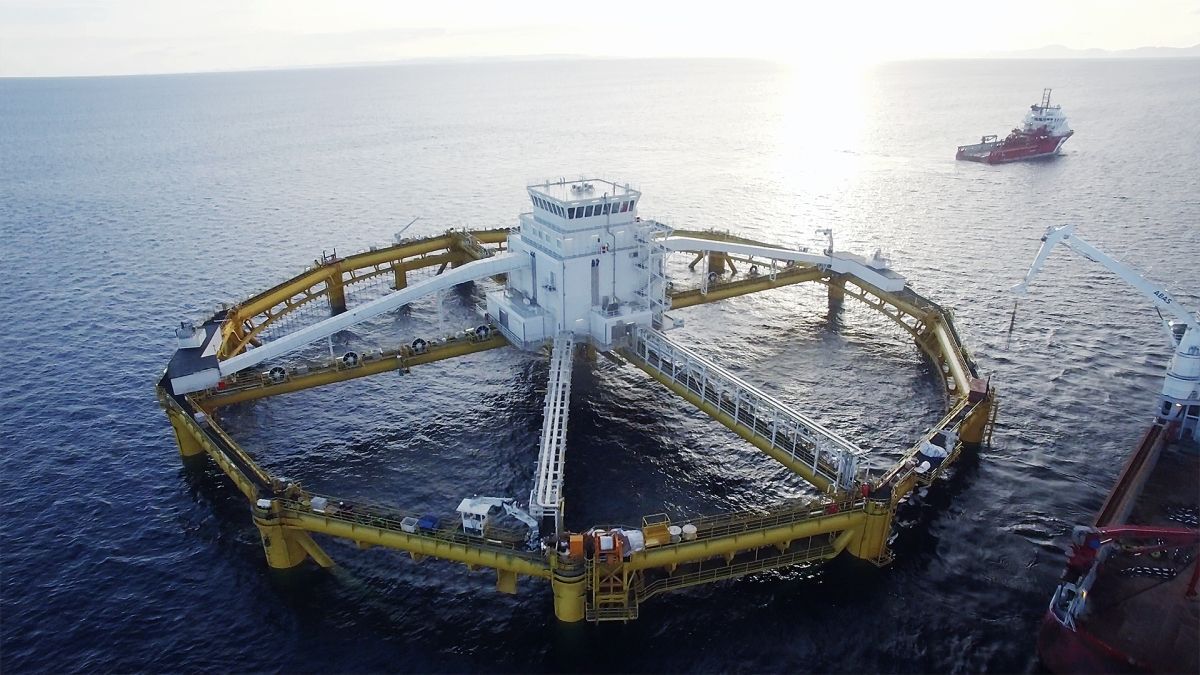
The legislation converges with trailblazing new technology being developed by Norwegian entrepreneurs: supply chain companies working hand-in-hand with producers to arrive at ambitious and revolutionary ways of farming.
This article looks at what the new Norwegian scheme actually entails, the pros and cons of the approach, what research is being undertaken in this area, why science and good husbandry will be key to delivering the welfare and sustainability gains everyone is hoping for, and what opportunities this may hold for Scotland.
Why is the Norwegian government promoting closed containment now
This new push from the Directorate of Fisheries was not entirely a surprise: in recent years, pressure has been building around mortality rates and environmental impact. Sea lice levels and mass escapes have frequently featured in the news headlines.
On the back of the government’s latest aquaculture policy paper (Havbruksmeldingen, April 2025), this legislation gives a clear political signal: if Norwegian farmers want growth – especially in areas designated ‘red’ under the traffic light system – this must be delivered through low-impact containment systems.
A colourful political backdrop
The Norwegian government has had a turbulent ride ever since its formation in September 2025. The initial coalition between Labour and the rurally-focused Centre Party fell apart when the latter left following a dispute about energy policy.
This resulted in a minority Labour government relying on support from four other parties: the Green Party (MDG) and the left-wing SV and Rødt, with the Centre Party occasionally weighing in. These parties are not formal coalition partners, but are essential for passing legislation.
Norwegians call it a “tutti-frutti” coalition; a humorously disparaging term referencing the multicoloured pick’n’mix sweet.
The national budget was finally agreed last December, but not without further drama and negotiation walk-outs.
Against this backdrop, the new aquaculture regulations may have been a useful tool for Labour in its attempts to appease MDG, SV and Rødt, all of whom have explicitly proposed that closed containment should be a requirement for sector growth.
What exactly does the new legislation cover?
Fish Farmer readers will already be familiar with Norway’s controversial traffic light system. Green zones allow for biomass growth; yellow means no change; and red zones lose capacity due to environmental pressure – particularly from wild salmonid interactions and (what is perceived to be) the associated lice risk.
Several areas turned red in recent cycles, leaving Norwegian producers frustrated and looking for a way to win back capacity in sustainable ways. The government’s answer: allow those operators to regain some lost biomass, but only within verified closed or semi-closed units.
This is not a blanket green light; it’s highly targeted. Only three production areas qualify (3, 4 and 5; along the south-west to mid-west coastline, from Stavanger towards Møre og Romsdal), and only for the portion of biomass they previously lost.
And critically, it’s not enough to simply buy a shiny new system: you need third-party verification that the facility actually prevents lice intake, stops escapes, and collects a significant portion of waste.
Politically, the move allows the government to show both industry and environmental groups that it’s serious about innovation, welfare, and sustainability.
Practically, it gives farmers a clear incentive to invest in technologies that can reduce impact, without abandoning growth.
And promisingly, some of the closed systems can already show evidence of several successful production cycles, with high levels of welfare and protection from lice and escapes.
It’s not ‘one size fits all’
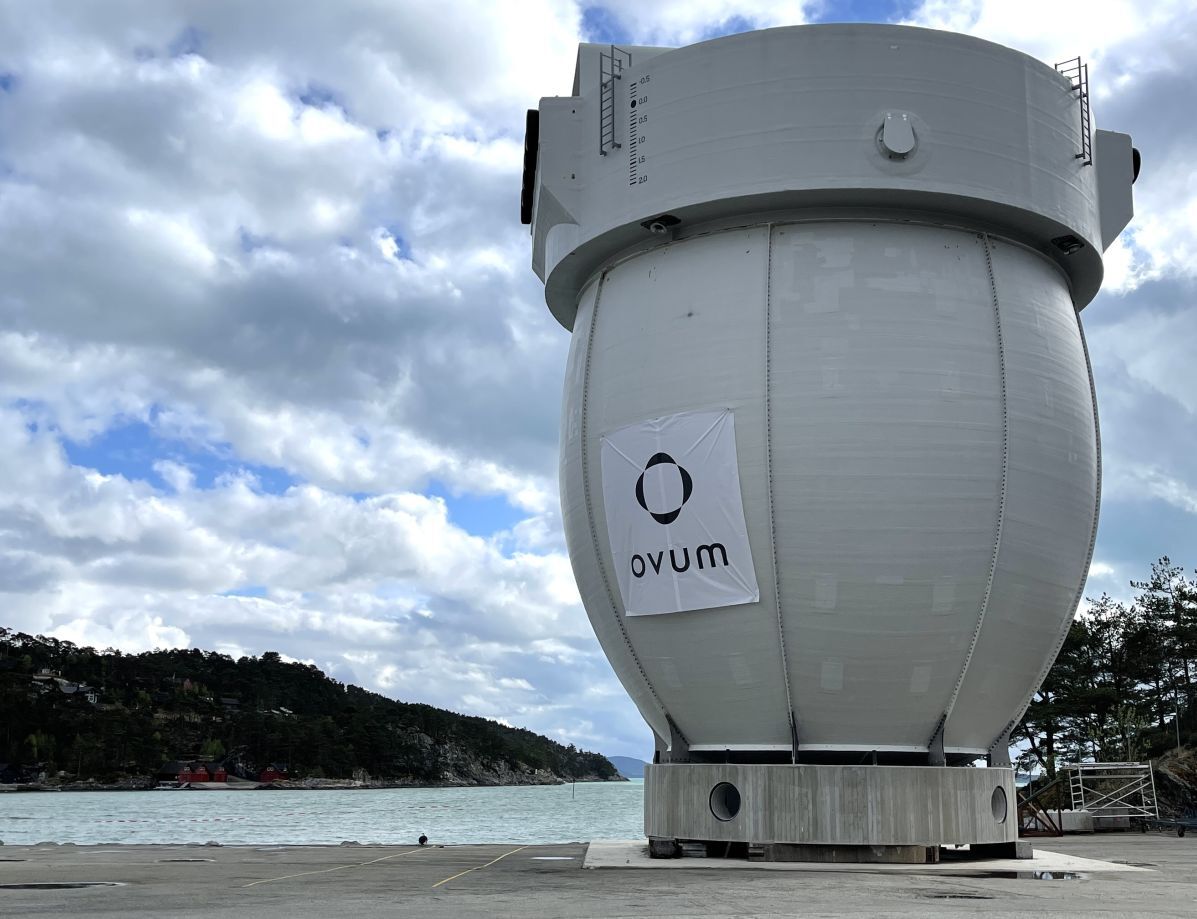
Norway’s new rules are deliberately technology neutral. For verification, what matters isn’t the label, it’s the performance. If a system prevents natural throughflow, keeps lice out at intake, prevents escapes through double-security measures, and captures waste to a defined level, it qualifies.
Producers will be encouraged to use the system that they deem the most suitable for their locality. And the idea is not for closed containment to replace traditional farming methods, but to be used alongside them. That flexibility is important, because it leaves room for innovation and avoids the trap of regulators betting on one specific design.
Still, closed systems are not magical silver bullets. While the list of benefits is long, there are some fairly sizeable wrinkles to iron out. Next, let’s look at some of the pros and cons.
The upsides...
The good news is that closed and semi-closed farming is something that both the producers, the supply chain and the government want. Even the Norwegian Veterinary Institute, the environmentalists and the wild fish enthusiasts may have cause to feel quietly hopeful at the promise of lice-free salmon and controlled collection of waste.
Closed and semi-closed systems don’t just tick a political box; they can solve real operational problems, many of which will resonate with Scottish farmers as much as their Norwegian counterparts:
1. Sea lice reduction
By controlling intake water, these systems can massively cut lice exposure. In fully closed units the reduction is dramatic – and some manufactures even promise to eliminate the sea lice problem once and for all.
In semi-closed systems, they still see meaningful reductions, because deep-water intake avoids the surface lice bloom. (There is a tentative caveat: sea lice are adaptable creatures, and there is recent research – e.g. Norway’s Institute for Marine Research – suggesting that some sea lice may thrive at greater depths than previously thought.)
2. Reduced escape risk
Solid walls and double security make mass escapes extremely unlikely, which – amongst other obvious benefits – is also good for ensuring social licence.
3. More control over water quality
Closed systems allow control over temperature, salinity, oxygen and CO. If it’s done right, water quality becomes more stable than in open-net pens, which may reduce stress and help fish convert feed more efficiently. Of course, “done right” is the key here: poor design or insufficient redundancy, for example, can create welfare issues of their own.
4. Sludge capture and reduced benthic impact
Over recent years, Scottish farmers and academics have worked with regulators on modelling the benthic impact of aquaculture waste and monitoring the seabed for Priority Marine Features – topics that are crucial for open-net pen farming applications. But by capturing a meaningful share of faeces and uneaten feed, closed containment systems can greatly reduce local seabed impact.
What happens to the captured sludge is a different story: there’s a lot of untapped potential. A project funded by FHF – the Norwegian Seafood Research Fund – is currently mapping different solutions for the capture and usage of aquaculture sludge. The consortium will use lifecycle analysis, from feed right through to end use, to evaluate whether these solutions would solve the environmental challenge or simply move the issue from sea onto land.
5. A new wave of innovation and supply chain growth
Where regulation creates opportunities, supply chain innovation will follow (and vice versa). Norway’s incentive scheme gives equipment manufacturers, engineers, and service companies an encouraging market signal. This should lead to a rapid evolution of pumps, filtration systems, sludge separators, measurement and monitoring equipment, and so on. As we know, Scotland itself has a wealth of innovative supply chain businesses in these areas that might well benefit from increased demand across the border.
...and the downsides
While some may view closed and semi-closed containment as the answer to everything, the commercial reality is much more complicated.
1. Cost and energy demand are still the elephants in the room
Fully closed systems can cost several times more per tonne of capacity and use more energy than traditional pen systems. Even semi-closed units, though cheaper, require pumps, special materials, and complex maintenance. For Norwegian producers trying to recover lost biomass, this can be worth it, and economies of scale may play a part. For Scottish farms operating on slimmer margins, the number-crunching could perhaps be tougher, unless similar government incentives or planning advantages offset the cost.
2. Sludge management isn’t solved yet
Where does all that collected sludge go? Even in Norway, with more processing infrastructure, it remains a logistical challenge. Pumping to shore is costly, barges are weather-dependent, and processing options vary by region. And until a more valuable end use product is developed, sludge remains a cost-benefit nut to be cracked.
3. The water-quality risk shifts, from natural to mechanical
In open pens, storms, warming seas and harmful blooms are the big hazards. In enclosed systems, the risks may look like pump failures, sensor errors, biofouling, clogging, CO₂ build-up, or oxygen crashes. It’s a different risk profile: less dependent on the ocean, but more dependent on engineering reliability. Teams of technicians, data monitoring, and proactive maintenance will all be part of the transition to this new way of farming.
4. Verification and paperwork
Norway’s regulations require independent experts to verify that a containment unit performs as it should, with organisations like DNV already on the scene to offer their services. However, the devil is in the detail: what do you measure, how often, and under what conditions?
The Directorate of Fisheries has already admitted that data systems don’t perfectly track production in closed units. Refinements are likely to follow, no doubt alongside a great deal of administrative workload and – possibly – a bit of bickering.
5. Systems vary enormously
There is a risk of trying to compare apples with pears: system designs are completely different from each other, and standard categories have not yet been agreed.
Regulators can’t treat them as equivalent, and farmers shouldn’t either. This is why Norway’s technology-neutral but performance-based framework is sensible, and why good research and verification matter.
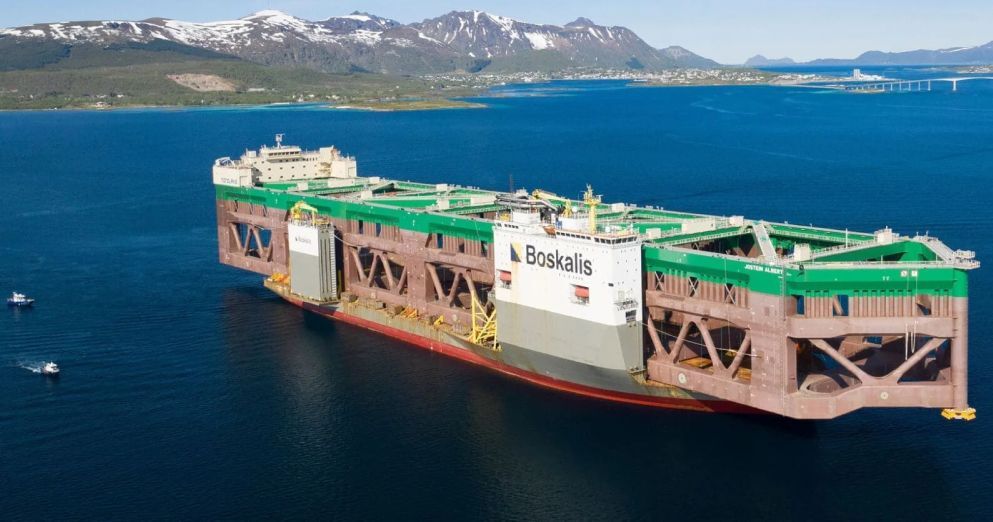
Research is the key
Ultimately, the success of closed and semi-closed containment will rest on research and good husbandry. The systems must work for everyone involved – first and foremost for the fish. So what research is being done in this space right now?
Jørund Larsen is the head of Production Biology and Technology at FHF. He tells Fish Farmer: “Studies have shown that facilities at sea can demonstrate promising biological and environmental results. But clearly, closed containment systems are fundamentally different from traditional open-pen farming in terms of production environment, hydrodynamics, and construction.
“Despite the good results we have seen so far, the development of closed containment technology is still in an early phase. If we want to make full use of the technology’s potential, a lot of work remains to be done. Among other things, there is a considerable need for research on how the technology may best be used to ensure good fish health.
“Currently, the FHF has one ongoing project on floating closed or semi-closed farming technology. Led by SINTEF Ocean, the project is called ‘Environmental requirements for good fish health and welfare in closed cages at sea (BIOCLOSED)’ and is set to complete in September next year.
“We are also preparing to fund a new set of projects in this area. Working in close dialogue with supply chain members and producer companies, we have mapped out some of the most pressing challenges and opportunities involved. This helped shape the 20 million NoK (ca. £1,482,000) funding call we announced last summer.”
The topics encompassed by the FHF call – identified by industry as being of the highest priority – include, among others:
• Arriving at a common categorisation of different system concepts, with clear definitions for each based on physical design, water treatment, and what these mean for waste discharge and biological specifications;
• Mapping solutions for water intake and treatment, and documenting the effect of these on the risk of introducing and spreading infection leading to disease outbreaks;
• Carrying out data capture and analysis of completed commercial production cycles, so that documentation of biological performance throughout the cycle can be made freely available;
• Developing interoperable tools for assessing the technical integrity of different closed or semi-closed systems – taking into account salinity differences, mass density, and the effects of biomass – and making these available to the sector.
Larsen concludes: “The overarching theme of the call is to gain knowledge that can help ensure cost-effective solutions, good fish health and welfare, and sound husbandry practices. We look forward to announcing the funded projects in the near future.”
As we know, biology will always trump technology. The new systems may be cutting-edge, but the only thing that really matters is whether the livestock thrives and survives. Future research may shine a light on optimal stocking densities, hydrodynamics, microbiome management, gill health under different filtration regimes, or a range of other topics. And as new funding emerges, so will the opportunities for Scottish consortia.
What does this mean for Scotland?
When changes are afoot (or should that be afloat?) in Norwegian aquaculture, the rest of the salmon world tends to sit up and listen. Be they political, technical or biological, developments in Norway often foreshadow where things are heading in other producer nations.
Scotland now has its own semi-closed developments emerging, with SeaQure Farming’s trout farm project at Ardnish – supported by £1.8 million from the Scottish Government – and the long-awaited Loch Long Salmon’s farm near Arrochar.
And for Scotland, where politics, public perception and environmental pressure are all playing a part in shaping the sector’s future, the Norwegian experiment is going to be invaluable. We will be able to see real data on performance, economics, health and welfare, failures and successes, and long-term sustainability.
Right now, Norway is effectively creating a real-time testbed showing how closed and semi-closed systems behave at commercial scale, how regulators verify them, and how the economics play out when incentives are tied to environmental performance. And no doubt the outcomes will have an impact far beyond the Norwegian coast.
Why not try these links to see what our Fish Farmer AI can tell you.
(Please note this is an experimental service)
You May Also Like


Sign up to our daily Newsletters
Permission Statement

Yes! I would like to be sent emails from Fish Farmer Magazine
I understand that my personal information will not be shared with any third parties, and will only be used to provide me with useful targeted articles as indicated.
I'm also aware that I can un-subscribe at any point either from each email notification or on My Account screen.


© 2026 Fish Farmer.