



A tale of two reports
Two reports looking into the economic impacts of Scotland’s salmon farming industry were published this winter, but with contrasting conclusions.
Here we explore the findings from both, to help you decide.


First, analysis from BiGGAR Economics for trade body Salmon Scotland presented “the scale and depth” of economic activity supported by Scottish salmon farming across the country.
Its top headline was the industry delivering a £1bn boost to the economy, and supporting 11,000 jobs, despite its “accounting for a fraction of Scottish marine environment”.
“Collectively, the activities of those involved in the sector supported an economic impact worth £953m Gross Value Added (GVA), and 10,850 jobs across Scotland in 2024,” it explained.
The new report also found salmon farming jobs “pay an average of about £44,500, around 16 per cent above Scotland’s typical salary, generating at least £37m in tax last year, with more through the supply chain”.
It concluded the sector is “one of the most important rural economic engines and a vital anchor for jobs, investment, and supply chain businesses across Scotland.
“The year-long, permanent, high-wage, employment opportunities the sector provides, contributes to the liveability of these areas and reduces population decline by attracting workers, contributing to local infrastructure, and enabling other local businesses and services to thrive.”
Let’s look a little more in detail at the figures behind the headlines.
“Since its beginnings 60 years ago, Scotland has established itself as the third largest producer of Atlantic salmon globally, producing around 100,000 tonnes in the 2000’s,” the report began.
“Over the last two decades the sector has grown at a conservative pace, averaging 1.5% per annum. There are over 200 active farms across north and west Scotland that collectively produced 192,000 tonnes of Scottish salmon in 2024.
“A significant portion of this production serves a thriving export market, making Scottish salmon the UK’s largest food export. In 2024, over 101,000 tonnes of whole, chilled, salmon, valued at £844m, were exported to customers worldwide.
“Further processed products, such as sides, fillets and smoked salmon, added a further £106m to export valuations in 2024.
European Union
“The European Union (EU) remains the primary market, receiving 63,000 tonnes in 2024, with North America also being a key destination. The top three individual markets were France, the USA, and China.
“The direct activities of the Scottish salmon farming sector in 2024 generated £231.2m in GVA for the Scottish economy and directly employed 2,460 people.” The majority of these, it added, are located in rural and coastal communities.
“Wages and salaries paid to employees totalled £108.6m in 2024. In 2024, staff spending by the Scottish salmon farming sector supported £65.5m in GVA for the Scottish economy and sustained 490 jobs.
“Remote and rural areas of the country have experienced population ageing and decline over a number of years, with a lack of local job opportunities often a key driver. Small increases in secure employment often have large effects on the viability of these local economies.
“As one supply chain operator explained: ‘We are providing very well paid jobs to a young workforce who often have young families. They are helping to keep local schools and shops open.’
“Supply chain companies that make the operation of salmon farms possible are also located in remote and coastal locations. For example, almost all of Inverlussa (140), Migdale (68), and GaelForce (120) employees are based in the Highlands and Islands.
“In 2024, the Scottish salmon farming sector’s spending supported a total supply chain impact of £589.9m in GVA and 7,040 jobs.

“In addition to supporting economic activity, the core operations of the sector generate fiscal revenues. This arises from the employment taxes (income tax and national insurance) associated with salaries and wages paid.
“Based on total wages and salaries and the number of employees, this was estimated at £44,539 per employee in 2024 (16% more than the median wage for Scotland in the same year).
“Total employment tax revenues for 2024, arising from those directly employed in production activity, were estimated to be worth at least £37.1m. Further tax revenues would be raised from employment associated with the supply chain.
“While producers have a degree of vertical integration, in 2024 they spent around £1.2bn on external goods and services – of which £714m (60%) went to businesses located in Scotland.”
The BiGGAR Economics’ report concluded: “Scottish salmon farming is a vital contributor to the fabric and sustainability of the local communities in which it is based. Without the presence of the sector in these areas, it is likely that many of the services or business community would not exist.”
The figures were welcomed by the Scottish Government, with Deputy First Minister Kate Forbes praising the sector’s contribution to jobs and growth.
Ms Forbes said: “This is a sector that continues to invest in its people, with average salaries being significantly above the Scottish average. It is also an industry that brings benefits to the country’s wider supply chain.
“The Scottish Government will continue to take bold steps to support the sector’s ongoing sustainable development and to ensure it remains a Scottish success story.”
A critical view
A second report into the economic impacts of Scotland’s salmon farming industry, ‘Assessing the Economic Impact of Salmon Farming in Skye & Lochalsh: An Exploratory Scoping Study’, offered a counter view, however.
This study, by analysts Dr Andrew Moxey and Dr Angela Tregear of the University of Edinburgh, which uses Skye and Lochalsh as a case study, argued that “the industry overplays its economic benefits and downplays its costs”.
The report was commissioned by the Sustainable Inshore Fisheries Trust (SIFT) and WildFish, a UK charity campaigning for wild fish and their environment.
Charles Millar, Executive Director of SIFT, summarised: “The salmon industry operating in Scotland may tout itself as a success story, but we now have data on the jobs it costs in other sectors.
“All too often the benefits don’t stay in Scotland, the profits flow overseas, and local communities are left with both the bills and the environmental consequences.”
Giving further details, a WildFish spokesperson added: “Across Scotland as a whole, official statistics show that salmon farming production jobs have fallen in the last decade. In Skye and Lochalsh, the report estimates that approximately 137 people currently work in the industry, some 2% of the local workforce.
Negative impact
“However, the report estimates that the negative impacts of salmon farming have cost between 12 and 38 jobs locally in other sectors, including in mussel farming, creeling and marine tourism, all of which have markedly lower environmental impacts than open cage salmon farming.
“Multinationals, which own most of Scotland’s salmon farms, also receive substantial UK tax credits and grants, in some years receiving more than they pay in tax.
“Moreover, the industry requires extensive government oversight, which is funded from the public purse, while salmon farms have been exempt from local business rates since 1981.”
Andrew Moxey, co-author of the report and former Chief Agricultural Economist for the Scottish Government, added: “Published official guidance for economic appraisals emphasises the importance of estimating net effects accounting for costs as well as benefits.
“Doing so for salmon farming is hindered by a lack of data, but our findings from Skye and Lochalsh confirm that headline figures exaggerate the net benefit to Scotland and host communities. Better data and more routine analysis would help to inform debate about the magnitude and distribution of net benefits and their relevance to achieving different policy objectives.”
Calling for an “independent, Scotland-wide” analysis, SIFT’s Executive Director Charles Millar concluded: “At the very least, this industry should now be required to pay its way and make a fair contribution to the parts of Scotland where its harmful effects are most widespread.
“The Scottish Government has spent far too many years touting the benefits of salmon farming and ignoring its costs: we need an independent Scotland-wide economic analysis of this sector before the multinationals get a penny more in state funding or any new planning approvals.”
A year on from the Holyrood salmon inquiry, where are we now?
It has been a whole year since Holyrood concluded its critical inquiry into fish farming in Scotland, and dished out an ultimatum for urgent improvement, so now seems a good time to catch up on progress.
Last January, nine MSPs on the Rural Affairs & Islands Committee (RAIC) concluded their follow-up inquiry focusing on four themes of fish health and welfare, environmental impact, interactions between wild and farmed salmon, and the location of fish farm sites.
The committee was checking up on progress from an earlier inquiry in 2018, conducted by its predecessor the Rural Economy & Connectivity Committee, which ruled urgent action was needed to improve regulation and address fish health and environmental challenges. It set out 65 recommendations.
Six years later the follow-up inquiry revealed its findings, which could be summed up in a single word: “disappointment”.
The RAIC’s overarching conclusion was that “the slow rate of progress in improving the regulation and enforcement of the Scottish salmon farming industry needs to be addressed as a matter of urgency, to future-proof the industry and enable it to grow sustainably”.
The committee rejected calls for a moratorium on new and expanded sites – for now – unless the Scottish Government could show progress on its recommendations, and those from the earlier inquiry, within a year. So how has it been going?
We had two interim updates in September, first from the Cabinet Secretary for Rural Affairs, Land Reform and Islands, Mairi Gougeon MSP, and then from the chief executive of the trade body Salmon Scotland, Tavish Scott.
The minister’s update, Ms Gougeon said in a letter to the RAIC, “represents six months of concentrated activity by the government”. Here we focus on a few of their key commitments, and how and when they are being met.
On the Scottish Government’s commitment to “explore how the presentation and accessibility of existing data collections can be improved”, the minister reported that the Scottish Environment Protection Agency (SEPA) had updated the Scotland’s Aquaculture website to ensure it has “secure infrastructure and that it is more intuitive and accessible for users”.
Transparent
SEPA, she said, had also secured funding “to undertake scoping work for the design and delivery of a digital platform to support efficient, effective and transparent marine fish farm regulation, including the roll-out of streamlined and integrated consenting, and modernised access to comprehensive multi-agency information about aquaculture in Scotland”.
On another government commitment to “analyse mortality data, exploring thresholds for ‘persistently high mortality’, and whether fish farms with ‘persistently high mortality’ exist”, Ms Gougeon updated: “We have developed a robust analytical framework to determine whether there is ‘persistently high mortality’ at Scottish production sites. The framework employs qualified parameters for ‘elevated’, ‘recurrent’ and ‘persistent’ mortality to design a modelling approach that can help identify sites that potentially show ‘persistent elevated mortality’.
“Quality assurance is being undertaken on the preliminary analytical model with a view to generating initial results later [in 2025].
“Where there are sites screened as having ‘persistent elevated mortality’ under the analytical framework, we will engage with those operators to explore what actions are already taken by producers to prevent issues causing mortality persisting from year to year.
“By spring 2026 we will provide a project report to the RAIC detailing both the finalised methods, the results of analysis, and the planned Scottish Government response to these.”
The Scottish Government had also committed to a new Environmental Quality Standard for emamectin benzoate, an insecticide used to control parasitic sea lice on salmon.
Ms Gougeon updated the RAIC: “SEPA have taken account of the most up-to-date science and have had an interim standard in place since 2019. All new and significant changes to emamectin benzoate discharges since then have been permitted in accordance with the interim position.
“SEPA are committed to reviewing all permits for existing operations to ensure that all sites are required to operate under the new standard by June 2028.”
The Scottish Government had also pledged “to continue to work with SEPA and the sector to support development of the monitoring strategy underpinning SEPA’s Sea Lice Risk Assessment Framework, and to manage the transition of governance of this issue under existing local authority Environmental Management Plans by the end of 2025”.
In her update, the minister said: “SEPA has carried out a risk-assessment across all sites and varied the permits for all existing marine pen fish farm operations. These variations include conditions relating to impacts of sea lice on wild fish requiring monitoring across all operations and ‘standstill’ conditions in terms of sea lice numbers on those sites that have been identified as having the highest relative risk.”
However, Ms Gougeon added that “these variations have been appealed by the operators and will not come into force until the appeals process is complete”. Later on, she detailed: “The Scottish Government Planning and Environmental Appeals Division has received 260 appeals relating to SEPA’s sea lice risk assessment framework.”
Further, under environmental matters, she said: “The finfish aquaculture sector in collaboration with SEPA have completed the first set of pilots for monitoring sentinel pens to test sea lice dispersions models. The results from the monitoring are currently being collated and assessed.
“SEPA has consulted on and now adopted a new charging scheme in relation to monitoring impacts of sea lice from marine pen fish farms. This has allowed the development and implementation of an initial programme of sea trout monitoring on the West Coast, Western Isles and Orkney in 2025. SEPA are in the process of developing a larger ongoing national programme of monitoring that will commence in 2026.”
On the issue of fish farm escapes, she updated: “We have committed to prioritise progress on penalties for fish farm escapes in 2026/2027, however some initial scoping work has commenced to consider options for the introduction of penalties.”
Salmon Scotland
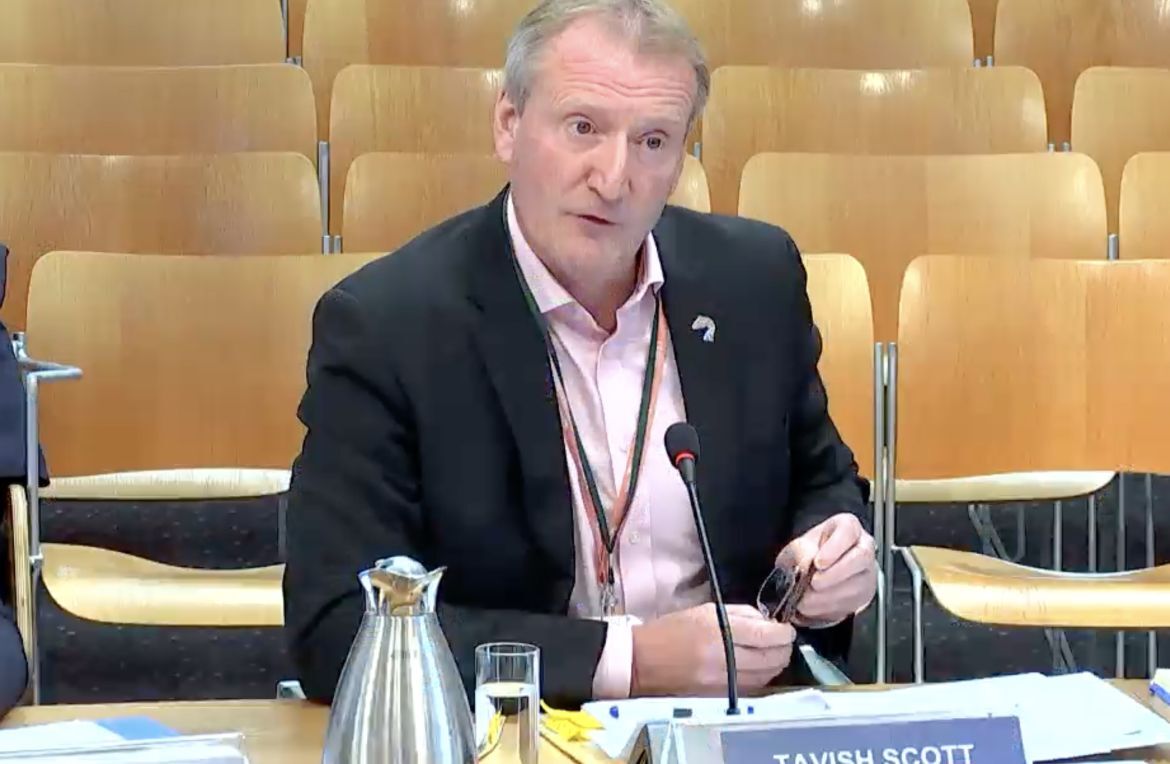
A week later Tavish Scott, chief executive of the trade body Salmon Scotland, presented the industry’s progress update to the RAIC.
Mr Scott began with a long list of headlines, including “record survival figures for January-August 2025 (92.3%)”, “record low antibiotic use figures for 2024 (down to 5.1mg/kg)”, and “continuing consumer demand, both domestically and internationally, with the sector on track for record exports in 2025”.
Mr Scott said: “Alongside improvements in fish health, welfare and survival, salmon farmers are reporting significant improvements in overall biological performance, fish growth, and productivity.
“We previously updated the Committee that fish survival in 2024 had been significantly improved over 2022 and 2023. Our sector recorded an overall improvement in marine survival of 10%, between 2024 and 2023 (82.3% v. 72.3%).
“We are pleased to report that this trend has continued in 2025. Survival in the first half of 2025, and to date, has exceeded expectation, with record figures. The January to August 2025 figure is 92.31%, which is the lowest since we first started publishing in 2018.”
The use of antibiotic medicines, he said, had also been significantly reduced: “In 2024, antibiotic use dropped to 5.1mg/kg, a reduction of nearly 80% compared to 2023. Furthermore, use is restricted to a small number of farms. Antibiotics were used on 8% of all farms in 2024 (7.1% of seawater farms and 10.6% of freshwater farms).”
Salmon Scotland told us it expects to publish its revised welfare guidelines in January.
Summing up the sector’s progress so far, Mr Scott said: “This is testament to the hard work of the sector’s farmers, veterinarians and fish health professionals, as well as the £1bn invested in fish health and welfare since 2018.”
Striving to improve survival rates
The Scottish salmon industry has made significant progress in improving fish welfare and survival over recent years, supported by substantial investment and innovation.
Since 2018, the sector has invested over £1 billion in fish health and welfare, veterinary care, technology, and stock management. This investment has contributed to record survival rates, with monthly survival for farmed salmon reaching an average of 99.12% between January and June 2025 – the highest since voluntary data reporting began in 2018. Overall survival across farms rose to 82.3% in 2024, up from 72.3% the previous year, reflecting a 36% reduction in mortalities.
Key improvements include enhanced monitoring and mitigation measures against environmental challenges, such as jellyfish blooms and warming seawater. The industry has adopted advanced technologies, such as freshwater treatment vessels, underwater cameras, and innovative netting to improve fish health. There is also a focus on reducing medicine use, with antibiotic use falling by nearly 80% in 2024 to the lowest level since reporting began.
Transparency has increased through voluntary publication of detailed farm-by-farm mortality and sea lice data, with survival rates consistently high and sea lice levels at historic lows. Independent audits and certifications, such as RSPCA Assured, cover virtually all Scottish salmon farms, enforcing high welfare standards, including limits on stocking densities and humane slaughter methods.
The industry is also innovating with semi-closed containment systems to improve environmental control and fish welfare
further. However, some welfare campaign groups note that there is still room for improvement, particularly in areas like transport, transfer, and enclosure policies, and call for greater transparency and regulatory leadership.
Why not try these links to see what our Fish Farmer AI can tell you.
(Please note this is an experimental service)
You May Also Like



Sign up to our daily Newsletters
Permission Statement

Yes! I would like to be sent emails from Fish Farmer Magazine
I understand that my personal information will not be shared with any third parties, and will only be used to provide me with useful targeted articles as indicated.
I'm also aware that I can un-subscribe at any point either from each email notification or on My Account screen.


© 2026 Fish Farmer.