ao link

Wrasse welfare

 In the battle against sea lice, the salmon industry has had to deploy several different weapons. As well as chemical, mechanical and freshwater treatments, in recent years the use of cleaner fish has helped to keep lice numbers down.

Linked InXFacebook
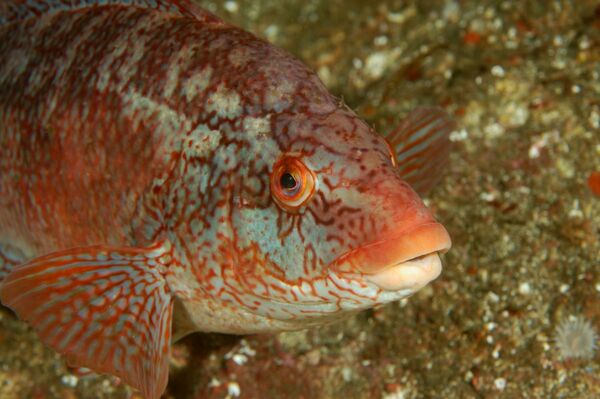
ballan-wrasse_AdobeStock_11525088-20250213.jpg
Ballan wrasse

Lumpfish (Cyclopteridae) and wrasse (Labridae) are natural predators for sea lice, and picking lice off from larger fish like salmon is natural behaviour for these species. Keeping cleaner fish in pens with salmon has been shown to help keep lice numbers down in a way that has minimal impact on both the salmon and the environment.


There are signs, however, that some fish farmers are rethinking their strategy with cleaner fish, for several reasons – particularly because there is now greater awareness of cleaner fish welfare issues.


Last May, a revised edition of the RSPCA welfare standards for farmed Atlantic salmon came into effect. While not statutory, this matters, because most of the UK’s salmon production comes under RSPCA Assured’s welfare scheme. The new edition includes more specific requirements for cleaner fish, in particular demanding that they must be safely separated from the salmon in the pen before treatment or transportation takes place.


Meanwhile, farmers now provide cleaner fish with appropriate feed sources – they cannot survive on sea lice alone, and they prefer to graze on feed blocks rather than compete with the salmon for pellets – and artificial hides to replicate the seaweed beds in which they like to take shelter. All this helps to reduce stress for the cleaner fish and allow them to do their job.


In Scotland, the use of lumpfish has been largely discontinued – while these fish are effective cleaners, they have proven to be problematic when the salmon are being treated or transported. Lumpfish like to attach themselves to flat surfaces and this can cause problems when fish are being pumped to another location such as a wellboat.


For wrasse, the picture is more mixed. A spokesperson for Mowi said: “Mowi continues to use wrasse as part of its sea lice treatment programme, sourced from Mowi’s hatchery in Anglesey as well as some wild stocks.”


Mowi-owned Wester Ross also uses wrasse as cleaner fish, and Bakkafrost and Scottish Sea Farms use wild-caught (but not farmed) wrasse.


In contrast, Cooke Scotland said: “Cooke Scotland does not use cleaner fish in its salmon farming operations. We continually develop and assess the best methods of sea lice control on our sites to ensure our salmon are cared for to the highest welfare standards.”


Concern over the sustainability of the wild wrasse fishery has led to increasingly tight controls. The Scottish Government and Salmon Scotland initially introduced voluntary controls in 2018. These were later made mandatory in 2021 through a licence condition, requiring a Letter of Derogation for those wishing to commercially fish for wrasse.


Wrasse fishers are limited to a maximum of 250 creels and there is a closed season for wrasse fishing in some areas, typically between April and mid-July. In addition, some areas have been designated as “no take” zones to protect stocks.


Up until recently, Otter Ferry Seafish maintained a wrasse farming operation to supply adult wrasse to the Scottish salmon industry. This has now been wound down and the company now maintains broodstock only, to supply larvae to a producer in Norway, where there is still a greater demand for cleaner fish.


It takes two years to grow wrasse to adult size, so investing in future production represents a commercial risk if the market is uncertain. Even so, Otter Ferry’s Managing Director, Alastair Barge, stresses that cleaner fish continue to play a role in protecting salmon: “It’s still a tool in the toolbox.”

lumpfish SAIC(1) 20250523
Lumpfish (photo: SAIC).

Making vaccination more effective

Meanwhile, later this year, it is hoped we will see the conclusions of a study looking at how to improve the efficacy of vaccination against Aeromonas salmonicida, a bacterium which is associated with furunculosis in salmon, and can cause potentially fatal outbreaks of disease in cleaner fish.


The project has been led by the University of Stirling’s Institute of Aquaculture, salmon producer Mowi and Otter Ferry Seafish, with support from vaccine specialists Ceva Ridgeway Biologicals and the Sustainable Aquaculture Innovation Centre (SAIC).


Vaccination against A.salmonicida has been one of the big success stories for salmon farming, and has allowed the industry to reduce the amount of antibiotics deployed. Ballan wrasse have, however, been found to be vulnerable to an “atypical” strain of A.salmonicida and the vaccines appear to be less effective against this variant due to its diversity.


Farmed wrasse in the UK are currently administered an autogenous vaccine, that is, a custom-made vaccine prepared from a pathogen isolated from a specific animal or group, and then used to vaccinate that same group. This is typically done initially via dipping when the fish are very small and then by injection ahead of releasing the wrasse into sea cages.


The study set out both to look both at how the vaccine is best administered, and to determine improved ways formulate it. One of the findings so far is that there is a noticeable variation in terms of how individuals’ immune responses operate, with some fish responding more to the vaccine than others.


Dr Sean Monaghan of the Institute of Aquaculture who, with his colleague Dr Andrew Desbois, has been working on the study, said: “Elevated antibodies are induced by the vaccine in pre-deployed fish. We’ve looked further at those antibodies and also some key genes that are associated with adaptive immune response or immune memory.”


These include genes associated variously with cell immunity, antibody immunity and the expression of antibodies.


Monaghan and the team plan to publish a paper on the findings within the next six months.

SAIC wrasse at Otter Ferry ldscp 20250523
Wrasse at Otter Ferry (photo: SAIC).
Linked InXFacebook
Add New Comment
You must be logged in to comment.
Broodstock Technician (Ardessie) - Mowi Scotland
Garve, Wester RossGarve, Wester Ross£28,258 to £35,265 per annum£28,258 to £35,265 per annum

Trainee Health & Safety Advisor - Mowi Scotland
Western IslesWestern Isles£28,000 to £30,000 per annum£28,000 to £30,000 per annum

Farm Technician (Laga Bay) - Mowi Scotland
Acharacle, LochaberAcharacle, Lochaber£28,258 to £31,648 per annum£28,258 to £31,648 per annum

Environmental Field Scientist (Fort William) - Mowi Scotland
Fort William, LochaberFort William, LochaberSalary On ApplicationSalary On Application

Feed Operations Technician (ROC - Fort William) - Mowi Scotland
Fort William, LochaberFort William, Lochaber£30,387 to £34,032 per annum£30,387 to £34,032 per annum
Fish Farmer Magazine
IPSO
Facebook
X
Linked In

© 2026 Fish Farmer.