
ao link

Unwelcome visitors… for some
I think I must sound like a stuck record sometimes, but why, oh why do we not value shellfish aquaculture in the UK as they do in Europe?

Linked InXFacebook
M Gigas AdobeStock 901749185 20250901
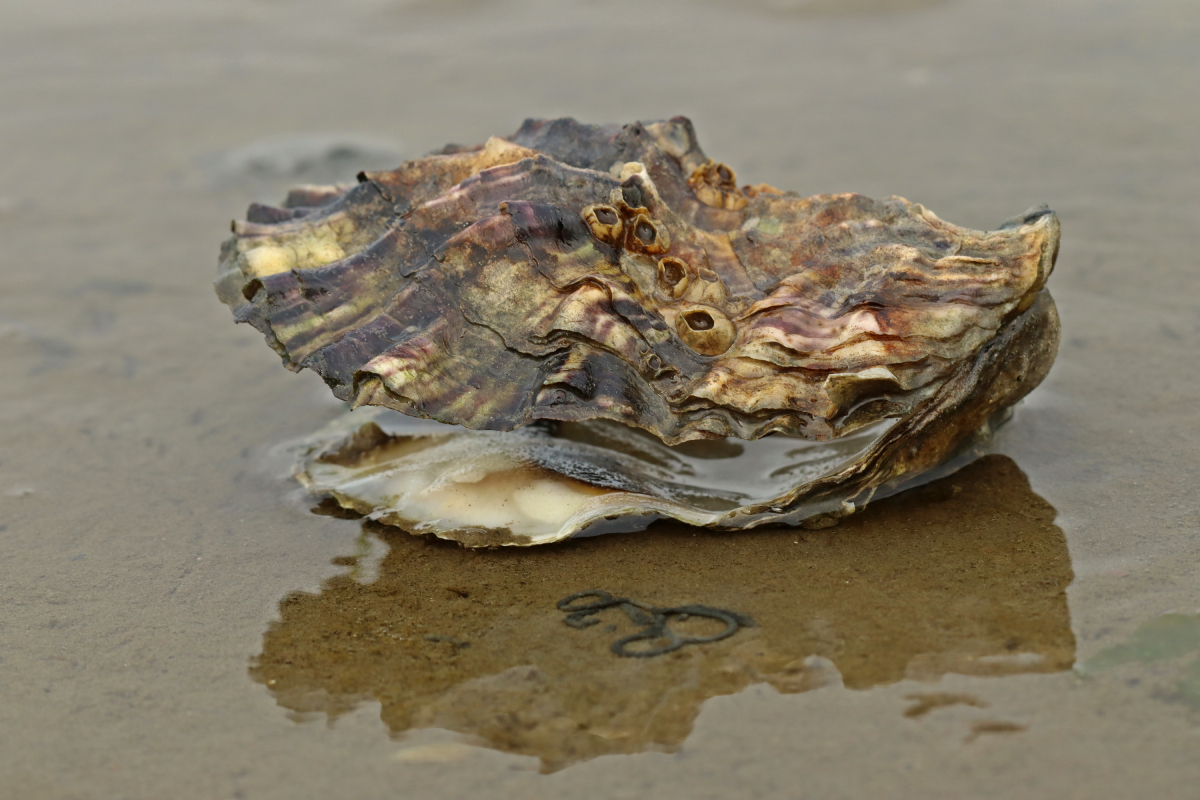
Pacific oyster (Magallana gigas)

I have just returned from a break in Brittany, where oysters are plentiful, and are valued both as a food and a tourist industry. So much so, that earlier this year the regional government announced a €10m (£8.7m) investment in sustainable aquaculture to increase oyster production from 85,000 tonnes in 2024 to 100,000 tonnes in 2027 and mussel production from 40,000 tonnes reach 50,000 tonnes.


In the Bay of Cancale alone, annual production of Pacific oysters (Magallana gigas) exceeds 5,000 tonnes from 340 hectares, which is twice the production of the UK. In the adjacent Bay of Mont-Saint-Michel, over 1,000 tonnes of flat oysters (Ostrea edulis) are produced, along with some 10,000 tonnes of bouchot mussels per year.  


Cancale itself hosts dozens of seafood restaurants, viviers (ponds), vente direct (“direct sale”) sheds and beach-side oyster pop-ups.


The local beach boasts a mountain of shells discarded by picnickers, who enjoy fresh oysters while watching the buzz of activity on the farms, which start just a few metres from the seafront. Guided farm visits are a popular way to spend an hour or two between the tides.


This is a scene which I have seen repeated in many areas of France, from l’Etang de Thau in the Mediterranean, to Arcachon and La Rochelle on the Atlantic coast, and all around the coast of Britanny and Normandy.


Looking at country level, Spain produced 193,654 tonnes of farmed shellfish in 2022, France 155,981 tonnes, the Netherlands 33,090 tonnes and the whole of the UK, a mere 17,480 tonnes.


Our coastline is more than 250% larger than Spain’s, 370% larger than France’s and 2,750% larger than the Netherlands’, so it is obvious that the UK farmed shellfish industry has huge potential to deliver growth, create jobs, and support the national food security agenda.


What we lack is the necessary top-level recognition of the potential value of the industry, which would unlock the financial and regulatory support needed to help it develop and support coastal communities. It would also allow shellfish farmers to find a renewed sense of pride in their work.


Instead, in the minds of NGOs and regulators, it is too often parcelled in with finfish aquaculture, an industry which I fully support, but which comes with its own complications and detractors. Shellfish aquaculture on the other hand, uses no feed, no chemicals and no medicines, it is environmentally benign, increases biodiversity, and provides a range of unremunerated ecosystem services, from acting as a carbon and nitrogen sink, to cleaning the water in which it grows.  


However, that is not enough for environmentalists, who see that warming waters are causing Pacific oysters to breed naturally and form their own reefs in estuaries and on mudflats, which could affect local attempts to re-establish native oyster beds.


This has led to the situation where several large landowners, including the Duchy of Cornwall, are phasing out Pacific oyster cultivation on their land by declining to renew leases when they expire. The Duchy is removing 20 years of support for successful businesses and is also operating a clean-up programme to remove wild-seeded Pacific oysters from estuaries and waterways on the estate. 


Elsewhere, the issuing of new licences or permission to expand Pacific oyster farms is no longer permitted anywhere north of the 52°N parallel in England – a line connecting the towns of Fishguard in the west and Felixstowe in the east. This is a bizarre situation, given that oyster farms already exist north of this line in both England and Scotland.

oyster farm Morbihan Brittany AdobeStock 449896090 20250901

The future of Pacific oyster farming

Concerned by this development, the Shellfish Association of Great Britain (SAGB) commissioned a study from the University of Essex, to undertake a critical review of the current and future status of Pacific oyster farming in the UK.


Professor Tom Cameron and Dr Michael Steinke presented an outline of their findings at the SAGB conference in June.


The review found that Pacific oysters have already spread far and wide, with M. gigas populations found extensively throughout Europe, from Norway in the north, to Cyprus in the south. In the UK, wild populations have been found to be genetically more closely related to French and Spanish M. gigas populations than to UK hatchery stock.


Banning oyster aquaculture in parts of the UK is therefore futile, and will not prevent naturalised spread, but instead, it will suppress ecological and economic benefits to coastal communities. Modelling found that even with the removal of 67% of wild stock annually, the population size would still remain the same after 20 years.


“It is likely that even if all UK M. gigas producers were to remove their stock overnight, the defacto naturalisation of the species is sufficiently advanced that the wild and free-living population will continue to spread regardless. There are potential source populations outside of stocks managed for culture along both the UK and mainland European coastlines, where widespread control measures for M. gigas are not contemplated. These populations would likely re-seed any suitable areas within a matter of years,” Dr Steinke said.


A more sensible and practical approach recommended by the researchers is for M. gigas, which makes up more than 95% of UK oyster production, to be given legal naturalised status in the UK.


Many European countries have already legally naturalised M. gigas, but all appeals to Defra (advised by Natural England) to give them the same status in the UK fall on deaf ears. Instead, under the Wildlife and Countryside Act 1981, M. gigas remains classified as an invasive, non-native species. This is despite the fact that the official UK risk assessment for M. gigas acknowledges that the spread of this species is likely primarily from extant wild populations, rather than fishery operations.


Other recommendations from the team are that industry and regulators should work together to mitigate wild spread where necessary; an EU Adaptive Management approach is adopted; benefits are built into Habitat Regulations Assessments, which are designed to protect ecological sites such as Special Areas of Conservation (SACs) and Special Protection Areas (SPAs) from the potential negative impacts of plans and projects; and that oyster aquaculture should be promoted.


In addition, the US-devised Resist-Accept-Direct (RAD) Framework should be revisited as a guide. This framework offers a strategic approach to managing resources in the face of climate change and other ecological shifts. It encourages managers to consider a range of responses beyond simply trying to resist change, including accepting inevitable changes or directing them in a desired direction. For M. gigas, this could involve decisions about where to allow or encourage their spread, where to try and control their populations, or how to manage the impacts of their presence on other species and ecosystems. 


Importantly, UK policy on M. gigas should be updated to reflect the environmental and socioeconomic benefits of Pacific oysters to the shellfish fishery and to open its utility for the provision of nature-based solutions to help adapt to the effects of sea-level rise.


“With appropriate mitigation methods in place, there is no reason why Magallana gigas should not be granted a legal naturalised status in the United Kingdom,” Dr Steinke concluded. 

oysters in market AdobeStock 21926187 20250901
Oysters in market, France
Linked InXFacebook
Add New Comment
You must be logged in to comment.
Hygiene Department Trainer (Night Shift Monday to Friday) - Mowi Scotland
RosythRosythSalary On ApplicationSalary On Application

Broodstock Technician (Ardessie) - Mowi Scotland
Garve, Wester RossGarve, Wester Ross£28,258 to £35,265 per annum£28,258 to £35,265 per annum

Trainee Health & Safety Advisor - Mowi Scotland
Western IslesWestern Isles£28,000 to £30,000 per annum£28,000 to £30,000 per annum

Farm Technician (Laga Bay) - Mowi Scotland
Acharacle, LochaberAcharacle, Lochaber£28,258 to £31,648 per annum£28,258 to £31,648 per annum

Environmental Field Scientist (Fort William) - Mowi Scotland
Fort William, LochaberFort William, LochaberSalary On ApplicationSalary On Application
Fish Farmer Magazine
IPSO
Facebook
X
Linked In

© 2026 Fish Farmer.