




Lerøy and Scottish Sea Farms: significant value for the group
The board of the Lerøy Seafood Group has spoken in glowing terms about its association with Scottish Sea Farms, in which it owns a half share with SalMar.


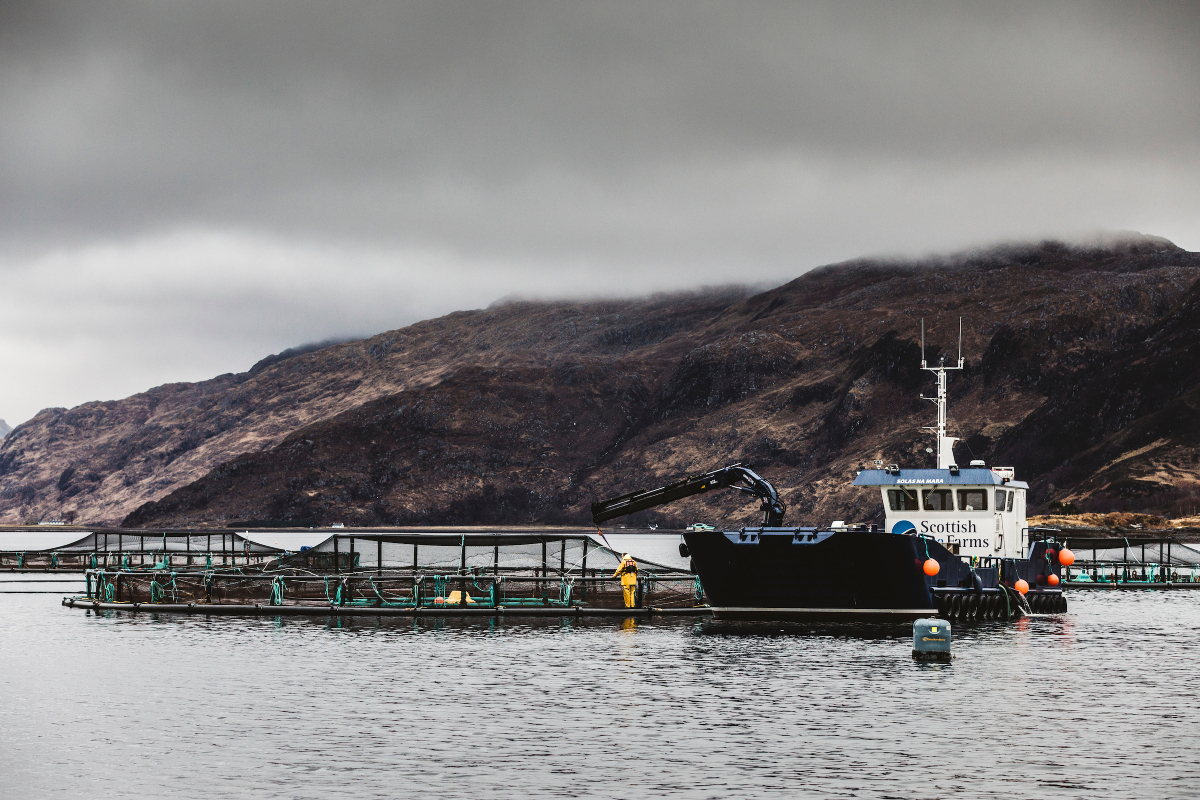
Scottish Sea Farms (SSF) has been connected with the group for almost quarter of a century.
In 2001, Lerøy and SalMar took over the company then known as Hydro Seafood, and began building it up into the operation it is today, trading under the SSF brand (the joint company set up to own SSF is actually called Norskott Havbruk).
Solid expansion came four years ago when it acquired the Scottish and Shetland interests of Grieg Seafood which decided to pull out of the UK and focus on Norway and Canada (unwisely in the case of Canada, as it turned out).
Like many salmon companies, SSF has endured its share of biological issues on which it has since made significant progress.
This improvement was acknowledged by long-serving Lerøy CEO Henning Beltestad in the group’s annual report published a few weeks ago who said: “Associated companies represent a significant value for the group.”
Lerøy has two associates in its stable – SSF and the Norwegian aquaculture vessel company Seistar.
They usually sit separately from the main group in terms of financial reporting, particularly if they are jointly owned, but CEO Beltestad was in no doubt about SSF’s value to the business.
He told shareholders one of its most important assets was the 50% ownership in the UK-based aquaculture company along with Seistar.
Beltestad said: “Scottish Sea Farms is a joint venture with SalMar ASA and represents one of the largest farming companies in the UK.
“Following some challenging years, SSF saw significant improvements in 2024 with harvest volume growing from 24,884 GWT in 2023 to 40,439 GWT in 2024.
“The EBIT/kg improved from NOK -12.2 in 2023 to NOK 13.7 in 2024 with EBIT before fair value adjustments of biomass improving from NOK -304 million (-£22m) in 2023 to NOK 555 million (£40m) in 2024.”
He added: “Due to stocking plans, the harvest volume in SSF is expected to be around 32,000 GWT in 2025, but the long-term potential is substantially higher. “
A diversified seafood portfolio
In general seafood terms, Lerøy’s results are probably more important than its larger rivals such as Mowi and SalMar which exclusively involve salmon farming.
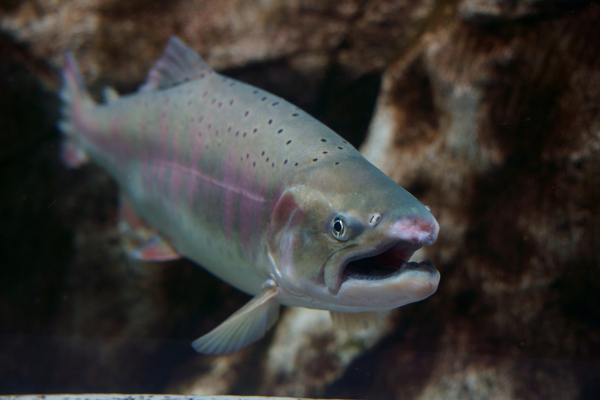
The group, which celebrated its 125th birthday last year, has a large trout farming business, a fish increasing popularity in the United States and Far East countries like Thailand.
It also owns one of Norway’s largest deep sea fishing fleets devoted to catching cod, haddock and saithe (also known as coley).
Cod and haddock quotas in the Barents Sea have been sharply reduced over the past couple of years, but some of that loss has been made up through higher white fish prices, which is creating an acute cost crisis for British fish and chip shops.
Nevertheless, salmon farming is its largest revenue earner and CEO Beltestad is clearly in a positive mood.
He writes: “From humble beginnings on the island of Lerøy, we have grown into one of the world’s largest seafood companies.
“Our dedication to quality and the knowledge passed down through generations remain central to our identity. With over 6,000 employees, we deliver premium Norwegian seafood worldwide as we are shaping the future with an eternal perspective.
“We have experienced positive underlying developments in fish welfare in 2024, one of our most critical areas.
“In the past year, we made significant strides, improving genetics, roe and smolt production, and introduced new technology.”
The salmon sector is now using submerged cages to combat lice and they have reduced treatment frequency by 85%, he revealed.
“These advancements, along with the Lerøy Way, have improved fish welfare and operational efficiency resulting in a record biological performance and production in 2024, providing a strong foundation for 2025.”
He also said the group is advancing towards its 2025 goals which it set out three years ago.
“We are progressing towards these goals in farming, and our value-added processing, and sales & distribution (VAPS&D) segments.
“In wild catch, our employees are doing everything they can to maximise the values of the quotas. Still, the significant quota reduction, to historic low levels, has a negative impact on catch volumes and profitability.”
He maintained that the group had laid a strong foundation for achieving its objectives this year.
“Our long-term improvement programme has positioned us to meet both our short and long-term goals.
“We are now seeing the results of years of consistent efforts. By translating learning into action, we are driving improvements that will carry us forward. Our focus remains on growth, sustainability and on delivering value.
“New technologies are propelling us toward our sustainability and volume growth goals. I am optimistic about the future and the opportunities that lie ahead.”
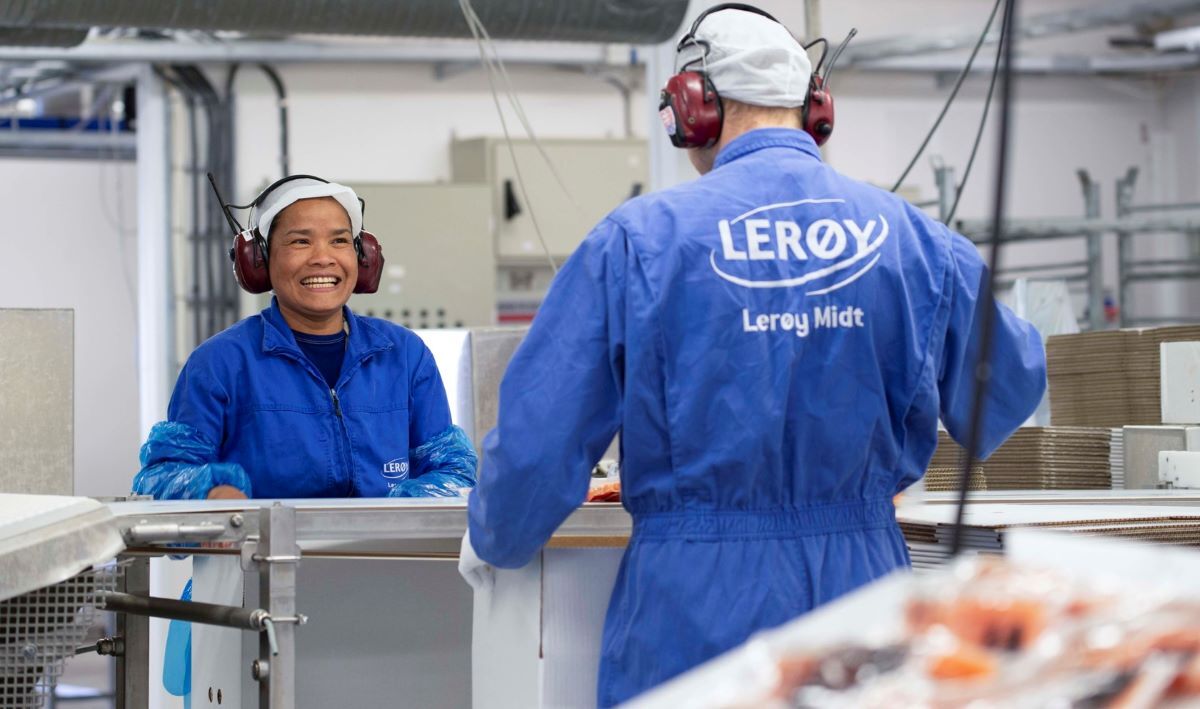
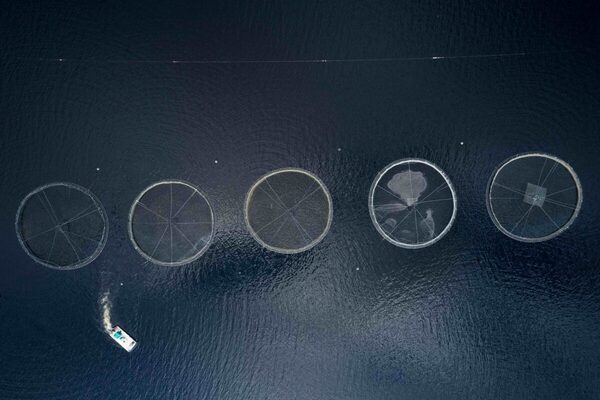
Lerøy has also invested heavily in new technology for the sea-based aquaculture production phase. Shielding technology in the form of submersible and semi-closed cages is currently being used in Lerøy Sjøtroll and Lerøy Midt.
Despite its many parts, Leroy is also forging a unified strategy. “We have invested significantly over many years, and our business units are increasingly working together under the One Lerøy approach.
“Our processes are becoming more aligned and methodical and although there is always room for improvement, the progress is clear.
“There is strong momentum across all areas of our business. Our efforts to refine our strategy and performance management are paying off.”
Strategic priorities – farming
Three years ago both the biological and financial performance of the farming segment were below expectations, with a reduction in harvest volume and a negative impact on costs.
A thorough analysis was performed to ensure a reversal of this trend and very specific initiatives have been carried out.
The farming segment has a long value chain, CEO Beltestad said, including genetics, roe, smolt, sea phase farming and logistics, which implies a long lead time from the start of an initiative until the financial results are impacted.
The core idea of the strategy is to reduce risk in each of the steps, to increase biosecurity and fish welfare and, ultimately, to improve financial results.
He declared: “It is believed that the sum of initiatives across the value chain will have an overall impact that is higher than each of the individual initiatives.
“In short, the optimal selection of genetics and ideal production processes on land will ensure a more robust smolt, which will lead to more robust fish in our sea farms. Better biosecurity, better fish welfare, lower mortality and higher growth will, in turn, lead to better financial results.”
Why not try these links to see what our Fish Farmer AI can tell you.
(Please note this is an experimental service)
You May Also Like



© 2026 Fish Farmer.