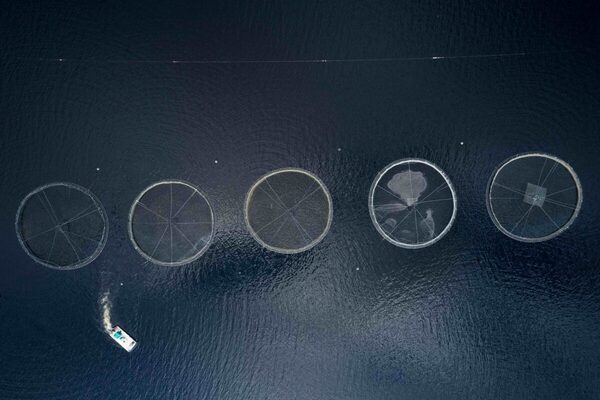

Using solar energy to help power aquaculture installations on land – from pond farms for shrimp and tilapia to state of the art RAS facilities – is one thing, but applying the same technology to farm sites at sea comes with a number of challenges.

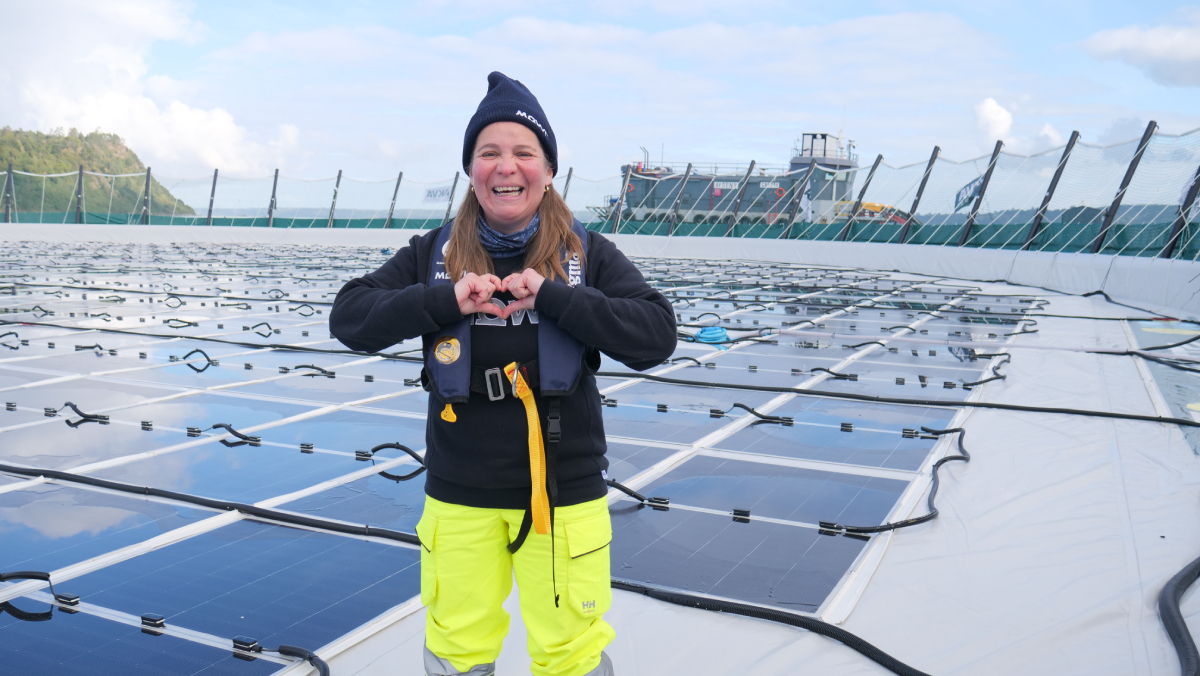
That, however, is exactly what Mowi’s Chile arm has done at its salmon farm at Huar Norte, in the Los Lagos region.
The 50-metre diameter array will help power Mowi’s farming operations in the area and, the company says, will save over 120,000 litres of oil and 350 metric tons of CO2 annually, marking a significant milestone for the Chilean salmon farming industry.
This project, the first of its kind, was developed jointly with three leading international companies in energy solutions: AKVA group, Alotta Energy and Fjord Maritime. Its aim is to minimise the use of fossil fuels through a floating solar plant that can directly supply operations and store energy for later use.
This technology was designed in Norway and adapted to the Chilean marine environment, and it will make it possible to cover up to 50% of the site’s energy needs. This will also significantly reduce the carbon footprint and sea traffic, Mowi says, which will improve the environment and the work environment.
Eugenia Gonzalez, Site Manager at Huar Norte, says: “It’s extremely important for us as a company to start using renewable energies, and to try, in a certain way, to eliminate the use of diesel. We are not just an industry that produces salmon, but also an industry trying to go into renewable energies, and environmentally friendly.”
The new array is anticipated to produce approximately 360,000 kw-hours per year.
Ricardo Gantenbein, Sea Water Production Manager at Mowi Chile, says: “To move forward towards a more sustainable industry, it is essential to work with strategic allies that will drive innovative solutions.”
And as Steve Burns, General Manager, Fjord Maritime LATAM, points out, there is another advantage to supplementing diesel generators with solar energy. He explains: “Normally, if a ponton is running only on generator, 24 hours a day, those generators will last maybe four, maybe five years. But if you add a solar panel to it, you’re adding a green generator, so you are using the diesel generator less, so we are looking at the possibility of 15 years.”

Alotta has also deployed floating energy solutions for aquaculture businesses in Norway, including one which the company says is the world’s northernmost floating solar power plant. That was for salmon farmer Emilsen Fisk, and now the company has ordered a second plant.
The solution – an Alotta Circle Mc120 – has already enabled the fish farming company to cover over 90% of its power needs using only solar energy and battery storage.
“We were curious to see how solar power would perform in real conditions – and we got the answer quickly. The diesel generator has barely been running,” says Roy Emilsen, Managing Director of Emilsen Fisk. “It’s quiet at the site – in the best possible way. We’re saving money, reducing emissions, and improving the working environment. That’s why we’re now ordering system number two.”
The installations at Emilsen Fisk are partially funded through support from Enova, a Norwegian government agency that promotes the transition to sustainable energy. According to Alotta, this support is a key driver for change in the industry.
“These incentive programmes help more and more fish farmers take the leap – both those without shore power and those already using battery hybrids but wanting to go even greener with solar,” says Egil Hjelmeland, Chief Sales Officer at Alotta.
“We assist with the entire application process, making it easy for customers to get started.”
Combining floating solar panels with cages at sea, or fish or shrimp ponds, maximises land use efficiency and offers mutual benefits – solar panels shade the water, reducing evaporation and temperature extremes, while the ponds cool the panels, improving their efficiency.
In several provinces, China has pioneered “solar-fish symbiosis” projects: vast arrays of floating solar panels are installed on the surfaces of aquaculture ponds. Fish are raised underneath, benefiting from the shade, which reduces heat stress and algal blooms. At the same time, electricity generated by the panels can power pumps, aerators, and local communities.
In the Mekong Delta, some shrimp farmers have installed floating solar systems to power on-site cold storage and water treatment, increasing both yield and product quality while slashing utility costs.
The integration of solar power into aquaculture is not only possible but increasingly practical and beneficial. From small backyard fish ponds to large commercial farms and innovative aquaponics systems, solar energy is enabling sustainable, productive, and resilient aquaculture worldwide.
As technology continues to advance and costs decline, the adoption of solar solutions will likely accelerate, helping meet food security goals while protecting our planet’s precious natural resources. Whether in a rural village in Africa, a rooftop in North America, or a vast pond in Asia, prospects for the future of green energy in aquaculture look sunny.

Why not try these links to see what our Fish Farmer AI can tell you.
(Please note this is an experimental service)